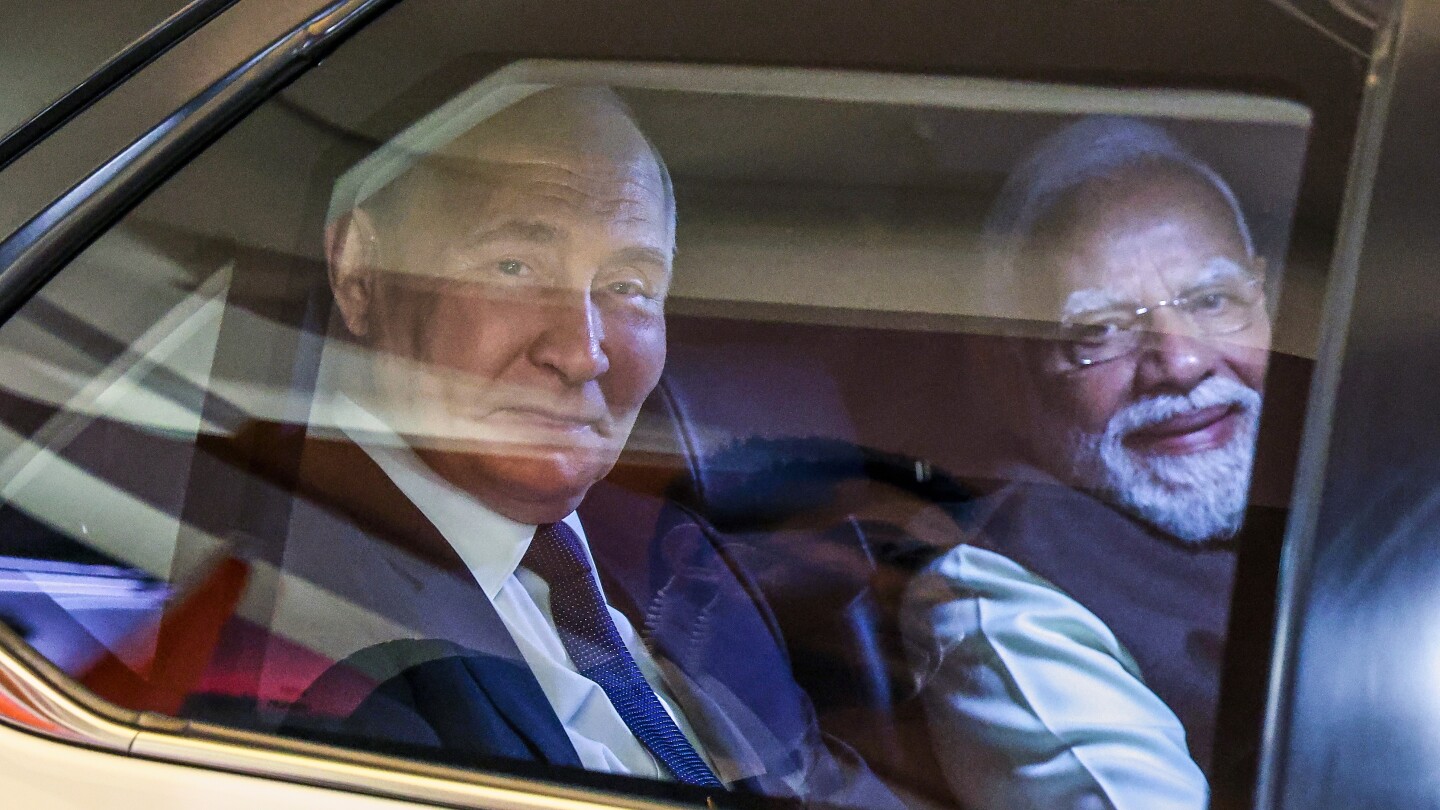
Russian President Vladimir Putin commenced high-stakes negotiations with Indian Prime Minister Narendra Modi during the 23rd Russia-India Annual Summit in New Delhi on Friday, marking a critical juncture in bilateral relations amid ongoing geopolitical pressures. The meeting represents Putin’s first state visit to India since 2021, characterized by demonstrative camaraderie as Modi personally welcomed the Russian leader with an enthusiastic embrace at the airport.
The summit agenda encompasses multifaceted discussions spanning defense cooperation, energy security, and labor mobility frameworks. Defense collaboration features prominently, with India advocating for expedited delivery of two additional S-400 missile systems under the 2018 $5.4 billion agreement, alongside modernization programs for Russia-supplied Su-30MKI fighter jets and accelerated military hardware transfers. February’s military cooperation pact, recently ratified by Moscow’s State Duma, further institutionalizes joint exercises, logistical support, and disaster response mechanisms.
Economic dimensions reveal ambitious targets, with bilateral trade reaching $68.7 billion in the previous fiscal year and both nations aspiring to achieve $100 billion by 2030. India seeks to address its significant trade deficit through expanded pharmaceutical, agricultural, and textile exports while pursuing long-term fertilizer supply agreements and elimination of non-tariff barriers. The migration agreement for skilled Indian workers represents another breakthrough expected from the talks.
This diplomatic engagement occurs against a complex backdrop where Western nations criticize India’s continued import of discounted Russian crude, which reached unprecedented levels making India Russia’s second-largest oil customer after China. The United States has implemented sanctions targeting Russian oil producers and elevated tariffs on Indian goods to 50%, directly linking these measures to India’s energy purchases. Simultaneously, negotiations for critical trade agreements with both the European Union and United States face potential complications due to India’s sustained engagement with Moscow.
Indian officials maintain that their country adheres to all international sanctions regimes while pursuing national economic interests. The summit consequently embodies India’s delicate balancing act between historical Russo-Indian partnerships and contemporary Western alliances, all while the Ukraine conflict approaches its fourth year with ongoing international efforts to broker peace settlements.