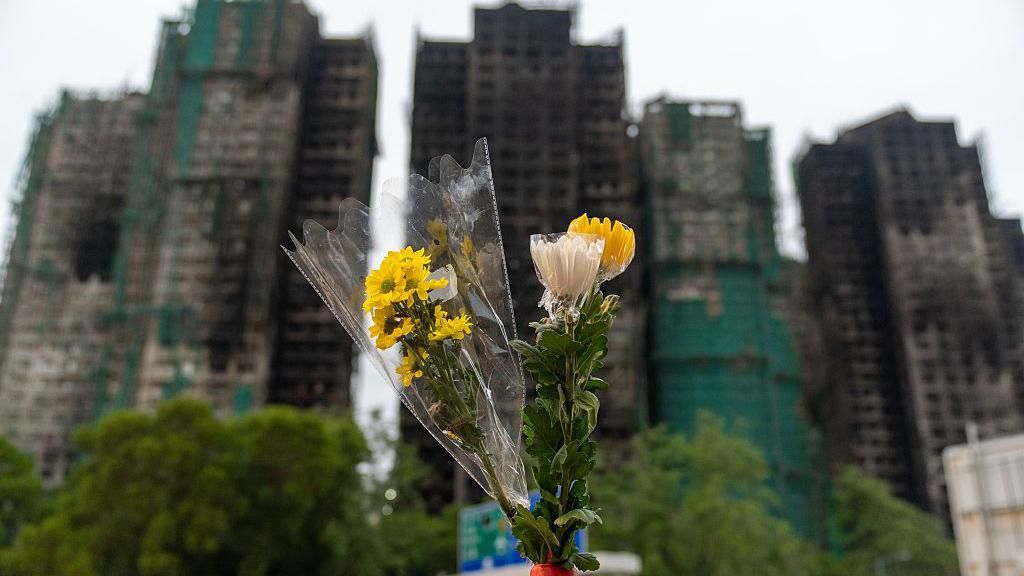
A catastrophic fire that engulfed a densely populated housing estate in Hong Kong’s Tai Po district has become the catalyst for a complex political confrontation, pitting public demands for accountability against the government’s stringent national security measures. The inferno, which claimed at least 159 lives and displaced thousands, represents the most severe tragedy to strike the city since the 2019 pro-democracy protests.
In the aftermath, undergraduate Miles Kwan initiated a petition echoing the 2019 protest slogans with ‘four demands’ for governmental transparency and investigation. Within hours, the petition gathered over 10,000 signatures before being removed, and Kwan was arrested under Hong Kong’s national security law on sedition charges. His detention reflects authorities’ determination to prevent what they describe as attempts to ‘exploit’ the tragedy to ‘endanger national security.’
Government officials including Executive Council member Ronny Tong and lawmaker Regina Ip defended the arrests, emphasizing the need to differentiate between genuine opinion and petitions with ‘criminal intent.’ They cited concerns that public anger could lead to a recurrence of the 2019 unrest. Meanwhile, Chief Executive John Lee pledged comprehensive support for victims and announced an independent inquiry into the fire, building safety reviews, and financial assistance measures—actions notably similar to those demanded in Kwan’s petition.
The national security apparatus has responded aggressively to the disaster. China’s Hong Kong security office issued warnings against instigating ‘black terror’—a term previously used to describe the 2019 protests—and vowed to punish ‘hostile foreign forces’ regardless of their location. Fifteen individuals have been arrested on suspicion of manslaughter, primarily construction firm executives and staff, while six fire equipment contractors face detention separately.
Critics including pro-democracy activist Samuel Chu and arrested former district councillor Kenneth Cheung question the suppression of legitimate inquiry, arguing that seeking accountability constitutes a human response rather than a political campaign. Politics professor Kenneth Chan observes that authorities are applying ‘Beijing’s playbook’ focused on social control, replacing community-led relief efforts with government-backed initiatives.
The controversy extends to the government’s decision to proceed with Legislative Council elections during the mourning period, permitting only pro-Beijing ‘patriots’ to contest. This move has drawn criticism from residents who believe priority should be given to victim support rather than political processes. As Hong Kong navigates this tragedy, the tension between public demands for accountability and national security enforcement continues to define the city’s political landscape.