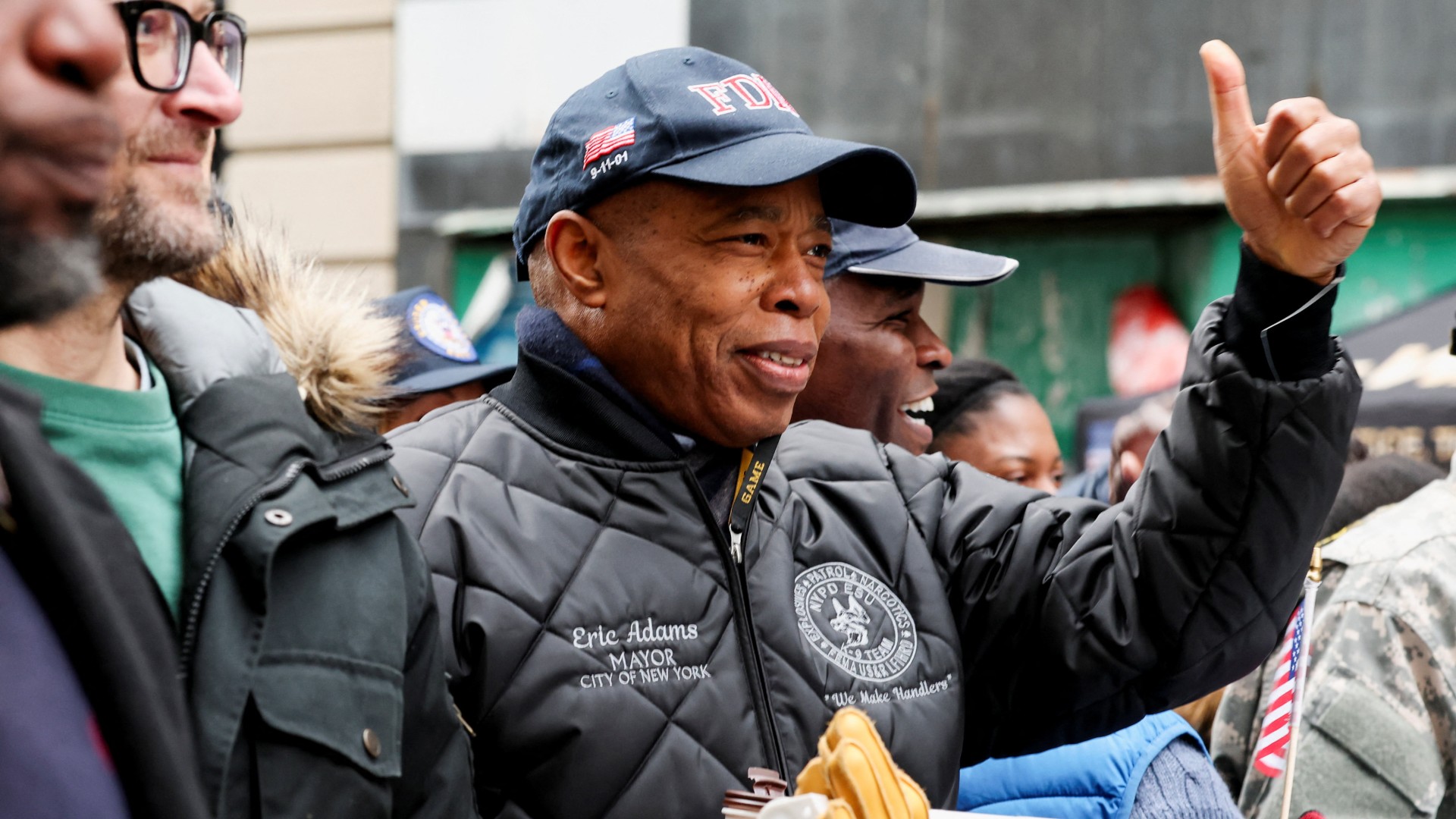
In his final legislative actions before leaving office, New York City Mayor Eric Adams enacted two executive orders on Wednesday that have ignited immediate controversy. The first order formally prohibits municipal entities from participating in or supporting the Boycott, Divestment, and Sanctions (BDS) movement against Israel, while the second empowers authorities to establish protest-free zones around houses of worship.
Executive Order 60 explicitly bans city agencies from engaging with organizations that support the BDS movement, which Adams characterized as “antisemitic in nature and discriminatory in practice.” The order mandates that investment decisions for the city’s five pension systems, serving approximately 750,000 beneficiaries, must be based solely on financial considerations rather than political stances. Currently, New York City maintains $300 million in Israeli bonds and assets within its $300 billion investment portfolio.
The second directive, Executive Order 61, instructs the NYPD to review its patrol guidelines and explore establishing designated protest zones at significant distances from religious institutions. This measure follows recent demonstrations outside Park East Synagogue where protesters chanted anti-Israel slogans during an event promoting Jewish settlement in the occupied West Bank.
These actions create an immediate political challenge for mayor-elect Zohran Mamdani, a progressive who has historically supported the BDS movement. Mamdani must now decide whether to uphold or overturn the orders upon assuming office—a decision that will inevitably provoke strong reactions from opposing factions within the city’s substantial Jewish and Muslim communities, each numbering approximately one million residents.
The timing of these orders coincides with Adams’ recent taxpayer-funded trip to Israel, where he notably declared that he “served” Israeli Jews as mayor of New York. This statement, along with the executive orders, has renewed concerns about foreign influence in American politics and the appropriate boundaries between municipal governance and international conflicts.
Civil rights organizations have criticized the measures as potentially unconstitutional restrictions on free speech and protest rights, particularly amid ongoing tensions surrounding the Israel-Palestine conflict. Adams’ administration has faced previous allegations of aggressively handling pro-Palestinian demonstrations, including police interventions at Columbia University encampments and Nakba-day protests in Brooklyn.