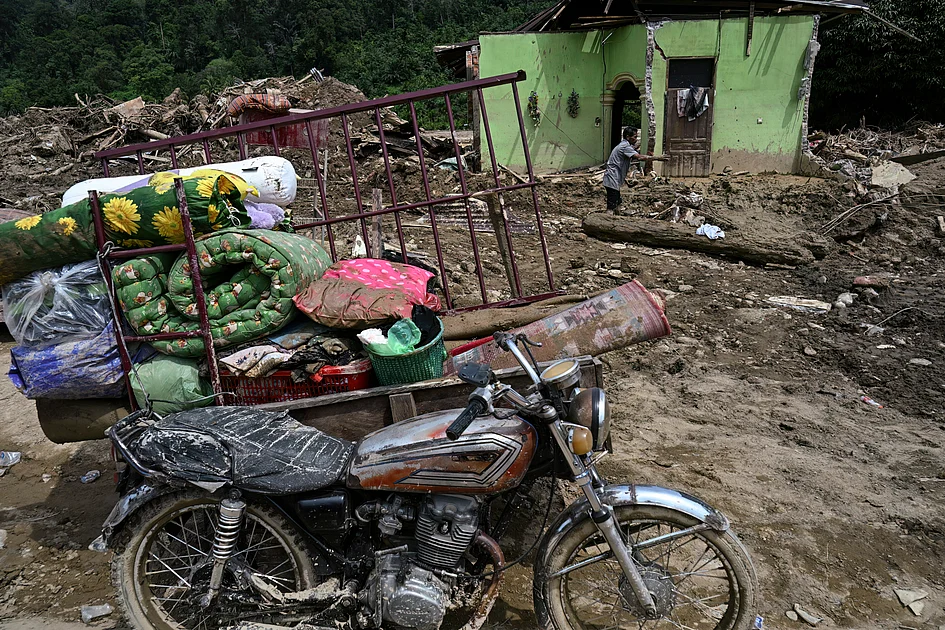
Meteorological warnings of impending rainfall have triggered widespread alarm throughout flood-ravaged regions of Indonesia and Sri Lanka, where previous cataclysmic flooding has already claimed over 1,500 lives across four Southeast Asian nations. The Indonesian meteorological agency issued specific alerts for Sumatra’s most severely affected provinces, forecasting moderate to heavy precipitation between Thursday and Friday. Although current rainfall intensity remains below last week’s catastrophic levels, the psychological impact on survivors remains profound, with many expressing terror about potential repeat flooding.
Current official figures place Indonesia’s death toll at 776, with more than 560 individuals still unaccounted for due to compromised communication infrastructure and electrical failures in remote areas. Survivor testimonies reveal harrowing accounts of endurance, including one woman’s experience of being stranded on her rooftop for 48 hours without sustenance. The scale of destruction has overwhelmed local response capabilities, with fuel shortages creating kilometers-long queues at distribution points and relief operations struggling to reach isolated communities.
The broader meteorological context reveals a disturbing pattern: while seasonal monsoons traditionally provide essential irrigation for agricultural systems, climate change has dramatically altered their behavior, creating erratic and increasingly deadly weather phenomena. Last week’s catastrophic events simultaneously drenched Sri Lanka, Sumatra, southern Thailand, and northern Malaysia through two separate weather systems, creating a regional humanitarian crisis of unprecedented proportions.
In Sri Lanka, authorities renewed landslide alerts for vulnerable areas and advised against returning to unstable homes. The national death toll has reached 479, with hundreds still missing and survivors reporting entire villages transformed into graveyards. The economic implications are staggering, with preliminary rebuilding estimates approaching $7 billion—a devastating financial burden for a nation still recovering from its worst economic crisis in decades.