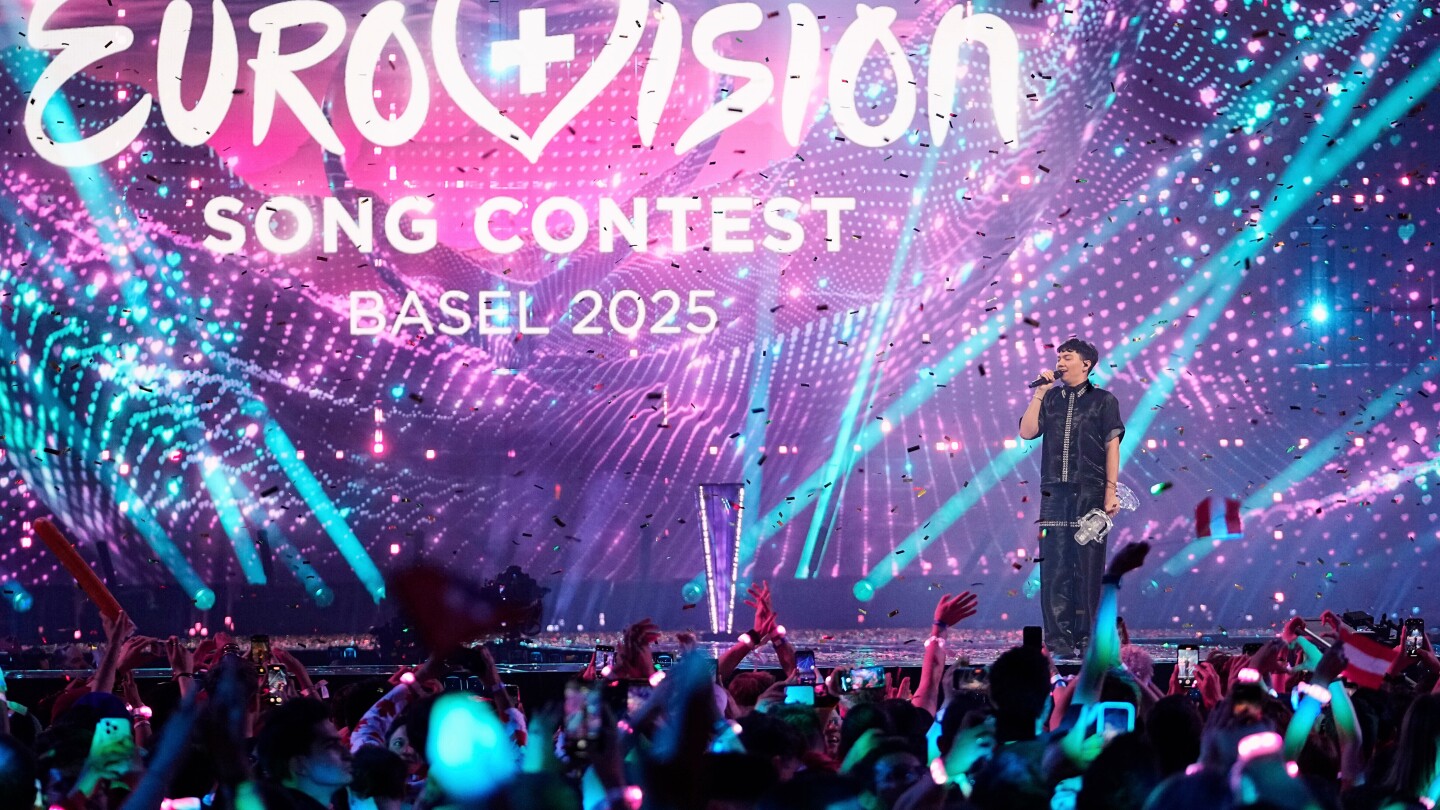
GENEVA — The European Broadcasting Union (EBU) convened a critical general assembly Thursday to address mounting tensions over Israel’s eligibility for the 2026 Eurovision Song Contest. This annual pop music spectacle, traditionally celebrated for its unifying spirit, now faces its most significant political challenge since Russia’s 2022 exclusion following its invasion of Ukraine.
The core dispute centers on calls from several member nations—including Iceland, Ireland, the Netherlands, Slovenia, and Spain—to exclude Israel from competition. These broadcasters cite both Israel’s conduct in the Gaza conflict and allegations of voting interference in previous contests as primary concerns. Conversely, nations including Austria and Germany have expressed support for Israel’s continued participation.
Experts observing the Geneva proceedings noted the unlikelihood of a unified resolution. Paul Jordan, a prominent Eurovision commentator known as ‘Dr. Eurovision,’ described the situation as ‘messy and toxic,’ noting the irony that an event branded ‘United by Music’ has become profoundly divided through geopolitics.
The EBU proposed structural reforms to safeguard contest integrity, including modified voting procedures and reinstating professional juries during semifinals. These measures aim to address claims of political manipulation in viewer voting. The union stated that a formal vote on Israel’s participation would only occur if member broadcasters deem these safeguards insufficient to protect the competition’s neutrality.
The implications of potential boycotts extend beyond symbolism. Dean Vuletic, author of ‘Postwar Europe and the Eurovision Song Contest,’ warned that withdrawals by democratic EU members would represent an unprecedented escalation in the event’s history. Such actions could significantly impact viewership metrics and financial stability for an institution already navigating media fragmentation and budget constraints.
With member broadcasters required to confirm 2026 participation by mid-December, the controversy threatens to overshadow the anticipated return of Bulgaria, Moldova, and Romania after absences for financial and artistic reasons. The resolution—or lack thereof—will determine whether Eurovision can reclaim its celebratory purpose or continue serving as a geopolitical battleground.