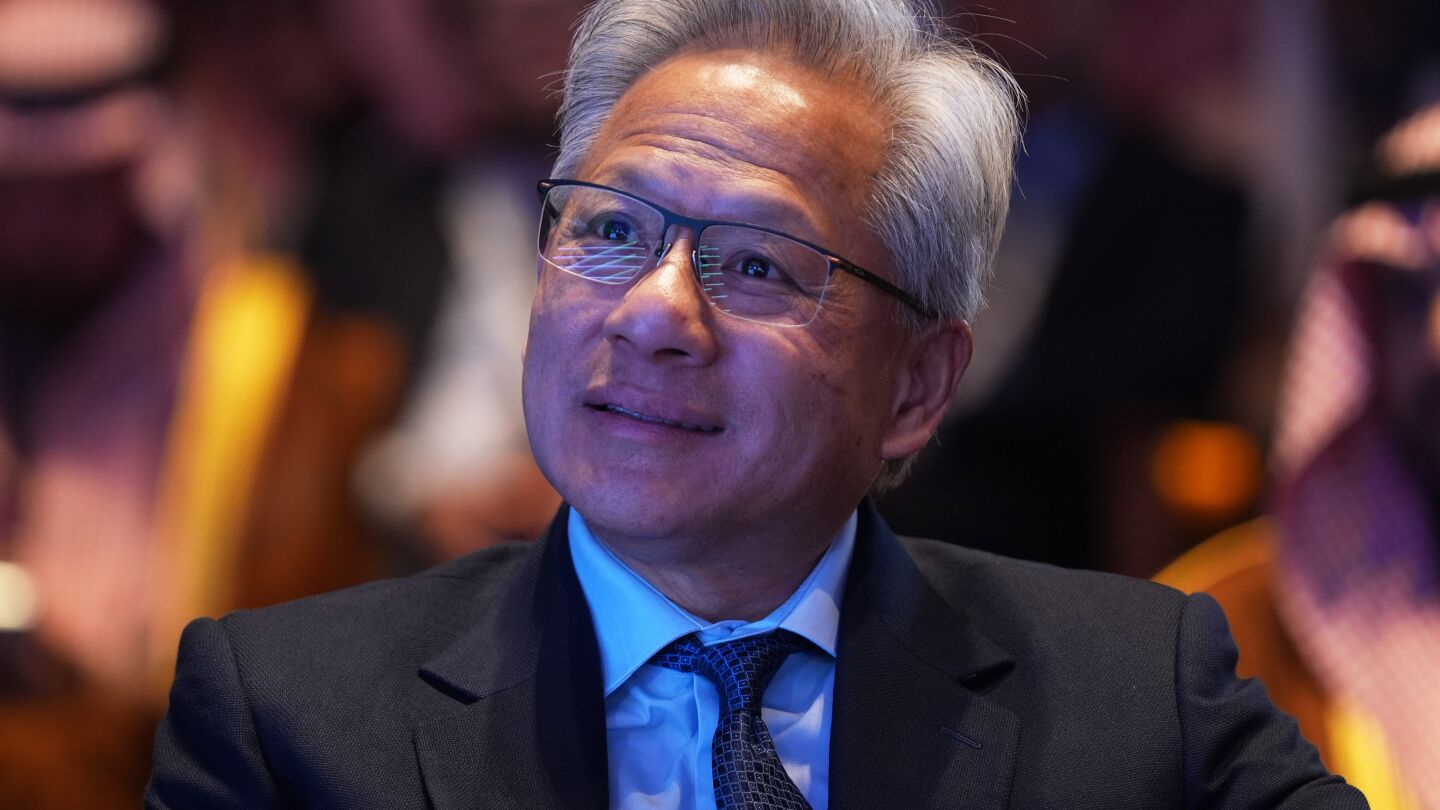
WASHINGTON — In a significant development at the intersection of technology and national security, Nvidia CEO Jensen Huang conducted high-level meetings with President Donald Trump and Republican senators on Wednesday. The discussions centered on federal policies governing the artificial intelligence industry, particularly regarding the contentious export of advanced computer chips to geopolitical rivals like China.\n\nThe closed-door session with members of the Senate Banking Committee occurred amid escalating lobbying efforts and substantial investments in AI technology. Major tech firms continue to promote ambitious predictions about AI’s transformative potential while navigating increasing regulatory scrutiny.\n\nHuang, representing Silicon Valley’s perspective, maintains that imposing restrictions on technology exports would hinder technological progress. This stance contrasts with growing concerns among policymakers and the public regarding AI’s potential risks and the possible misuse of American hardware by foreign competitors.\n\n\”I’ve consistently expressed support for export controls that ensure American companies maintain technological leadership,\” Huang stated to journalists before his Capitol Hill meeting. While acknowledging concerns about chip sales to China, he contended that existing restrictions have not significantly impeded Chinese advancements in the AI domain.\n\nThe CEO emphasized the importance of global competitiveness, arguing, \”We must offer the most competitive chips available to the Chinese market, as degraded products would be unacceptable to them.\”\n\nHuang revealed his earlier meeting with President Trump, during which they discussed export control mechanisms for Nvidia’s products. The conversation concluded with seasonal greetings exchanged between the technology executive and the president.\n\nThis lobbying push follows the Trump administration’s May reversal of Biden-era restrictions that had limited Nvidia and other chip manufacturers from exporting their products to numerous countries. The White House subsequently announced an unusual arrangement in August permitting Nvidia and Advanced Micro Devices to sell chips in China while requiring the U.S. government to receive 15% of sales revenue.\n\nThe proposal has created divisions among lawmakers, despite broad congressional support for AI export controls generally. Legislators increasingly view the sale of sophisticated AI chips to China as presenting substantial national security concerns, given China’s status as America’s primary competitor in developing artificial superintelligence.\n\nRepublican responses to Huang’s lobbying efforts varied considerably. Senator Mike Rounds (R-South Dakota) characterized the discussion as \”healthy and productive,\\” noting continued legislative openness to diverse policy approaches. He observed that Nvidia currently abstains from Chinese chip sales while recognizing export controls’ importance for national security.\n\nIn contrast, Senator John Kennedy (R-Louisiana) deliberately avoided the meeting, questioning Huang’s objectivity regarding chip sales to China. \”He possesses extraordinary wealth yet desires more—I don’t fault that ambition,\” Kennedy remarked. \”However, he cannot provide impartial guidance regarding technology sharing with China.\”\n\nDemocratic lawmakers expressed frustration about their exclusion from the proceedings. Senator Elizabeth Warren (D-Massachusetts), the Banking Committee’s ranking Democrat, criticized Huang for \”lobbying Republicans secretly rather than providing public explanations.\” She advocated for requiring the Nvidia CEO to testify publicly about why his company allegedly favors Chinese manufacturers over American businesses requiring access to high-quality chips.
Nvidia CEO Jensen Huang visits Republicans as debate over intensifying AI race rages