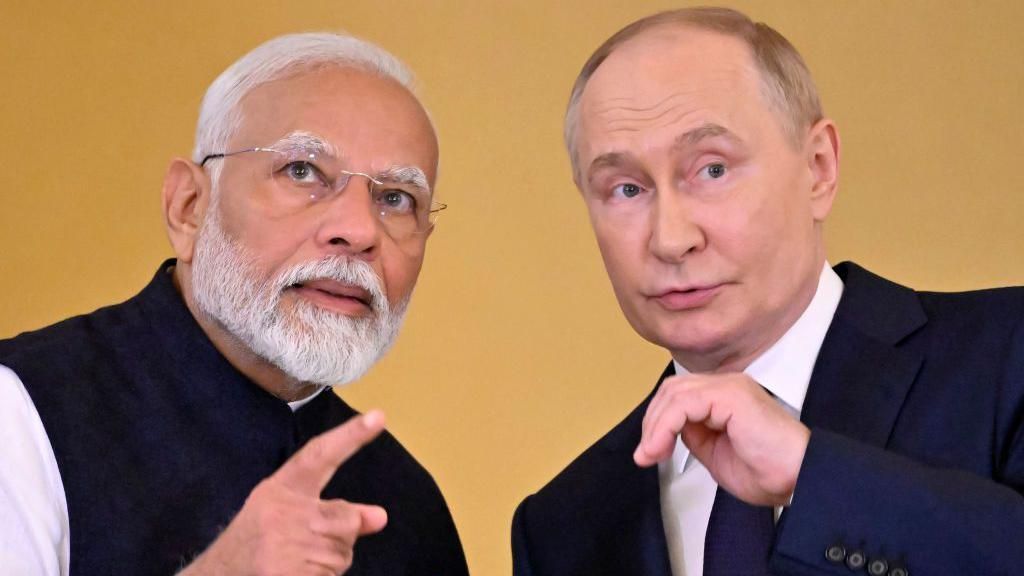
Russian President Vladimir Putin commenced a pivotal two-day diplomatic mission to New Delhi, marking a significant moment in international geopolitics. The visit centers on the annual bilateral summit with Indian Prime Minister Narendra Modi, occurring against a backdrop of escalating U.S. pressure campaigns and global trade realignments.
The Kremlin’s pursuit of strengthened Indo-Russian ties reflects multiple strategic imperatives. India’s remarkable economic expansion—exceeding 8% growth—positions the nation as an exceptionally attractive market for Russian commodities, particularly energy resources. Prior to Russia’s full-scale invasion of Ukraine, Russian crude constituted merely 2.5% of India’s oil imports. This figure surged dramatically to 35% as India capitalized on discounted pricing resulting from Western sanctions. Although recent U.S. tariff impositions have temporarily reduced orders, Moscow remains keen to preserve this crucial revenue stream.
Defense cooperation represents another cornerstone of the relationship. Reports indicate advanced negotiations for state-of-the-art Russian fighter jets and air defense systems, continuing a weapons trading tradition dating to the Soviet era. Concurrently, Russia views India as a vital source of skilled labor amid its domestic workforce shortages.
Geopolitically, the summit enables Moscow to demonstrate that Western isolation attempts have faltered. Putin’s diplomatic engagements with Modi and Chinese President Xi Jinping—including their trilateral meeting three months prior—visibly affirm Russia’s enduring partnerships within the Global South and its advocacy for a multipolar world order.
For Prime Minister Modi, the visit tests India’s doctrine of strategic autonomy amid increasingly complex global pressures. The administration faces competing demands: maintaining historical ties with Moscow while navigating strained relations with Washington following President Trump’s imposition of 25% tariffs on Indian goods. European allies have simultaneously intensified pressure, with German, French, and British ambassadors publishing a rare joint critique of Russia’s Ukraine stance.
Bilateral trade dynamics present additional challenges. While annual trade surged from $8.1 billion in 2020 to $68.72 billion in March 2025, this growth primarily reflects oil purchases that created significant trade imbalance. Modi seeks to diversify economic cooperation beyond hydrocarbons and defense, expanding India’s access to Russian consumer markets for electronics, seafood, and textiles.
Analysts from Delhi’s Global Trade Research Initiative characterize the summit as a negotiation over “risk, supply chains and economic insulation” rather than nostalgic diplomacy. The outcomes could range from modest agreements securing oil and defense supplies to ambitious frameworks potentially reshaping regional economic architectures.