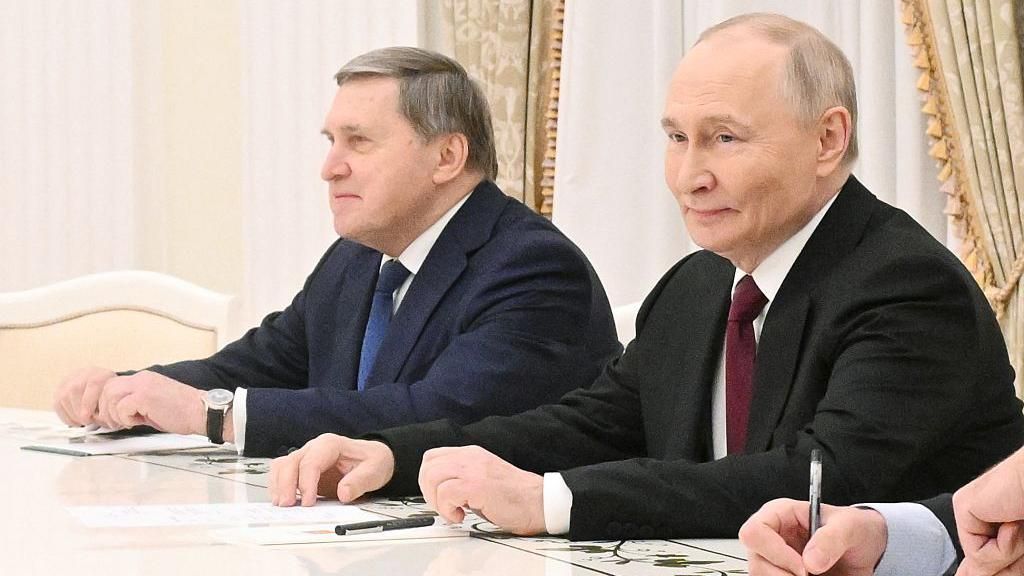
Russian President Vladimir Putin engaged in an extensive five-hour diplomatic session with American negotiators at the Kremlin on Tuesday, marking a significant development in efforts to resolve the ongoing Ukraine conflict. The high-stakes discussions featured Putin’s foreign policy aide Yury Ushakov alongside US envoy Steve Witkoff and Jared Kushner, former President Donald Trump’s son-in-law.
Despite the marathon closed-door meeting, Ushakov characterized the dialogue as “constructive” while emphasizing that substantial work remains before any comprehensive agreement can be reached. The negotiations occurred against a backdrop of heightened tensions, with Putin previously declaring European demands regarding the US-Russia draft peace proposal “unacceptable” and warning that Russia stands prepared should Europe seek confrontation.
The American diplomatic team arrived in Moscow following two previous rounds of discussions with Ukrainian representatives over the past fortnight. Ukrainian President Volodymyr Zelensky, speaking from Dublin during an official visit to Ireland, expressed anticipation for a post-meeting briefing from US officials. While acknowledging that “no simple solutions” exist, Zelensky highlighted that current circumstances present the most favorable opportunity for conflict resolution since the war’s inception.
Central to the diplomatic impasse remains the controversial 28-point peace plan initially circulated in November, which drew widespread criticism for perceived favorable treatment of Moscow’s interests. The proposal sparked particular concern regarding Ukrainian sovereignty over Russian-occupied territories and security guarantees, with Zelensky insisting on NATO membership provisions—a condition Russia has consistently opposed and Trump administration officials previously ruled out.
European allies have countered the original American draft with a modified document eliminating contentious elements, including recognition of Donetsk and Luhansk as de facto Russian territories. Putin dismissed these European demands as obstructionist to peace efforts during pre-meeting comments with journalists.
Meanwhile, military confrontations continued unabated along the front lines. Ukrainian authorities disputed Russian claims of capturing strategic locations including Pokrovsk and Vovchansk, characterizing Russian assertions as propaganda maneuvers. International observers corroborated Ukrainian positions regarding territorial control, noting significant Russian casualties in ongoing engagements.
The human cost of the conflict continues to mount, with UN documentation confirming over 14,000 civilian casualties alongside tens of thousands of military injuries and fatalities since Russia’s full-scale invasion began in February 2022. Civilian infrastructure including educational facilities, medical centers, and residential buildings have sustained systematic destruction through nightly aerial assaults.
The current confrontation represents an escalation of tensions originating in 2014 following Ukraine’s political realignment and Russia’s subsequent annexation of Crimea and support for separatist movements in eastern regions.