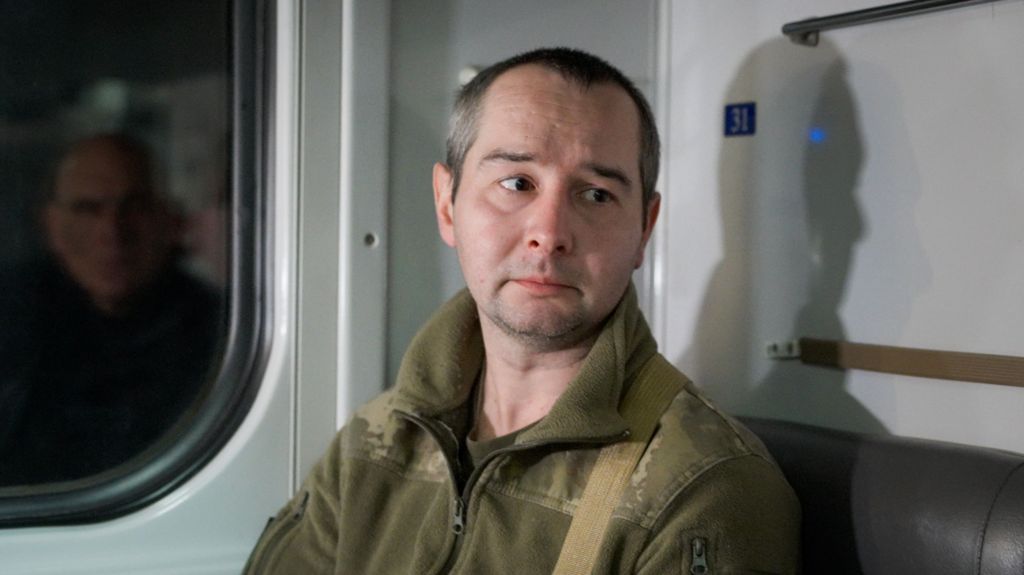
In Ukraine’s war-torn Donetsk region, the cessation of rail services stands as a stark symbol of Russia’s relentless advance. With trains now terminating west of the Donetsk border, civilians and soldiers congregate at the final station, awaiting transport toward relative safety—a literal train out of the conflict zone. This development coincides with Vladimir Putin’s increasingly assertive posture following leaked U.S. peace proposals, which many interpret as aligning with his maximalist territorial demands. Ukrainian President Volodymyr Zelensky acknowledges that territorial sovereignty remains the most contentious issue in U.S.-led peace discussions.
At the terminal station, soldier Andrii shares a poignant farewell with his girlfriend Polina before returning to the frontlines. When questioned about peace negotiations—which have involved Donald Trump’s envoys engaging with Ukrainian officials before Moscow visits—Andrii dismisses them as mere ‘chatter.’ His skepticism is echoed by fellow soldier Denys, who vehemently opposes ceding Donbas to Russia in any peace agreement.
Russian forces currently control approximately 85% of the Donbas region, comprising Luhansk and Donetsk. Their recent claim of capturing Pokrovsk—a strategic Donetsk hub—was countered by Ukrainian assertions that combat persists in the area. Soldiers boarding westbound trains for their 20-day leave exhibit profound exhaustion, with many immediately succumbing to sleep. Denys, a two-year army veteran, describes universal fatigue: ‘Everyone’s drained, everyone’s tired mentally and physically.’ His unit has been engaged in the besieged city of Kostyantynivka, where he characterizes drone presence as being ‘like flies.’ Despite the terror, he emphasizes their refusal to surrender after immense sacrifices: ‘Nobody will give Putin the Donbas. No way, it’s our land.’
The potential cession of Donetsk’s ‘fortress belt’ cities—Slovyansk, Kramatorsk, and Druzhkivka, home to over 250,000 Ukrainians—proves unacceptable to most citizens. While Russia has spent over a year attempting to capture Pokrovsk, U.S. assessments indicate Ukraine is both outnumbered and outgunned.
Civilian evacuation from Donbas continues unabated during peace talks. Dozens of refugees arrive daily at the Lozova border reception center, exploiting foggy conditions that reduce drone visibility. Approximately 200 displaced persons receive basic supplies and financial assistance each day. Among them, Yevheniy and Maryna escaped Kramatorsk with their two children due to escalating drone threats. Maryna recounts: ‘It’s getting harder to even go outside. Everything is dangerous—even going to the shop, you might not come back.’ While the family plans to relocate to Kyiv, Yevheniy expresses pessimism about negotiations: ‘That side [Russia] won’t agree to our terms.’
Conversely, some civilians demonstrate willingness to exchange territory for peace. Oleksandr, whose children already relocated to Germany, acknowledges Russia’s demands as ‘probably unacceptable’ yet contemplates territorial compromise. He states: ‘Personally I would agree to those terms,’ referencing the leaked U.S. draft proposing de facto Russian control over Ukrainian-held Donbas areas. Inna, evacuating with five children aged nine months to 12 years, concurs: ‘The main thing is that there will be peace.’ She had previously disguised explosions as fireworks while sheltering in their cellar.
Desertion rates further complicate Ukraine’s military position. Nearly 300,000 cases of desertion or unauthorized absence have occurred since Russia’s full-scale invasion began, with numbers rising dramatically over the past year. ‘Serhii’ (pseudonym), who volunteered initially, deserted in May after his understrength, poorly equipped battalion faced chaos near Pokrovsk. He claims most unit members were forcibly mobilized—’taken off the street’—and lacked proper training or leadership. Although considering rejoining the army, Serhii echoes U.S. assessments of Ukraine’s disadvantage: ‘A country of 140 million against us with 32 million—logically it doesn’t add up.’