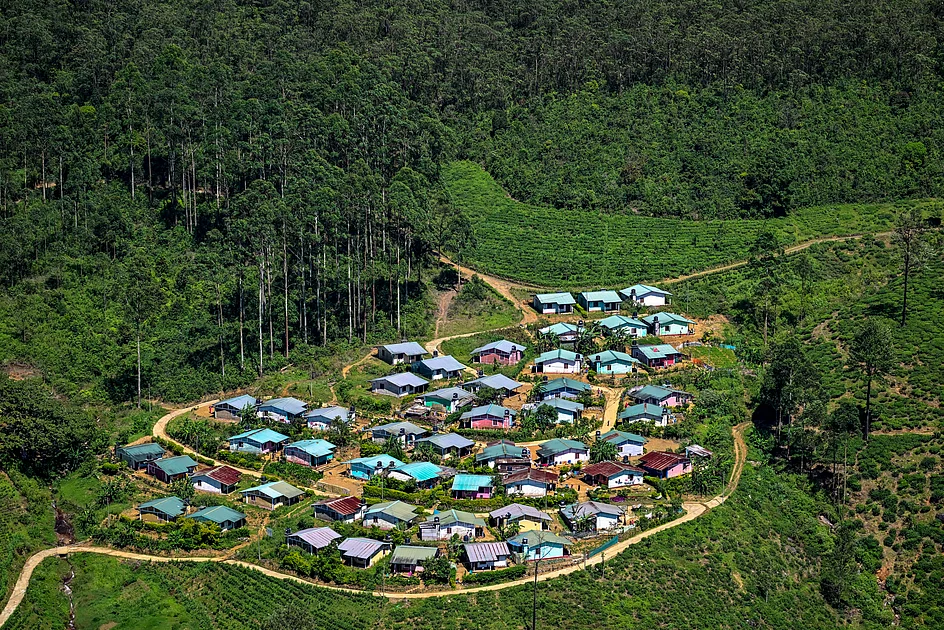
In the wake of Cyclone Ditwah, Sri Lanka’s picturesque tea-growing highlands have transformed into a landscape of devastation and tragedy. Rescue teams continue their grim search through the mud-clogged mountainsides where at least 465 fatalities have been confirmed, with 366 individuals still unaccounted for following the island nation’s most severe natural disaster in decades.
The aerial assessment reveals profound destruction across the central tea region, where entire slopes have sheared away, leaving ochre scars through the once-lush vegetation. Landslides have consumed road networks, infrastructure, and complete settlements, with only occasional roof peaks visible above the mud. The renowned tea plantations, vital to Sri Lanka’s economy, now appear as extensive channels of debris and uprooted vegetation.
Military aircraft from Sri Lanka, India, and Pakistan have mobilized for relief operations, transporting essential supplies to isolated communities in the Nuwara Eliya district. Helicopters modified for cargo transport are delivering water and rations to areas that remain inaccessible by ground. The full impact on the tea industry—including plantations, processing facilities, and agricultural workers—has yet to be comprehensively assessed but is anticipated to be substantial.
President Anura Kumara Dissanayake has declared a national state of emergency and issued an international appeal for assistance. Recovery efforts face significant challenges due to damaged infrastructure and persistent communication blackouts in remote zones. This catastrophe represents the most lethal natural event to strike Sri Lanka since the 2004 Indian Ocean tsunami, with both landslides and flooding affecting communities nationwide.