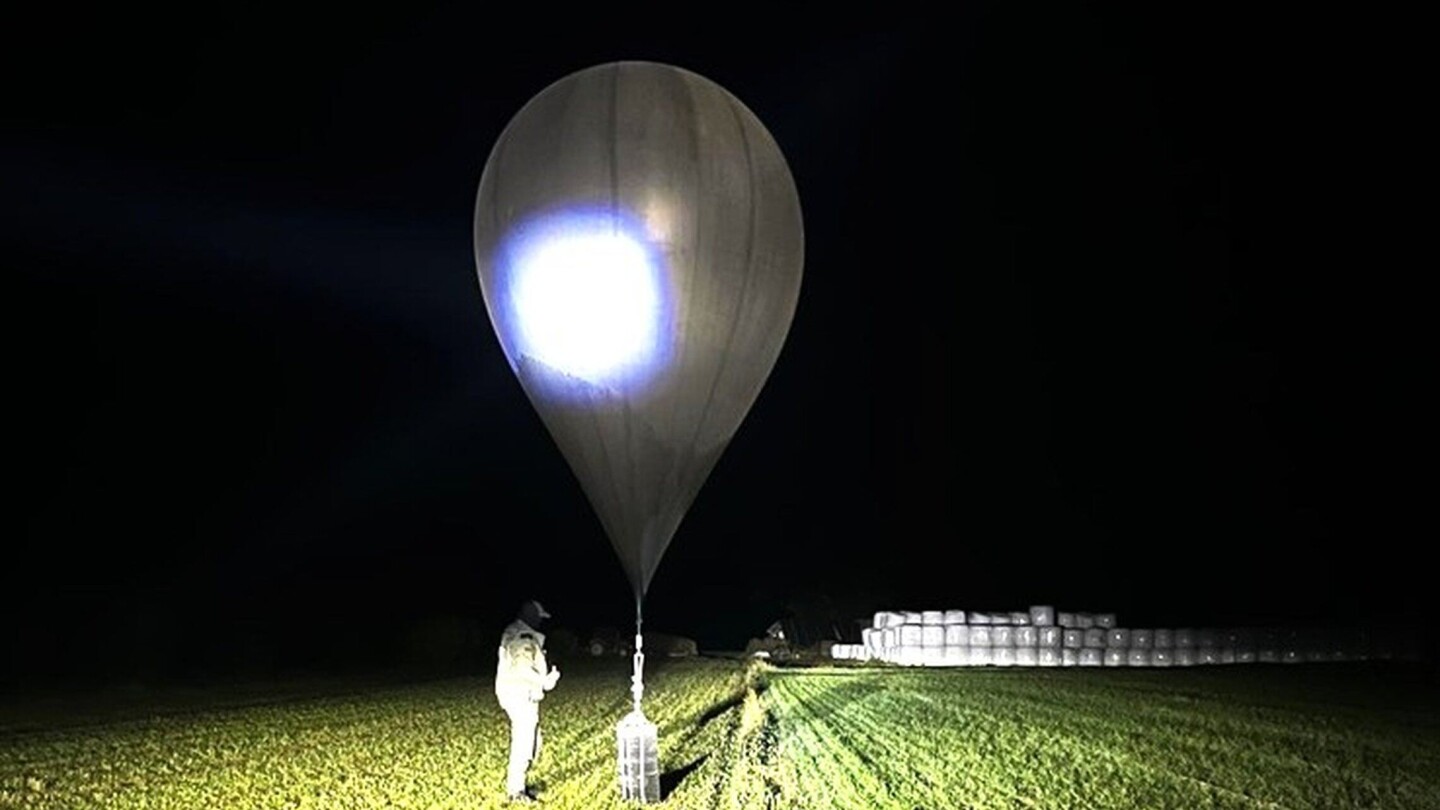
VILNIUS, Lithuania — A sophisticated aerial confrontation has emerged between Lithuania and Belarus, with Vilnius accusing its neighbor of orchestrating deliberate disruptions to aviation security through coordinated meteorological balloon launches. The ongoing incidents have forced repeated shutdowns of Vilnius International Airport, creating travel chaos and stranding thousands of passengers in what Lithuanian officials characterize as a calculated hybrid warfare campaign.
The situation reached critical levels when operations at Lithuania’s primary airport were suspended for eleven consecutive hours last Saturday night. Aviation authorities documented at least sixty balloons originating from Belarusian territory, with approximately forty penetrating restricted airspace crucial for flight safety. The systematic timing and precise trajectory of these incursions suggest intentional targeting of aviation infrastructure rather than random meteorological activity.
Deputy Foreign Minister Taurimas Valys condemned the actions as “a cynical hybrid attack against our economy, aviation security, and the entire nation.” The balloons, ostensibly used for cigarette smuggling operations, have become instruments of geopolitical tension between the neighboring states.
Belarusian President Alexander Lukashenko previously offered conditional apologies if Minsk’s involvement could be definitively established. However, the Belarusian government has simultaneously accused Lithuania of dispatching surveillance drones into its airspace for espionage purposes and distributing “extremist materials.” These allegations prompted Minsk to summon Lithuanian diplomat Erikas Vilkanecas this week, demanding formal explanations and investigations while reserving “the right to take all necessary measures to protect its sovereignty.”
The border region has become an arena for reciprocal measures, with Lithuania initially closing frontier crossings in October following repeated aerial incursions. Belarus retaliated by blocking over 1,000 Lithuanian commercial trucks from exiting its territory. Although Vilnius subsequently reopened borders under pressure from logistics companies, balloon incursions have continued escalating.
Prime Minister Inga Ruginienė acknowledged the government’s delicate balancing act, stating, “If necessary, we will close the border, but please understand that we must coordinate every action with our strategic partners.” This reference to NATO allies underscores the broader security implications as the alliance remains vigilant following unprecedented drone intrusions in September.
Lithuania is developing technological countermeasures, including a €1 million investment in an Intelligent Airspace Security System (IOEAS) that incorporates artificial intelligence for target recognition and trajectory prediction. IT Logika, a project beneficiary, is developing a high-power laser system capable of neutralizing multiple balloons during single operations. Additional proposals include relocating night flights to secondary airports like Kaunas and implementing stricter penalties for cigarette smuggling networks.
The escalating tensions occur against the backdrop of Belarus’s alignment with Russia and the ongoing conflict in Ukraine, now approaching its fourth year. This aerial provocation represents a new dimension in the complex security challenges facing NATO’s eastern flank.