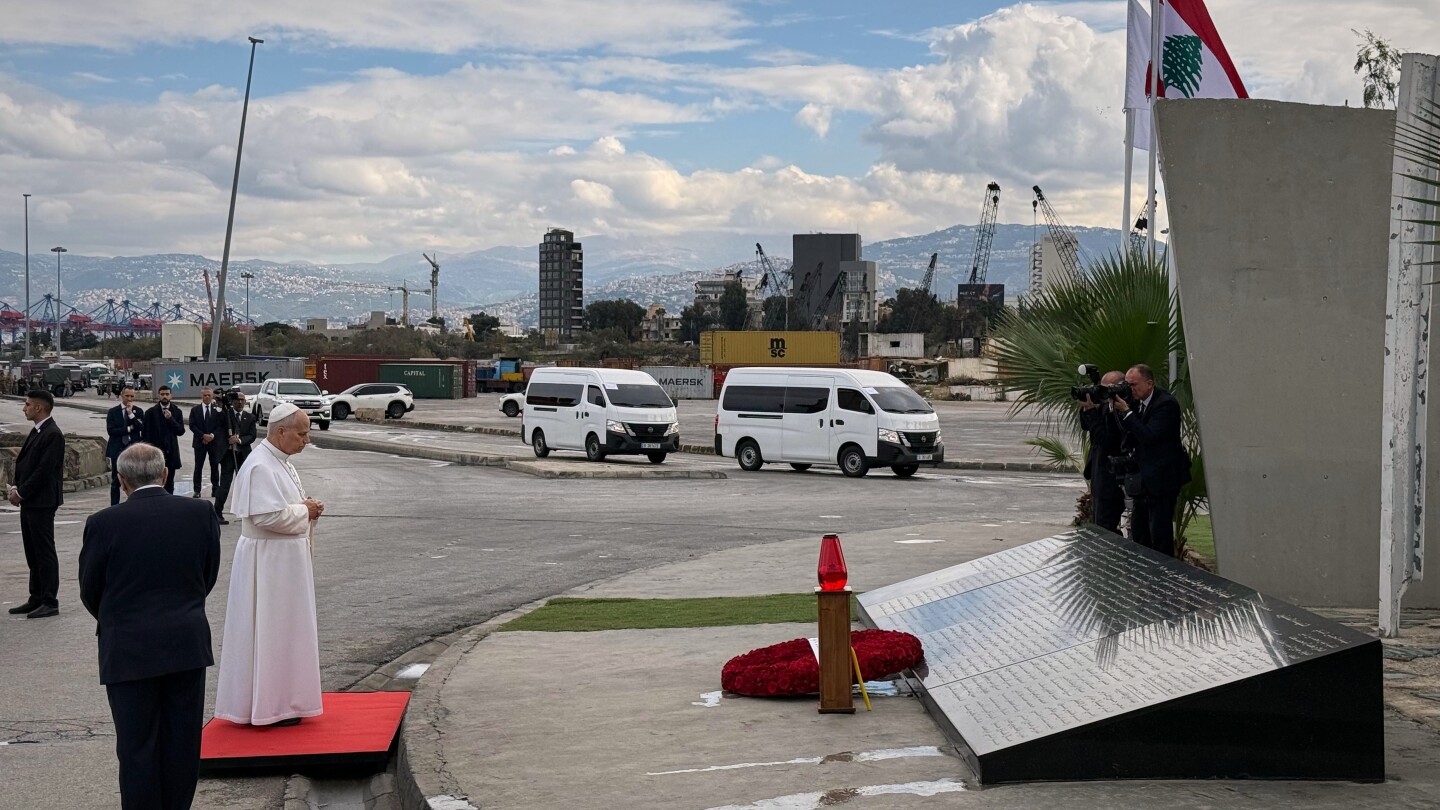
BEIRUT — Pope Leo XIV concluded his inaugural international journey with a profoundly symbolic visit to the devastated Beirut port, the epicenter of the catastrophic 2020 explosion that claimed 218 lives and became an enduring emblem of Lebanon’s systemic governance failures.
On Tuesday, the pontiff offered prayers and personal consolation to grieving families at the blast site, where relatives stood holding photographs of their lost loved ones. The emotional gathering occurred beside the skeletal remains of the last standing grain silo and mountains of incinerated vehicles—tangible remnants of the August 4 disaster that detonated hundreds of tons of improperly stored ammonium nitrate, causing billions in damages.
Five years after the tragedy, no officials have been held accountable in an investigation repeatedly obstructed by political interference. “The visit clearly sends the message that the explosion was a crime,” stated Cecile Roukoz, who lost her brother Joseph in the blast. “The country should end impunity and ensure justice is served.”
The papal visit included an earlier stop at De La Croix psychiatric hospital, where Leo emphasized societal responsibility toward vulnerable populations. “We cannot forget those who are most fragile,” he declared, criticizing societies that “race ahead at full speed clinging to false myths of wellbeing” while ignoring poverty and vulnerability.
Mireille Khoury, whose 15-year-old son Elias perished in the explosion, articulated the families’ unwavering demand for accountability. “Justice is the foundation of building any country,” she told The Associated Press. “Our children were killed in their homes because someone kept ammonium nitrate near a residential area.”
While acknowledging the symbolic comfort of the papal visit, Khoury emphasized that only concrete justice could partially soothe the enduring anger: “I will not say this anger will fully disappear until justice is served.”
The damaged grain silos—whose preservation families successfully advocated for as both memorial and potential evidence—stand as physical testament to the unresolved tragedy. Although the port has regained partial functionality, reconstruction remains incomplete, mirroring Lebanon’s broader struggle with economic collapse, political paralysis, and the aftermath of regional conflicts.