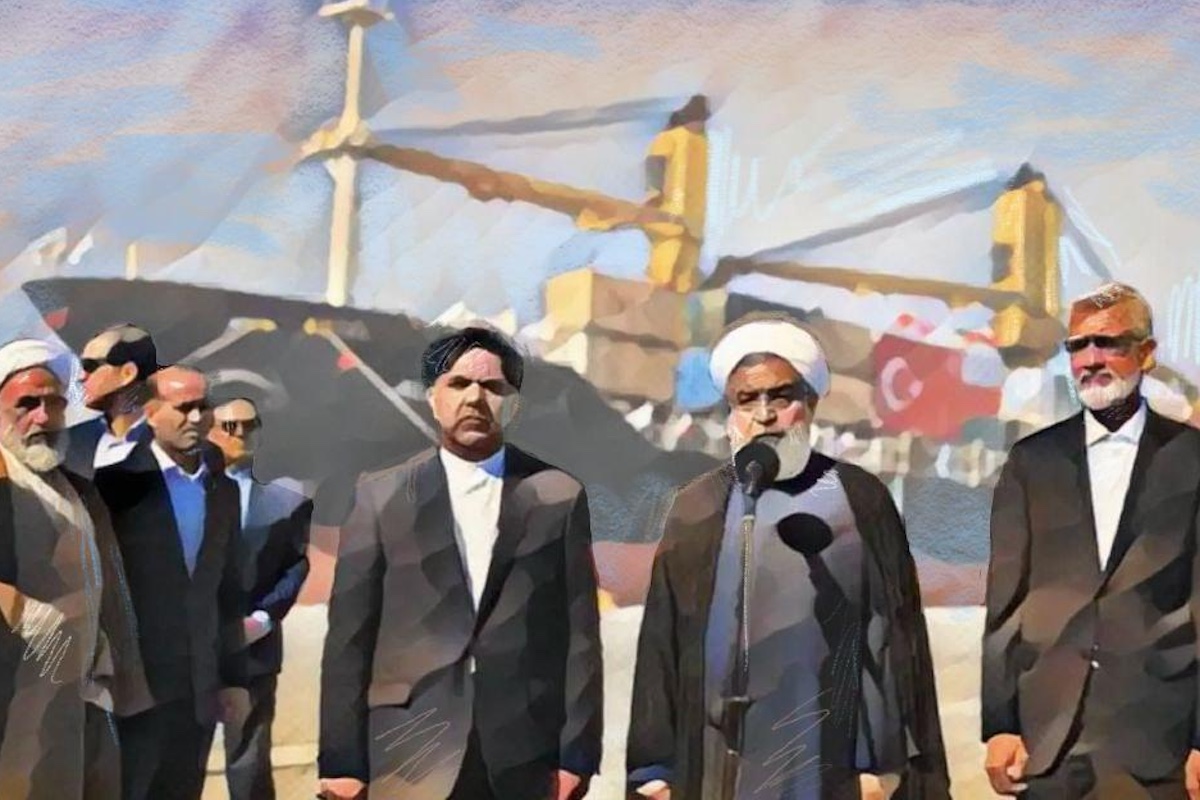
In a significant geopolitical reversal, the United States has reinstated a crucial sanctions waiver for Iran’s Chabahar Port, marking a victory for Central Asian connectivity ambitions and India’s regional strategic interests. The October 30, 2025 decision by the State Department came just six weeks after its surprising September revocation of the 2018 exemption under the Iran Freedom and Counter-Proliferation Act (IFCA).
The waiver restoration enables India to continue its 10-year management contract of the strategic Gulf of Oman port, which serves as a vital trade gateway for landlocked Central Asian nations and Afghanistan. This development directly counters China-Pakistan Economic Corridor’s Gwadar port located merely 100 miles away, highlighting the ongoing infrastructure competition in South Asian maritime routes.
Central Asian capitals have welcomed Washington’s pragmatic realpolitik approach, recognizing Chabahar’s role in providing alternative trade routes beyond existing corridors through China, Russia, or the Middle Corridor. The port now offers faster export pathways for regional commodities including minerals, cotton, and energy products to global markets.
Eldor Aripov, Director of Uzbekistan’s Institute for Strategic and Regional Studies, emphasized to The Times of Central Asia that ‘the waiver removes a major bottleneck to reliable access to the Indian Ocean, giving Uzbekistan and our neighbors one more route for our exports and imports. Diversification—which does not mean exclusivity—strengthens Central Asia’s strategic autonomy.’
The decision has revitalized multiple transport initiatives including the Lapis Lazuli route (Afghanistan-Turkmenistan-Azerbaijan-Georgia-Turkey), the Five Nations Railway Corridor (China-Afghanistan-Tajikistan-Kyrgyzstan-Iran), and the 2016 Ashgabat Agreement involving Kazakhstan, Uzbekistan, Turkmenistan, Iran, India, Pakistan, and Oman.
Recent diplomatic activity underscores the waiver’s significance: Afghan and Indian ministers met in New Delhi to explore Chabahar’s potential in reducing Kabul’s dependence on Pakistani routes, while Kazakh and Qatari officials discussed enhanced economic connectivity in Doha.
The sustained sanctions exemption signals Washington’s recognition of India’s rising global presence and acknowledges Central Asia’s pursuit of north-south economic integration without sacrificing strategic autonomy to regional powers.