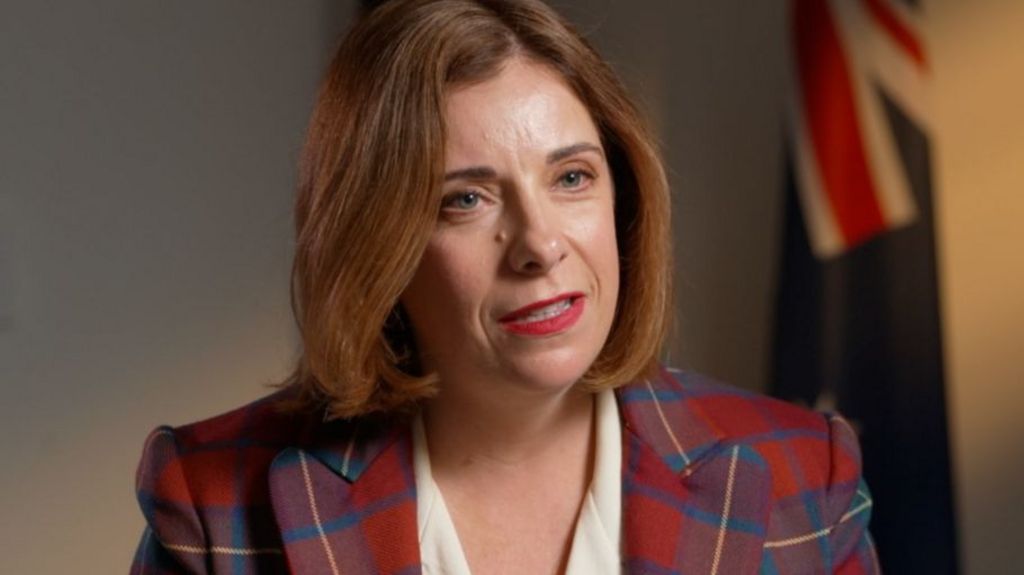
In a bold move that has drawn global attention, Australia’s Communications Minister Annika Wells has declared her government will not be intimidated by major technology corporations opposing the nation’s groundbreaking social media ban for users under 16. The policy, set to take effect December 10, requires platforms including Meta, TikTok, YouTube, and Snapchat to implement “reasonable steps” preventing underage access to accounts.
Minister Wells articulated the government’s firm stance in an interview with the BBC, emphasizing that Australia stands “on the side of parents, not the platforms.” She dismissed concerns from tech companies that have criticized the ban as an ineffective solution, noting they’ve had “15 to 20 years” to address documented harms caused by their platforms without sufficient action.
The Australian official revealed that multiple international leaders have contacted her government seeking guidance on implementing similar measures, positioning Australia as a pioneer in digital child protection. “We’re pleased to be the first, we’re proud to be the first,” Wells stated, adding that her administration stands ready to assist other jurisdictions pursuing comparable legislation.
The policy faces potential international headwinds, particularly from the United States where former President Donald Trump has pledged to defend tech companies against foreign regulations. Australia’s e-Safety Commissioner has already been summoned to testify before US Congress regarding the controversial measures.
Despite acknowledging potential implementation challenges, Wells characterized the policy as an evolving “treatment plan rather than a cure” that will be reviewed over the next two years. The minister drew parallels to Australia’s alcohol restrictions for minors, noting that while some underage drinking still occurs, the public health justification for protective legislation remains valid.
The ban has not been without criticism. Some digital safety experts argue alternative measures like enhanced parental controls and improved digital education might prove more effective. Legal challenges have emerged, including a High Court case brought by two teenagers arguing the policy violates children’s rights. Additionally, concerns have been raised about the exclusion of online gaming platforms like Roblox, which Wells acknowledged as an area of ongoing scrutiny.
Personalizing the policy’s implications, Wells shared that managing screen time presents challenges in her own household with three young children, a responsibility that primarily falls to her husband due to her demanding travel schedule. She framed the legislation as her contribution to supporting parents nationwide in their digital parenting struggles, noting that “you can’t parent an algorithm.”