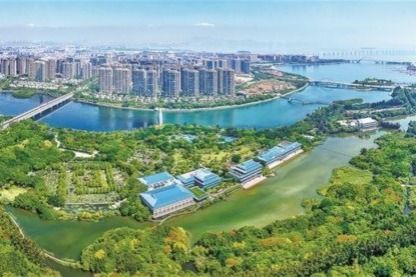
China has dramatically transformed its role in global environmental governance, evolving from a participating nation to a definitive leader in climate action, according to officials and experts speaking at a recent seminar on Ecological Civilization in Xiamen. The gathering brought together provincial leaders, national ministry officials, researchers, and business representatives to discuss China’s expanding contributions to building a sustainable global future.
Substantial environmental progress within China provides the foundation for this leadership claim. Public satisfaction with ecological conditions has remained above 90% for four consecutive years, demonstrating successful environmental protection alongside continued economic advancement. Air quality metrics show particularly dramatic improvement: concentrations of fine particulate matter (PM2.5) in major cities have plummeted by 56% compared to a decade ago, while heavily polluted days have decreased by an impressive 92%—representing the world’s most rapid air quality enhancement.
The green transition has simultaneously fueled economic growth, with China dominating the global new energy vehicle market for ten straight years. The nation’s forest coverage has expanded to over 25%, accounting for a quarter of the planet’s new green growth. These domestic achievements are now complemented by extensive international cooperation through multiple channels.
China has established 55 climate-focused South-South cooperation agreements with 43 developing nations while providing professional training to participants from over 120 countries. This effort aims to transform developing nations from passive recipients to active participants in global climate rule-making, advocating for equitable responsibility distribution and opposing green trade barriers.
Juncao technology exemplifies China’s practical contributions to global sustainability. This innovative, adaptable grass hybrid developed by Professor Lin Zhanxi serves multiple purposes—growing edible mushrooms, providing livestock feed, and enabling ecological restoration. Introduced to 109 countries, it has particularly benefited less developed regions through over 400 training sessions for 16,000 international trainees. The technology’s symbolic significance was highlighted when King Tupou VI of Tonga personally planted Juncao during a recent visit to Fujian, with many now calling it ‘friendship grass’ for its role in strengthening international bonds and improving livelihoods.