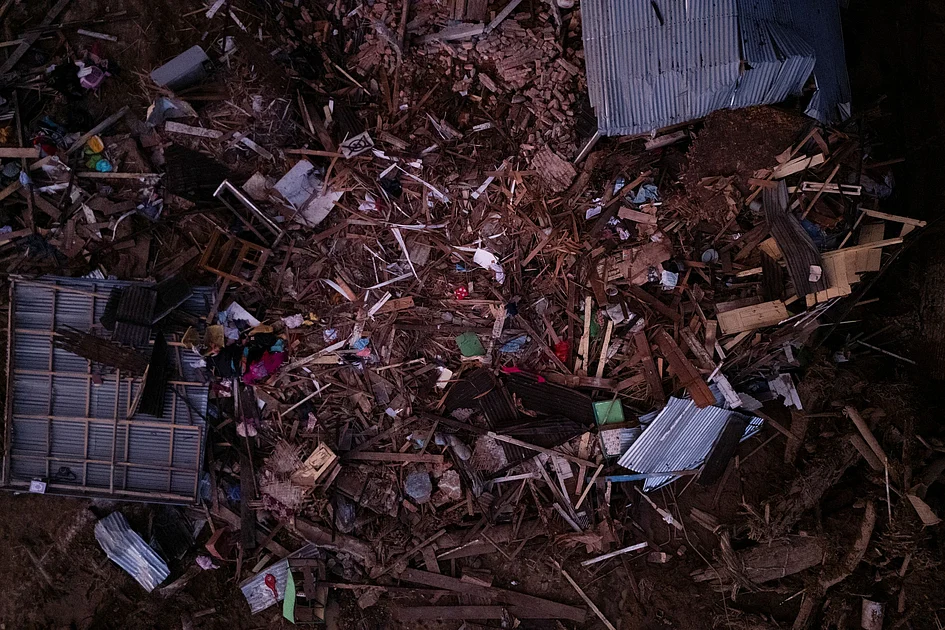
Southeast Asia confronts a catastrophic humanitarian crisis with fatalities approaching 800 after a rare tropical cyclone unleashed devastating floods and landslides across the region. The disaster’s full magnitude became apparent on Monday as improved weather conditions permitted assessment teams to survey the widespread destruction.
Indonesia bears the heaviest burden, reporting 604 confirmed deaths with an additional 464 individuals still missing. Neighboring Thailand has documented 176 fatalities, while Malaysia records three deaths from the extreme weather event. The tropical storm originated unusually in the Malacca Strait, generating torrential rainfall and powerful winds that persisted for seven days, severely complicating rescue operations.
In Indonesia’s West Sumatra province, the town of Palembayan presented scenes of utter devastation under suddenly clear skies. Hundreds of volunteers joined official crews in clearing mudslides, fallen trees, and wreckage from roadways. Residents sifted through the ruins of their homes attempting to recover documents and salvageable possessions from structures reduced to rubble. The Indonesian disaster agency reports more than 28,000 homes damaged and approximately 1.5 million people affected nationwide.
President Prabowo Subianto visited three impacted provinces, acknowledging the catastrophe while praising citizens’ resilience. “We face this disaster with resilience and solidarity. Our nation is strong right now, able to overcome this,” he declared in North Sumatra, noting that severed transportation links remained a significant challenge.
The catastrophe extends beyond Indonesia’s borders. Malaysia maintains 11,600 evacuees in emergency shelters, with authorities preparing for potential secondary flooding. Thailand’s southern provinces experienced their worst flooding in centuries, with approximately 3 million residents affected. The trading hub of Hat Yai received 335mm of rainfall on November 21—the highest single-day accumulation in three centuries—followed by persistent downpours.
Thai Prime Minister Anutin Charnvirakul has established a seven-day timeline for residents to return home, though the disaster response has faced criticism for its perceived sluggishness, potentially impacting the leader’s popularity ahead of anticipated January elections. Restoration efforts continue with 85% of water services already resumed in hardest-hit Songkhla province.
Climate scientists note this disaster continues a pattern of increasingly severe weather events across Southeast Asia, consistent with warnings about global warming intensifying extreme meteorological phenomena.