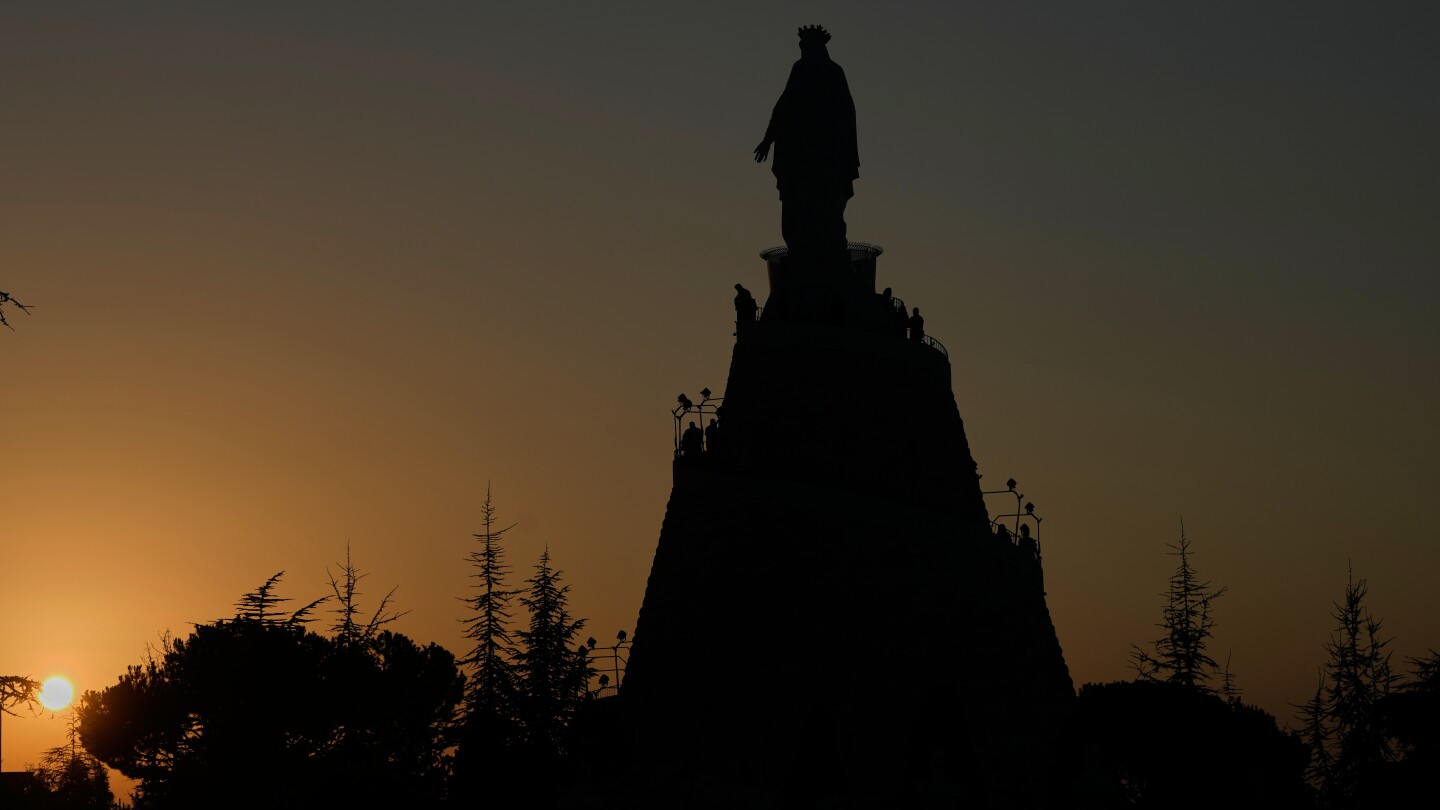
BEIRUT — While Christian populations across the Middle East have faced significant decline due to conflict and extremist violence, Lebanon presents a striking exception to this regional trend. Despite enduring numerous national crises, Lebanon’s Christian community continues to maintain substantial political influence and religious freedom, creating a unique sanctuary in a region where Christian populations have dwindled dramatically.
The recent visit of Pope Leo XIV to Lebanon underscores the Vatican’s recognition of Lebanon’s distinctive religious pluralism and serves as an encouragement for Christians to remain in the region. This stands in stark contrast to neighboring countries like Iraq and Syria, where Christian communities faced devastating persecution following the U.S.-led invasion of 2003 and the subsequent rise of the Islamic State group. IS forces systematically destroyed churches, confiscated properties, and declared caliphates across Iraq and Syria, triggering massive Christian emigration.
In Syria, recent church bombings in Damascus and concerns about the Islamist-led government under interim President Ahmad al-Sharaa have prompted many remaining Christians to consider leaving. Yet in Lebanon, Christians demonstrate remarkable resilience, clinging to their ancestral homeland despite economic and political challenges.
Lebanon’s sectarian power-sharing system, while frequently criticized for political deadlock, has effectively protected minority rights. The country’s political structure mandates that the president be a Maronite Christian, making Lebanon the only Arab nation with a Christian head of state. Christians also hold key positions including army command, central bank leadership, and senior security agency roles.
“More than half the advantage comes from Lebanon’s political system when it comes to Christians,” noted Monsignor Abdo Abou Kassm, director of the Catholic Center for Information. “There is a democratic system where people can express their opinions freely without getting killed, oppressed or sent to exile.”
Christian roots in Lebanon trace back to the faith’s earliest days, with monastic communities historically seeking refuge in mountain caves to avoid persecution. Today, Christians constitute approximately one-third of Lebanon’s 5 million people, representing the highest percentage of Christians in any Middle Eastern nation. The country recognizes 18 religious sects, with Maronite Catholics forming the largest Christian group followed by Greek Orthodox.
The historical ties between Lebanon and the Vatican run deep, with tradition holding that St. Peter established churches along Lebanon’s coast. Two men of Phoenician origin from Tyre were elected popes in the 8th century, and uninterrupted correspondence between the Maronite Church and the papacy dates back to 1215.
Despite Lebanon’s 1975-90 civil war that largely pitted Christians against Muslims, the Taif Agreement established equal parliamentary and cabinet representation between Christians and Muslims. Today, Muslims and Christians largely coexist peacefully, with Sunni Muslim cleric Khaldoun Oreimet acknowledging, “Christians are not only a community but an integral part of this land.”
The papal visit occurs amid ongoing regional tensions, including regular Israeli airstrikes and criticism from Christian politicians toward Hezbollah’s military actions. Many Christian leaders, including Maronite Church head Cardinal Bechara Rai, advocate for Lebanese neutrality in regional conflicts, emphasizing the devastating impact of foreign wars on Lebanese soil.
As Christian legislator Camille Dory Chamoun stated, “Our Lebanese identity is as important as our Christian identity. We have seen that we are paying a very high price for other people’s wars on our land.”