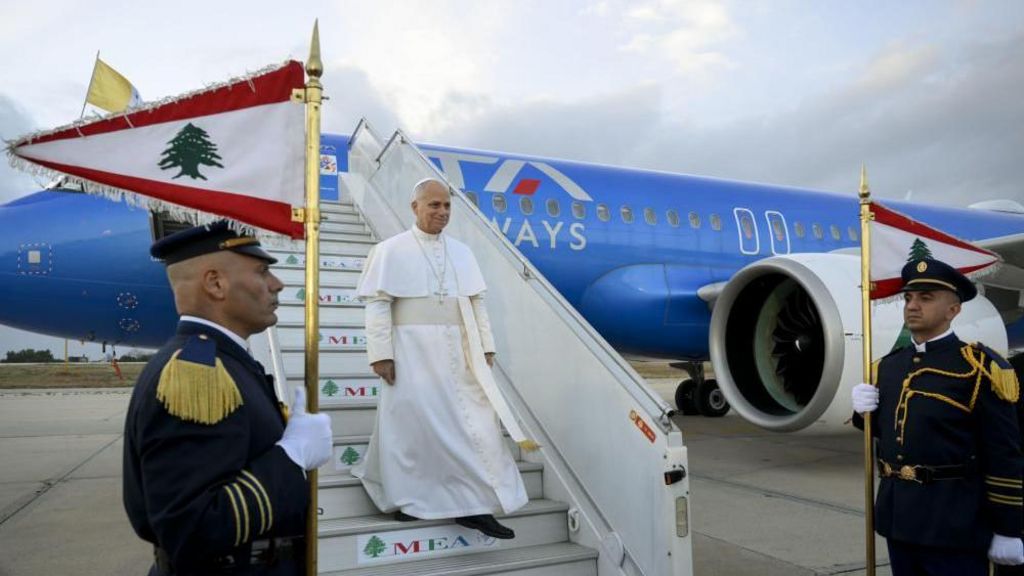
Pope Leo XIV has commenced his inaugural international journey with a strategically significant visit to Beirut, arriving precisely one week following Israeli airstrikes that targeted the Lebanese capital. This carefully orchestrated diplomatic mission underscores the Pontiff’s deliberate approach to global leadership during his initial six months in office.
The Pontiff’s itinerary commenced with a three-day engagement in Turkey, where observers noted his characteristically measured diplomatic style. Unlike his predecessor Pope Francis—known for passionate, extemporaneous remarks that occasionally required clarification from aides—Leo XIV demonstrates methodical precision in both speech and action. His interactions with journalists reflect thoughtful consideration, with each statement appearing deliberately crafted.
During his Turkish leg, the Pope delivered substantive addresses on global conflicts. Alongside President Recep Tayyip Erdogan, he criticized powerful nations for leveraging economic and military dominance, warning that such actions jeopardize humanity’s future. At a historic commemoration in Iznik marking 1,700 years since a pivotal Christian council, he unequivocally condemned weaponizing religion to justify violence or fundamentalism.
The Pontiff’s emotional depth surfaced during a profoundly moving moment at Istanbul’s Cathedral of the Holy Spirit. As he stood before Turkey’s diminutive Christian minority—who welcomed him with exceptional warmth—visible emotion overcame him, reminiscent of his overwhelmed reaction upon first appearing on St. Peter’s Basilica balcony last May.
In Lebanon, a nation grappling with severe governance challenges, Pope Leo immediately addressed political leaders, urging dedication to public service. His visit carries profound symbolism for Lebanon’s Christian community, which comprises approximately one-third of the population. Patriarch Bechara al-Rahi, leader of the Maronite Catholic Church, expressed profound gratitude, noting the Pontiff’s choice to prioritize a nation ‘still at war’ provides hope to citizens feeling abandoned.
Remarkably, even Hezbollah—the Shia Muslim political-military organization designated as terrorist by several Western nations—extended formal greetings through an open letter expressing ‘deep appreciation’ for the papal visit. Their supporters prominently displayed flags alongside Vatican and Lebanese banners during the Pope’s motorcade procession.
Despite these bridge-building efforts, limitations persist. The Russian Orthodox Church declined participation in ecumenical events in Turkey, while some critics expressed disappointment that the Pope didn’t more forcefully address Turkey’s suppression of opposition voices. In Lebanon, residents from conflict-ravaged southern villages voiced frustration over not being included in the papal itinerary.
As a South Side Chicago native unexpectedly elevated to one of the world’s most influential moral platforms, Pope Leo continues evolving into his dual role as spiritual leader and head of state. While lacking his predecessor’s disruptive urgency, he has demonstrably begun forging his distinctive voice in international diplomacy during this inaugural overseas mission.