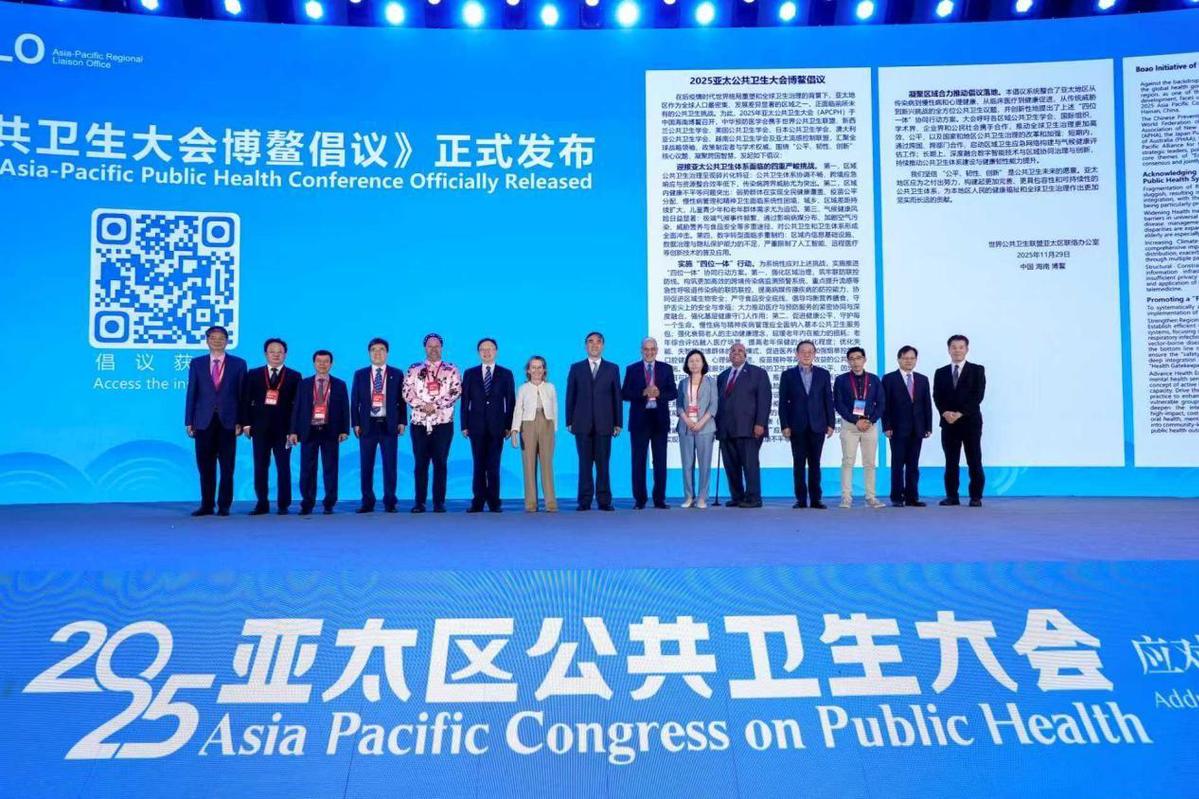
Public health authorities from across the globe have issued a compelling call for enhanced international cooperation to establish a more equitable, resilient, and innovative global health architecture. This urgent appeal was formalized through a joint initiative launched during the 2025 Asia Pacific Congress on Public Health, convened from Friday to Sunday in Boao, China’s Hainan province.
The collaborative effort brings together the Chinese Preventive Medicine Association, the World Federation of Public Health Associations, and national public health associations from New Zealand, the United States, Japan, Australia, and Vietnam, alongside the Asia Pacific Alliance for the Control of Influenza. These organizations collectively addressed the complex public health challenges confronting the Asia Pacific region, which hosts over half of the world’s population.
The comprehensive initiative outlines a strategic ‘four-in-one’ action framework designed to address critical gaps in regional health governance, widening health disparities, climate change-driven health threats, and barriers to digital transformation in healthcare.
Key components include establishing robust cross-border surveillance and early warning systems for infectious diseases, enhancing preparedness for acute respiratory infections including influenza, and strengthening cooperation on vector-borne disease control and regional biosafety. The plan further emphasizes integrating chronic disease management and mental health services into core public health programs, with particular focus on vulnerable populations including elderly citizens and individuals with disabilities.
Addressing climate-related health risks, the initiative advocates for targeted risk assessment mechanisms, expanded implementation of climate-health technologies, and accelerated development of climate-resilient health infrastructure. Simultaneously, it highlights the necessity of leveraging digital technologies to strengthen health systems while ensuring technological innovation reduces rather than exacerbates existing health inequalities.
The congress served as a platform for knowledge exchange, featuring presentations by more than 100 medical and public health experts that attracted over 750 participants worldwide, signaling strong global commitment to advancing these critical health security objectives.