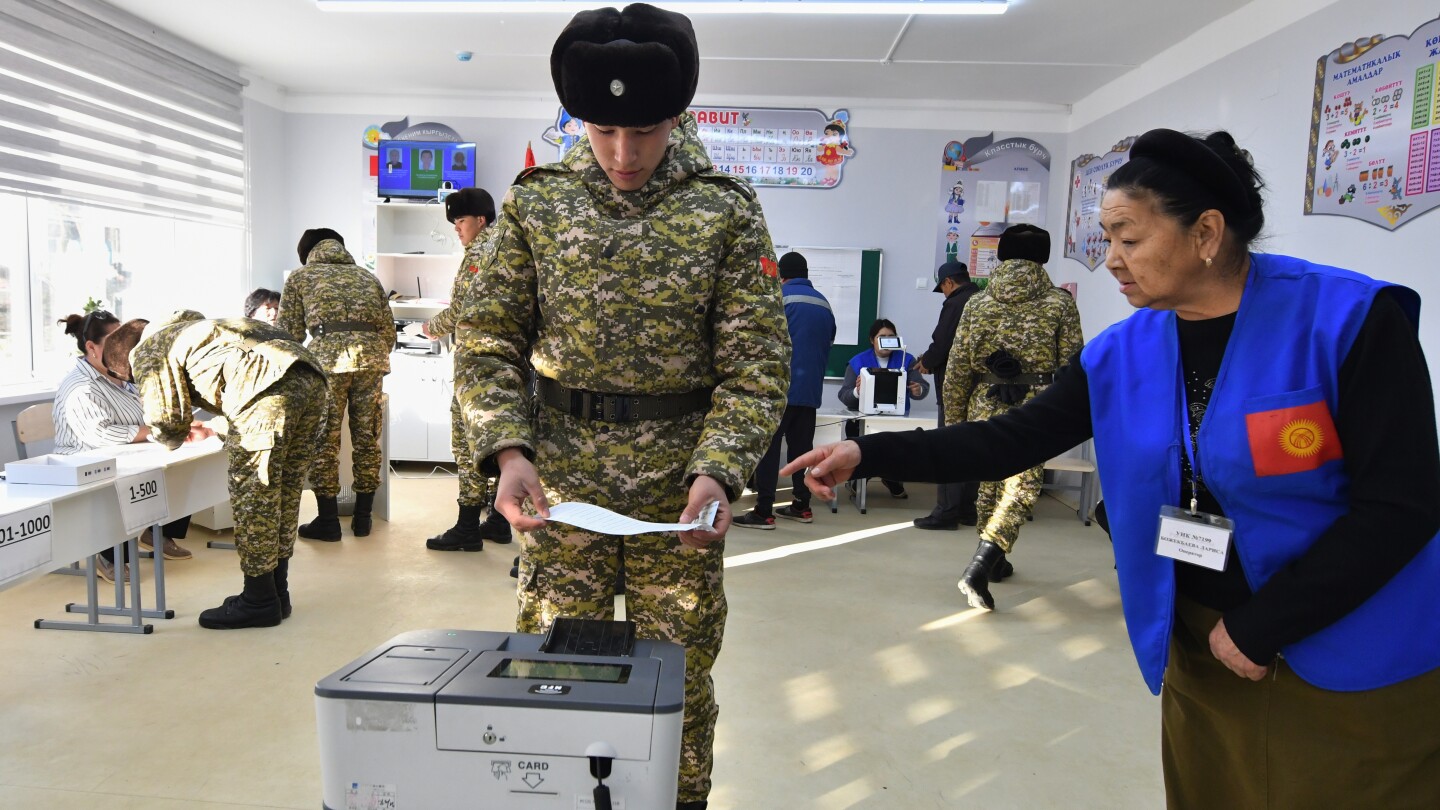
Voters in Kyrgyzstan headed to the polls on Sunday for an unscheduled parliamentary election conducted under circumstances that critics describe as a systematic erosion of democratic norms. The electoral process unfolds against a backdrop of detained opposition leaders and shuttered independent media outlets, signaling a profound political shift in this Central Asian nation.
President Sadyr Zhaparov, who has consolidated power since assuming office, appears poised to strengthen his parliamentary majority through this early ballot. Officials justified the expedited timeline by citing a need to avoid proximity to the scheduled 2027 presidential election.
Substantial electoral reforms have reshaped the political landscape, with the nation divided into 30 constituencies each electing three representatives to the 90-seat Jogorku Kenesh (unicameral parliament). Among 467 registered candidates, a gender quota mechanism mandates the election of at least one female legislator per district.
Political analysts attribute Zhaparov’s anticipated electoral success to Kyrgyzstan’s robust economic performance, partially driven by the country’s strategic positioning amid international sanctions against Russia. As a participant in Russian-led economic and security alliances and host to a Russian military installation, Kyrgyzstan maintains strong ties with Moscow while having previously accommodated a U.S. air base during Afghanistan operations. The nation remains one of the most economically vulnerable states to emerge from the Soviet collapse, heavily reliant on Russian economic assistance.