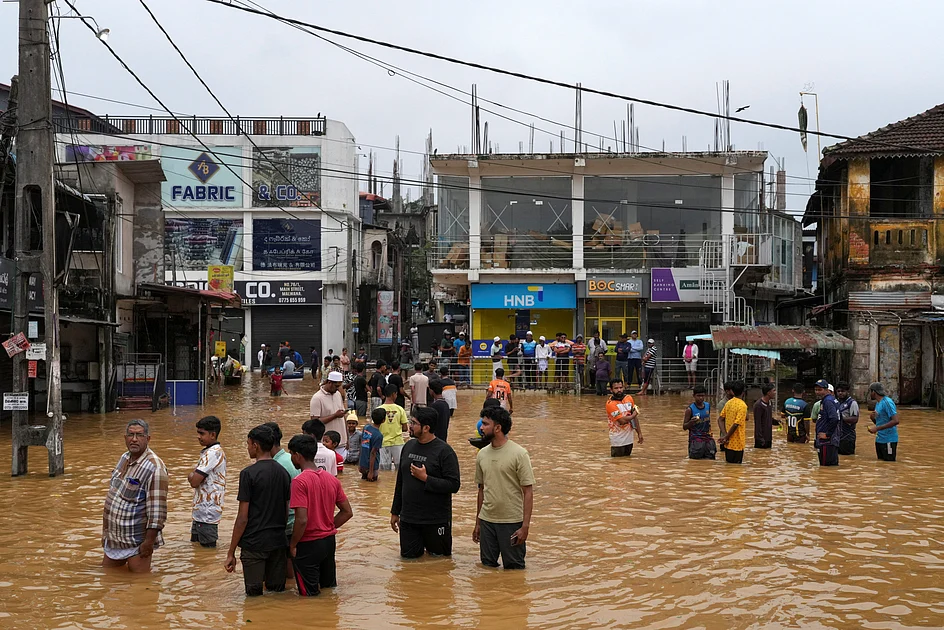
Sri Lanka is confronting a severe humanitarian crisis in the wake of Cyclone Ditwah, with the official death toll surging to 159 individuals. The Disaster Management Centre (DMC) has confirmed an additional 203 persons remain missing as the nation struggles with the extensive devastation.
While the cyclone itself moved away from the island on Saturday, its legacy continues to unleash chaos. The capital, Colombo, is now battling significant flooding in its northern districts. Officials attribute this new threat to rising water levels in the Kelani River, caused by heavy upstream rains that followed the storm’s passage.
The scale of displacement is staggering. Preliminary reports indicate over 20,000 homes have been completely destroyed, forcing approximately 122,000 citizens into government-operated temporary shelters. A further 833,000 people have been adversely affected and are in urgent need of humanitarian assistance.
In response to the catastrophe, President Anura Kumara Dissanayake has declared a nationwide state of emergency. This measure aims to streamline disaster response and facilitate international aid coordination. The Sri Lankan government has officially appealed for global support.
International relief efforts are underway. India spearheaded the response, delivering critical relief materials and deploying two helicopters with crew members to conduct aerial rescue operations. Japan has also committed assistance, announcing plans to dispatch an assessment team to evaluate immediate needs on the ground.
Despite the subsiding rains, access remains a critical hurdle. Several key roads in the worst-hit central provinces are still impassable, complicating relief distribution. Furthermore, a collapse of infrastructure has left nearly one-third of the population without electricity or clean running water due to ruined power lines and flooded water purification plants. Widespread internet disruptions have further hampered communication efforts.
This event now stands as Sri Lanka’s most lethal natural disaster since 2017, drawing grim comparisons to historical tragedies that have previously battered the island nation.