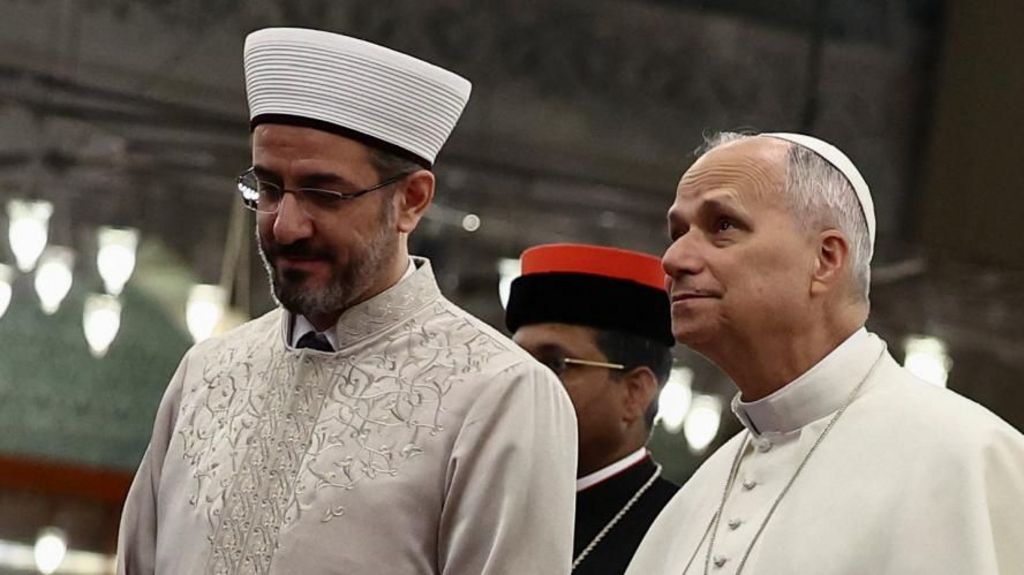
In a significant demonstration of interfaith dialogue, Pope Leo XIV visited Istanbul’s iconic Sultan Ahmed Mosque, commonly known as the Blue Mosque, marking his first visit to a Muslim place of worship since assuming the papacy in May. The Pontiff demonstrated profound reverence by bowing upon entering the magnificent structure, though notably refrained from praying within the mosque—a departure from the practices of his two immediate predecessors.
The Vatican characterized the visit as undertaken ‘in a spirit of reflection and listening, with deep respect for the place and for the faith of those who gather there in prayer.’ The carefully orchestrated tour was conducted alongside local Muslim leaders, emphasizing mutual respect and understanding.
This symbolic gesture forms a central component of the Pope’s four-day diplomatic journey to Turkey, with subsequent travels planned to Lebanon. The visit continues the interfaith bridge-building legacy planned by his predecessor, Pope Francis, which Pope Leo XIV has embraced wholeheartedly since his election.
Following the mosque visit, the Pope received a formal welcome at St. George’s Cathedral from Patriarch Bartholomew, spiritual leader of the Eastern Orthodox Church, further highlighting the trip’s ecumenical dimensions.
The Blue Mosque, officially named after Ottoman Sultan Ahmed I who commissioned its construction between 1603-1617, stands as an architectural marvel adorned with thousands of brilliant blue and turquoise ceramic tiles. The monument attracts millions of annual visitors and has served as a historic venue for papal interfaith engagement, having hosted Pope Francis in 2014 and Pope Benedict XVI in 2006.
The tradition of papal mosque visits began with Pope John Paul II’s groundbreaking 2001 visit to Damascus’ Umayyad Mosque. Pope Leo’s continuation of this tradition occurs against a backdrop of his warning against global conflict escalation, with him emphasizing that ‘the future of humanity is at stake.’
In Lebanon, where approximately one-third of the population identifies as Christian, the Pontiff is scheduled to engage with diverse faith leaders and youth representatives. The journey will culminate in a solemn Mass at the Beirut waterfront, site of the devastating 2020 port explosion that claimed over 200 lives and injured 7,000 others, serving as both memorial and prayer for healing and reconciliation.