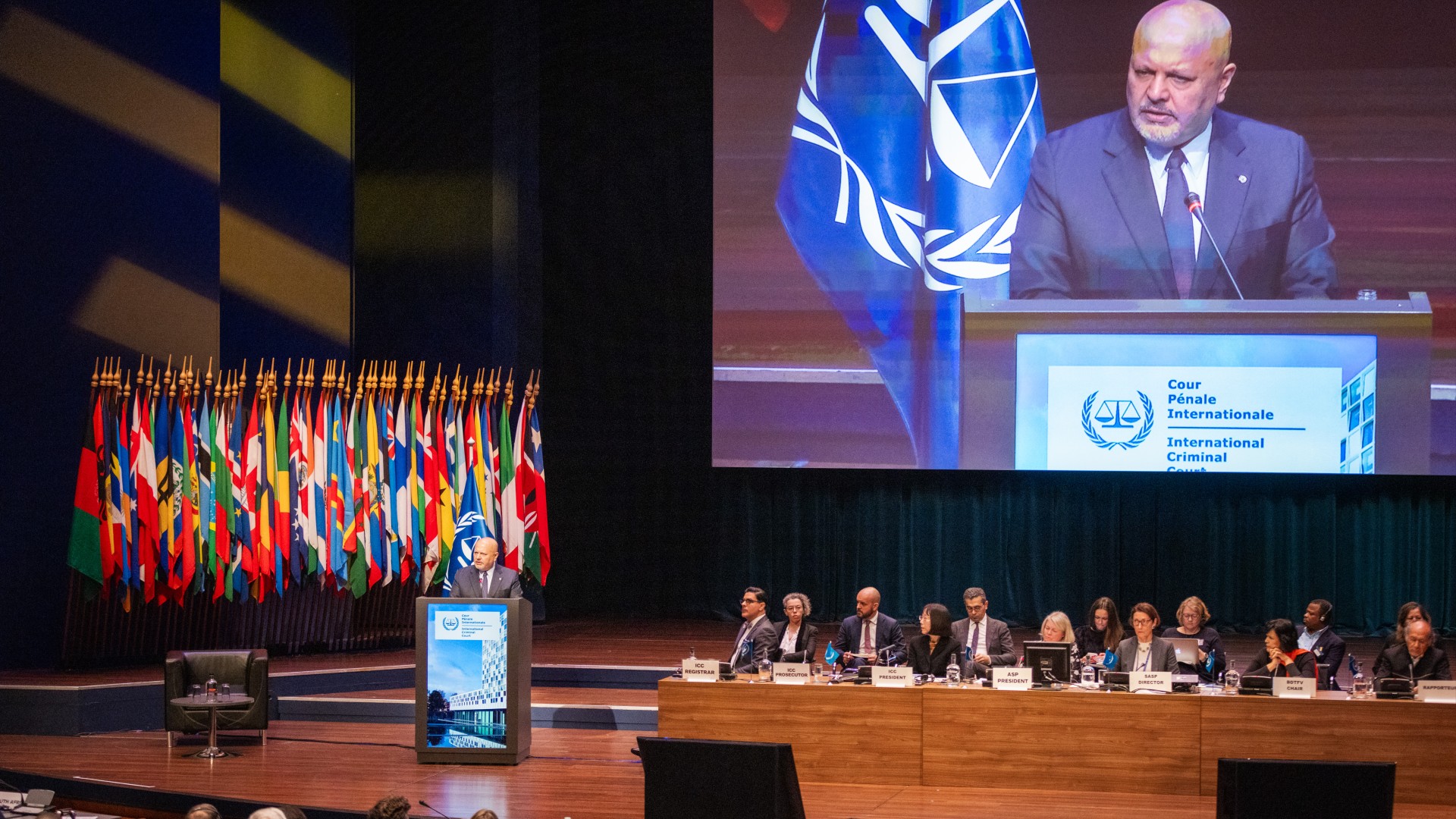
The International Criminal Court faces mounting institutional uncertainty as its Assembly of States Parties convenes in The Hague amid prolonged delays in an externally-managed investigation into Chief Prosecutor Karim Khan over alleged sexual misconduct claims. The unprecedented outsourcing of this probe to the UN’s Office of Internal Oversight Services (OIOS) has created legal ambiguities and operational paralysis within the world’s permanent war crimes tribunal.
Khan, who vehemently denies the allegations, has been on leave since May pending the investigation’s outcome, leaving deputy prosecutors to manage the Office’s docket. The ASP Bureau initially anticipated the OIOS report by October’s end, but complete silence from both the ASP and UN investigators has left the court in operational limbo with no updated timeline provided.
This leadership vacuum coincides with unprecedented external pressures on the ICC, particularly from the United States. The Trump administration imposed financial and visa sanctions against Khan, his deputies, and six judges in response to the court’s investigation into alleged Israeli war crimes in Gaza. These sanctions have reportedly caused significant case delays, including shelved arrest warrant applications for two Israeli ministers regarding apartheid charges.
Legal experts describe the situation as “uncharted territory” with profound implications for international justice. The decision to bypass the ICC’s own Independent Oversight Mechanism (IOM)—the body expressly mandated for such investigations—has raised serious procedural concerns. Although ASP President Paivi Kaukoranta cited “particular circumstances” and perception issues for outsourcing, no legal basis for this decision has been publicly provided, contradicting Article 46 of the Rome Statute and Rule 26 of the ICC’s Rules of Procedure.
The lack of transparency extends to the judicial panel that will eventually review OIOS findings. Their identities, terms of reference, and working methods remain confidential, with only vague assurances about geographical and gender representation. This opacity has drawn criticism from human rights organizations and legal scholars alike, who note the apparent contradiction between the court’s mandate for judicial transparency and its handling of this internal matter.
With multiple investigations—including those concerning Palestine, Ukraine, Darfur, Libya, DRC, and the Philippines—potentially affected by the leadership uncertainty, observers warn that the court’s ability to fulfill its mandate is increasingly compromised. The ongoing crisis highlights the fragile intersection of international justice, geopolitical pressures, and institutional governance at the world’s foremost permanent war crimes tribunal.