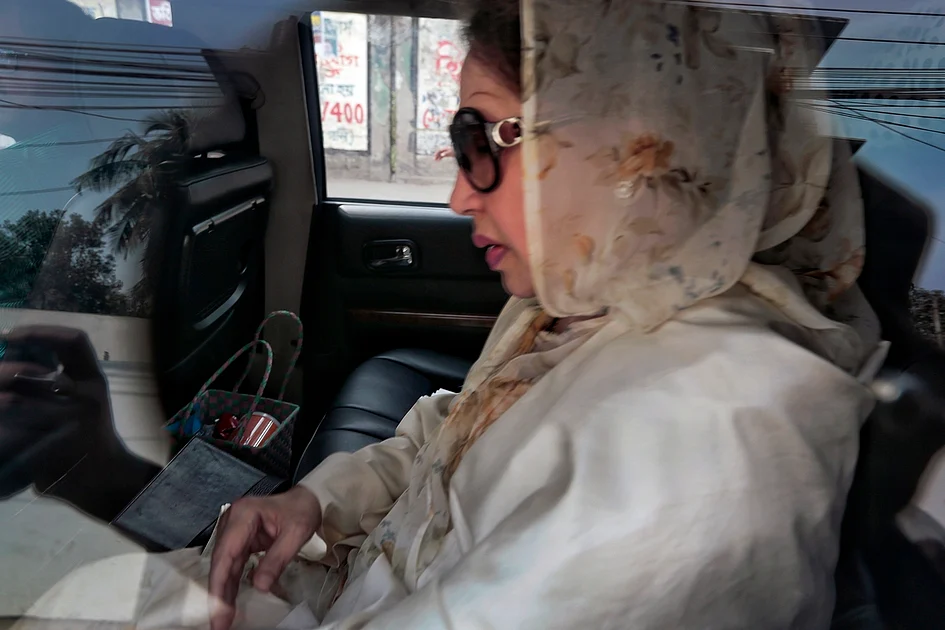
Bangladesh’s former Prime Minister Khaleda Zia, an 80-year-old opposition leader, remains in critical condition at a hospital intensive care unit after her health deteriorated significantly following admission on November 23rd with severe lung infection symptoms. Medical authorities have characterized her condition as extremely grave, according to statements from her Bangladesh Nationalist Party (BNP) officials.
The octogenarian politician, who served three terms as the nation’s premier, suffers from multiple chronic health complications including cardiac issues requiring a permanent pacemaker, liver and kidney dysfunction, diabetes, and respiratory ailments. Her deteriorating health has prompted an outpouring of concern from senior party members and supporters who gathered at the medical facility seeking updates on her condition.
From his London residence, Zia’s exiled son Tarique Rahman appealed to the Bangladeshi public for prayers while acknowledging his inability to return home due to circumstances beyond his control. Rahman, who has resided in the UK since 2008, expressed profound emotional distress at being separated from his mother during this medical crisis.
Zia’s current health battle occurs against a complex political backdrop. Previously imprisoned on corruption charges in 2018 under Prime Minister Sheikh Hasina’s administration, she was released last year following Hasina’s ouster from power. The interim government leadership, including Muhammad Yunus, has emphasized Zia’s symbolic importance as an inspirational figure during Bangladesh’s transitional period toward democracy.
Despite her critical health condition, Zia had previously committed to participating in the upcoming February 2026 elections, where her BNP party is considered a leading contender. Her illness now raises significant questions about both her political future and the broader landscape of Bangladeshi politics.