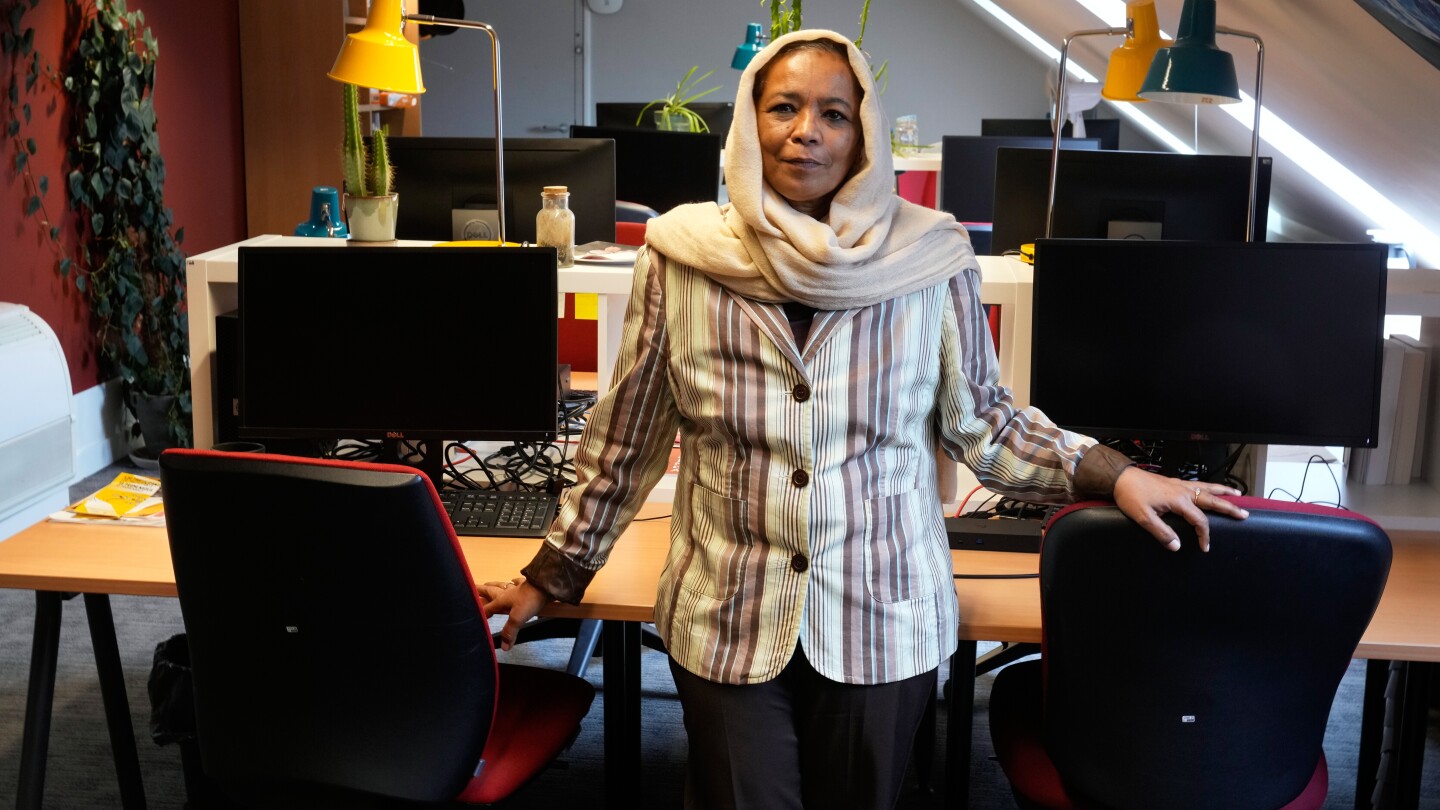
In the subdued lighting of Paris’s French National Institute for Art History, Sudanese archaeologist Shadia Abdrabo meticulously examines photographic evidence of Neolithic pottery dating back to 7,000 B.C. Her presence in France represents a critical emergency mission: to create a comprehensive digital inventory of Sudan’s cultural heritage while her homeland suffers devastating conflict.
The devastating civil war between Sudan’s Rapid Support Forces (RSF) and Sudanese Armed Forces (SAF), erupting in April 2023, has precipitated a cultural catastrophe of unprecedented scale. Multiple museums have been systematically looted and destroyed, including the regional museums in El Geneina and Nyala which were nearly obliterated. Most alarmingly, Khartoum’s National Museum—housing approximately 100,000 artifacts spanning millennia—was ransacked by militias who documented their destruction through social media videos.
This institution contained priceless treasures including prehistoric relics from the Kerma Kingdom, artifacts from the Napatan era of Kushite rule, remains of the pyramid-building Meroitic civilization, and later Christian and Islamic collections. Among the most significant losses were mummies dating to 2,500 B.C.—some of the world’s oldest and most archaeologically important—along with royal Kushite treasures.
UNESCO has raised urgent alarms about the systematic plundering, noting the threat to Sudanese culture has reached unprecedented levels. According to cultural heritage advocate Ali Nour, protective measures proved tragically insufficient: “While applications were being drafted, sites were being emptied. While risk assessments were reviewed, entire archives vanished.”
Abdrabo’s personal connection intensifies her mission. “I’m from Nubia, from the north, an area filled with monuments, archaeological sites and ancient life,” she explains, referencing a region that once rivaled ancient Egypt in power and wealth. Having fled Khartoum with her sisters as conditions deteriorated, she now works against time with funding until April 2026 to complete her digital preservation project.
The challenge is monumental. Datasets arrive in various formats—spreadsheets, handwritten inventories, decades-old photographs—and she has documented merely 1,080 objects thus far, representing approximately 20% of the national museum’s collection alone. Despite support from institutions like the Louvre and British Museum, the task remains overwhelmingly solitary.
International response has been hampered by insufficient media coverage compared to similar cultural emergencies in Afghanistan and Iraq, according to researcher Meryam Amarir. However, the recently established Sudan Cultural Emergency Recovery Fund, involving institutions like the University of Michigan’s Kelsey Museum, aims to coordinate global recovery efforts.
Geoff Emberling of the Kelsey Museum emphasizes the historical significance: “Ancient Sudan was connected through trade and military activity with Egypt, the Mediterranean world and Mesopotamia, and was the source of much of the gold available in the region. If we’re interested in these ancient cultures, then we have to be interested in Sudan.”
For Abdrabo, the emotional weight is palpable. “I cry when I talk about this,” she confesses. “My only goal is to bring back as much as possible, to do as much as I can for Sudan.” Beyond immediate destruction, she fears the war’s consequences—displaced populations, militia activity—will continue endangering cultural artifacts long after hostilities cease. Her database represents both a race against time and an act of cultural resistance, preserving what remains of Sudan’s heritage for future generations.