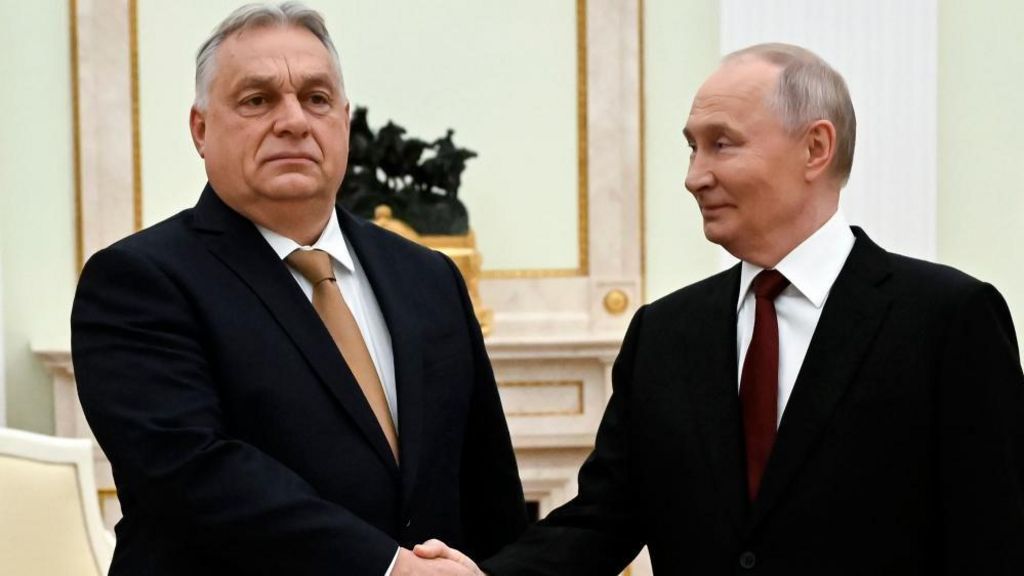
Hungarian Prime Minister Viktor Orban has conducted a high-stakes diplomatic visit to Moscow, engaging in talks with Russian President Vladimir Putin just days before crucial negotiations regarding the Ukraine conflict. This meeting marks Orban’s continued alignment with Moscow despite Hungary’s membership in both NATO and the European Union.
During their discussions, which were broadcast on Russian state television, Putin acknowledged Orban’s “balanced position on the situation in Ukraine” and expressed gratitude for Hungary’s proposal to host a potential Russia-US summit involving President Donald Trump. This Budapest “peace summit” initiative, however, was ultimately abandoned last month due to Russia’s unwillingness to compromise on its maximalist demands for ending the conflict.
The timing of Orban’s Moscow visit carries significant political implications as his Fidesz party faces potential defeat in upcoming April parliamentary elections, which would mark the first change in Hungary’s leadership in 15 years according to current polling data.
Energy security emerged as the central focus of the talks, with Orban framing the visit as part of a strategic effort to secure Russian energy supplies for Hungary, Slovakia, and Serbia during the winter months. This Moscow engagement follows Orban’s recent success in Washington, where he secured exemptions from US sanctions on Russian fuel—contingent on his continued leadership.
Orban has consistently positioned himself as a peace advocate since Russia’s 2022 invasion of Ukraine, recently claiming on Hungarian state radio that “Europe has decided to go to war in Ukraine.” He has vigorously supported Trump’s 28-point peace plan while accusing EU leaders of “war-mongering” for attempting to adapt the proposal to address Ukraine’s concerns.
In a recent communication with European Commission President Ursula von der Leyen, the Hungarian leader advocated for immediate, unconditional peace talks and direct EU negotiations with the Kremlin. He simultaneously expressed opposition to additional EU funding for Ukraine and rejected using frozen Russian assets to support Ukrainian defense efforts.
Despite Hungary’s continued energy dependence on Russia—receiving over 80% of its oil and gas and 100% of its nuclear fuel from Moscow—Orban’s recent agreements with the United States to purchase liquefied natural gas and nuclear fuel may potentially strain his relationship with Russian leadership. The Prime Minister argues that without agreements with both superpowers, Hungarian heating prices would triple next month.
Hungary faces mounting pressure from the EU to completely phase out Russian energy imports by 2027, making any Moscow agreements particularly contentious within the European bloc. The country’s trade relationship contributes approximately $5 billion annually to the Russian budget.
Political analysts suggest that both Putin and Trump have expressed clear interest in Orban’s electoral success next April, making any diplomatic achievement valuable for all parties involved. Putin previously praised Orban at September’s Valdai Forum in Sochi, celebrating the rise of “nationally-oriented political forces” across Europe and suggesting that their growth could lead to Europe’s “rebirth.”