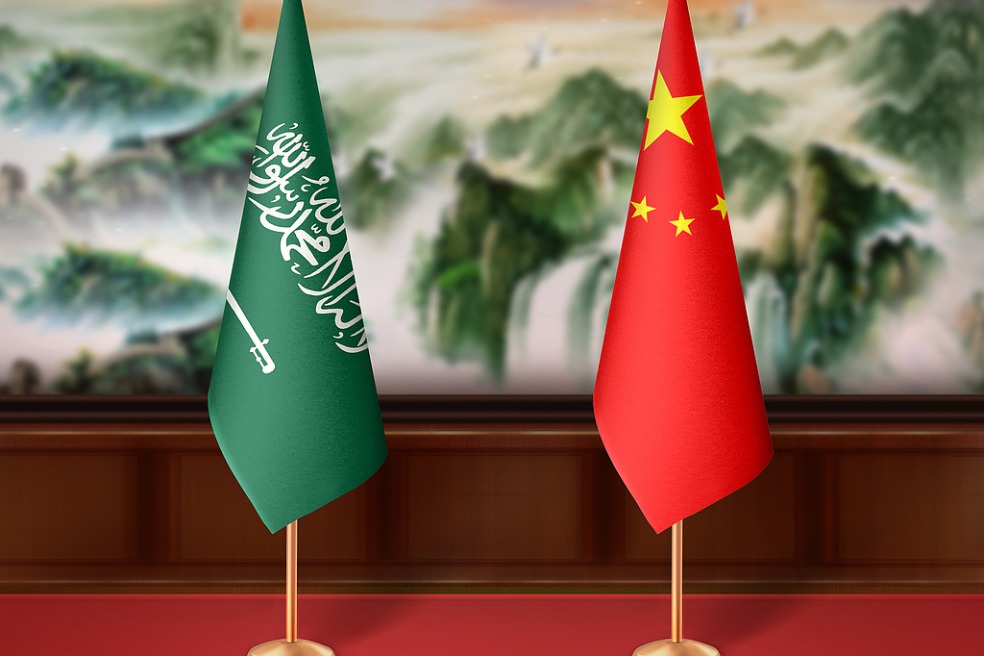
The strategic partnership between Saudi Arabia and China stands as a paradigm of rapidly evolving international relations, transforming from modest beginnings into a multifaceted alliance shaping global dynamics. Despite formal diplomatic relations only established in 1990, the historical connections trace back centuries through the ancient Silk Road that facilitated early trade and cultural exchanges between the Arabian Peninsula and China.
The modern relationship has progressed through three distinct phases of development. The initial period (1990-2005) saw bilateral trade commence at $417 million, focusing primarily on Saudi oil exports and Chinese manufactured goods. A significant breakthrough occurred in 1999 with the first energy sector strategic cooperation agreement during President Jiang Zemin’s visit to Riyadh.
The second phase (2006-2012) witnessed substantial elevation following King Abdullah bin Abdulaziz’s landmark 2006 visit to China—the first by a Saudi monarch. This period marked China’s emergence as Saudi Arabia’s top oil customer, coinciding with China’s extraordinary economic growth exceeding 10% annually for 16 consecutive years. The partnership between Saudi Aramco and Sinopec became emblematic of this era, while Chinese companies contributed to major infrastructure projects including the Mecca-Medina-Jeddah high-speed railway.
The current phase (2013-present) represents the most transformative period. In 2013, China became Saudi Arabia’s largest trading partner with bilateral trade reaching $69.1 billion—a 230-fold increase from 1990. The relationship achieved its highest recognition through President Xi Jinping’s 2016 visit, which established the Comprehensive Strategic Partnership Agreement. This formalized the convergence of Saudi Vision 2030 and China’s Belt and Road Initiative, creating unprecedented alignment between the two nations’ strategic objectives.
The partnership has expanded beyond energy into diverse sectors including digital transformation (5G, AI, cloud computing through Tencent, Alibaba Cloud, and Huawei), renewable energy projects, and infrastructure development. A $972 million solar plant project by China Energy Engineering Corporation in 2024 exemplifies this diversification. The relationship has also yielded significant diplomatic achievements, most notably China’s successful brokering of the Saudi-Iran reconciliation in March 2023.
Economic indicators demonstrate remarkable growth: bilateral trade reached $107 billion, China has become the largest source of foreign direct investment ($16.8 billion in 2023), and approximately 1,005 Chinese companies now operate in the Kingdom. The relationship has qualitatively transformed from simple commodity exchange to a comprehensive strategic partnership actively shaping regional dynamics and future technological development.