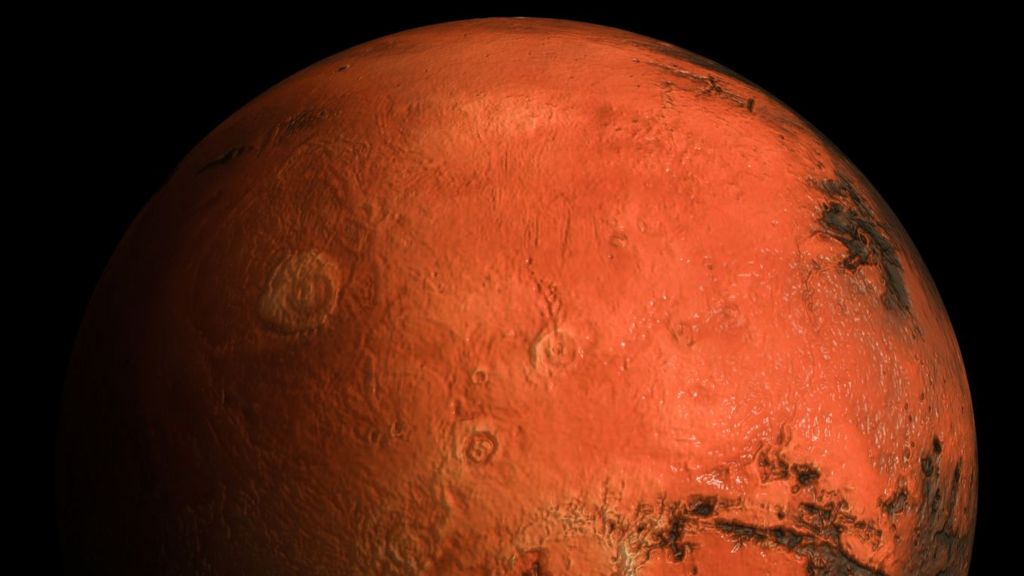
In a landmark discovery with profound implications for planetary science, researchers have documented the first conclusive evidence of electrical phenomena occurring within the Martian atmosphere. The breakthrough findings, captured by NASA’s Perseverance rover, indicate that Mars possesses the capacity to generate lightning-like discharges, fundamentally altering our understanding of the Red Planet’s atmospheric dynamics.
The scientific investigation centered on extensive data collection from Perseverance’s sophisticated SuperCam instrument, which has been systematically exploring the Jezero Crater region since its 2021 landing. After meticulously analyzing 28 hours of audio recordings and electromagnetic measurements gathered over 1,374 Earth days (equivalent to two Martian years), French researchers from the Institute for Research in Astrophysics and Planetology identified recurring electrical events colloquially termed ‘mini lightning.’
These atmospheric discharges appear intrinsically linked to Martian meteorological phenomena, particularly dust devils—small-scale whirlwinds formed by surface-heated rising air—and larger dust storm fronts. The turbulent internal mechanics of these systems appear to generate sufficient electrostatic charge to produce measurable electrical activity.
Dr. Baptiste Chide, the study’s lead author, emphasized the discovery’s significance to Reuters: ‘These discharges represent a major breakthrough with direct implications for Martian atmospheric chemistry, climate patterns, potential habitability parameters, and future exploration missions—both robotic and human.’ The research positions Mars alongside Earth, Saturn, and Jupiter as planetary bodies with confirmed atmospheric electrical phenomena.
However, the scientific community maintains appropriate caution regarding definitive conclusions. Particle physicist Dr. Daniel Pritchard noted in Nature that while the auditory evidence provides ‘persuasive evidence of dust-induced discharges,’ the absence of visual confirmation means ‘some doubt will inevitably remain regarding whether this constitutes true Martian lightning.’ He anticipates continued scholarly debate within the field.
The electrical discovery coincides with other remarkable findings from the Perseverance mission. Earlier this year, scientists identified rocks bearing unusual mineral patterns—dubbed ‘leopard spots’ and ‘poppy seeds’—that potentially resulted from chemical reactions associated with ancient microbial activity. While natural geological processes could explain these formations, NASA officials have suggested they might represent the most compelling evidence yet for past biological activity on Mars.
These collective discoveries reinforce the scientific rationale behind targeting Jezero Crater, which shows compelling evidence of having once been a river delta environment capable of sustaining liquid water—and potentially life—billions of years ago when Mars possessed a thicker atmosphere and warmer climate. Researchers now advocate deploying advanced instrumentation specifically designed to detect atmospheric discharges and more sensitive imaging systems to confirm and expand upon these groundbreaking observations.