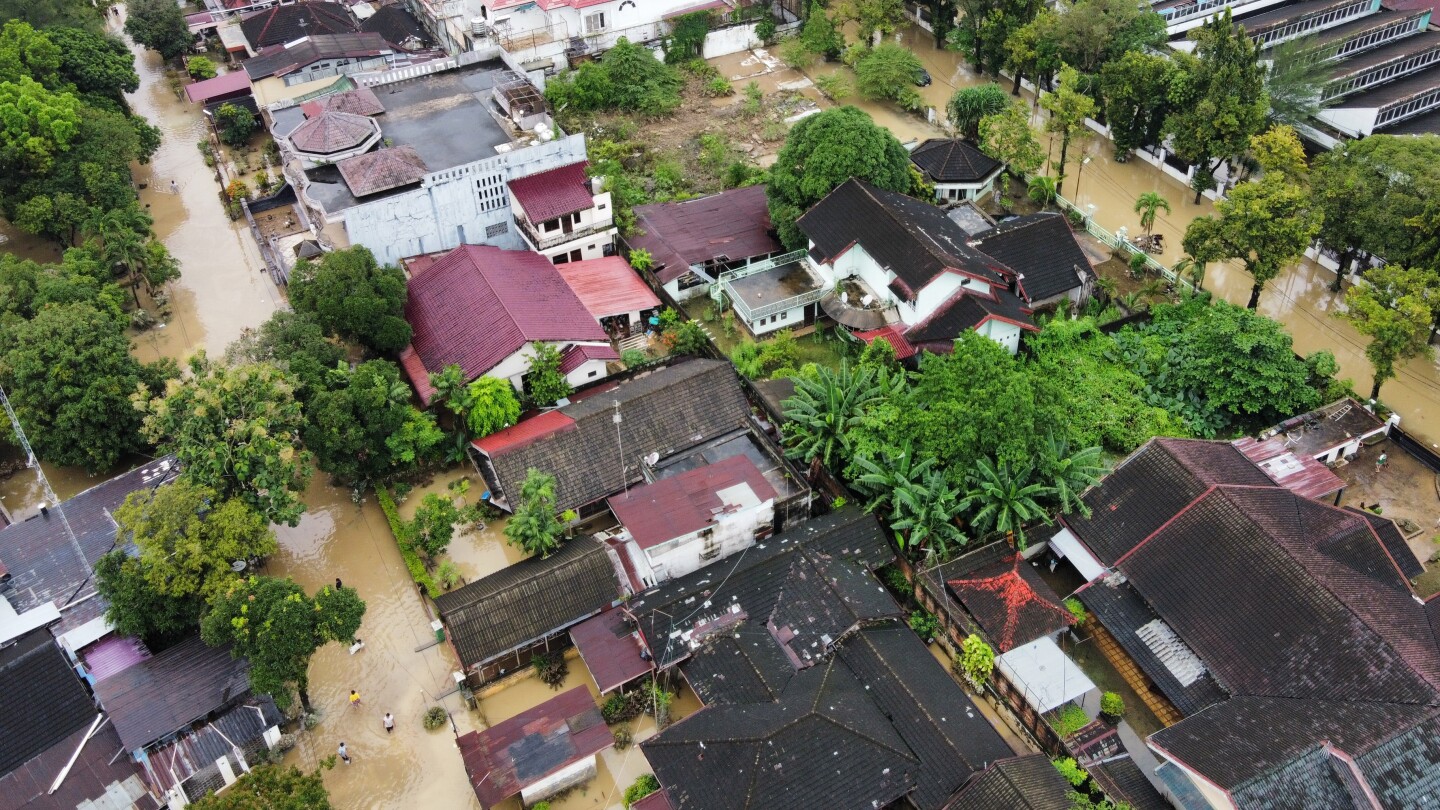
Rescue operations across Indonesia’s Sumatra island face significant challenges as damaged infrastructure and continuing severe weather compound a growing humanitarian crisis. The death toll has risen to 79 with dozens more reported missing following devastating flash floods and landslides triggered by Tropical Cyclone Senyar.
In North Sumatra province, where the most severe impact occurred, torrential monsoon rains on Tuesday caused rivers to overflow their banks. The resulting deluge swept through mountainous villages, carrying away residents and submerging over 3,200 homes and buildings. Provincial police spokesperson Ferry Walintukan reported Friday that at least 48 fatalities had been confirmed with 88 individuals still unaccounted for across 12 affected cities and districts.
The disaster response has been severely hampered by multiple factors including widespread mudslides, power outages, compromised telecommunications, and critical damage to transportation networks. Rescue teams are struggling to access isolated communities where bridges and roads have been completely washed out, preventing the delivery of heavy excavation equipment necessary for search operations.
West Sumatra province has reported similarly catastrophic damage, with flash floods across 15 cities and districts claiming 22 lives and leaving 10 people missing. The provincial disaster mitigation agency confirmed that more than 17,000 homes have been completely submerged, forcing approximately 23,000 residents to evacuate to government-operated temporary shelters. Agricultural losses include extensive damage to rice fields and livestock, with public facilities throughout the region rendered inoperable.
In Aceh province, three villages in Central Aceh district suffered particularly severe landslides triggered by the torrential rains, resulting in at least nine confirmed fatalities with two individuals still missing.
Meteorological authorities attribute the extreme weather conditions to Tropical Cyclone Senyar, which formed in the Strait of Malacca. Achadi Subarkah Raharjo, Director of Aviation Meteorology at Indonesia’s Meteorology, Climatology, and Geophysical Agency, warned that the cyclone system continues to create unstable atmospheric conditions that may persist for several days. The agency has extended its extreme weather warning due to strong water vapor supply and shifting atmospheric dynamics affecting multiple regions including Aceh, North Sumatra, West Sumatra, and Riau.
The current disaster highlights Indonesia’s particular vulnerability to seasonal weather events. The archipelago nation of 17,000 islands has millions of inhabitants living in mountainous regions or near fertile flood plains that are increasingly susceptible to climate-related disasters.