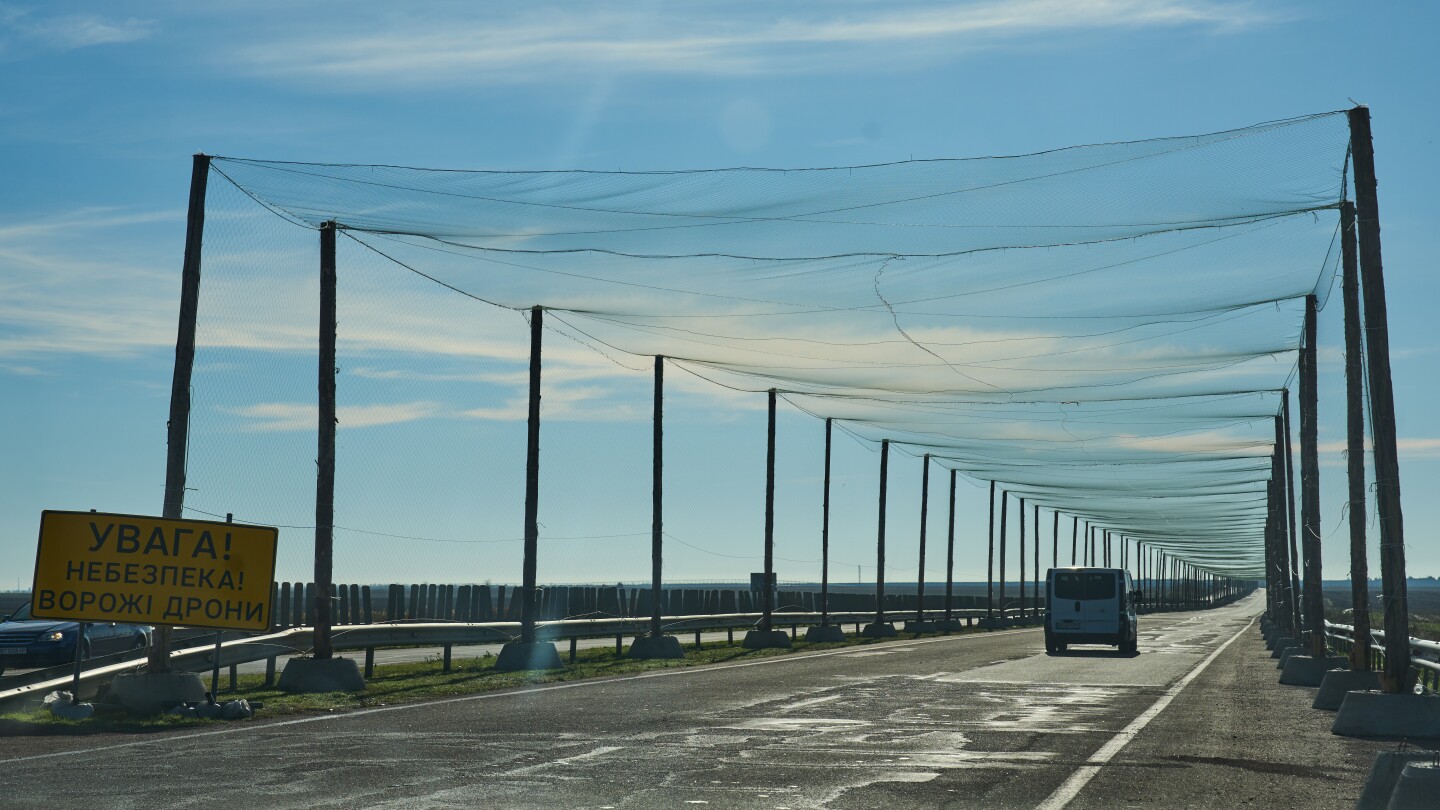
In the liberated territories surrounding Kherson, southern Ukraine, civilians continue to endure what military officials and locals describe as a systematic ‘human safari’ – relentless drone attacks transforming their communities into testing grounds for Russian warfare tactics. Despite Ukrainian forces reclaiming the city from occupation in November 2022, the region remains trapped in a harrowing cycle of violence where first-person view (FPV) drones hunt civilians with terrifying precision.
Residents like Olena Horlova from Komyshany village, merely 4 kilometers from the Dnipro River, navigate daily life under constant threat. Her survival strategies include driving without headlights after dark and keeping her daughters indoors indefinitely. The psychological warfare extends beyond immediate danger, with Russian Telegram channels routinely sharing attack footage accompanied by mocking captions and threats.
The United Nations Independent International Commission of Inquiry on Ukraine has documented these attacks as deliberate campaigns violating fundamental human rights. Their October report concluded these operations constitute crimes against humanity through murder and forcible transfer, noting Russian forces specifically target vehicles including marked ambulances and civilian cars.
Military intercepts obtained by The Associated Press reveal drones systematically scanning roadways before diving onto targets. Commander Dmytro Liashok of the 310th Separate Marine Electronic Warfare Battalion reports confronting approximately 300 daily drone incursions, with October alone seeing 9,000 drones over Kherson. His electronic warfare specialists neutralize over 90% of threats, yet the remainder causes devastating humanitarian impact.
Local hospitals bear witness to the human cost. Dr. Yevhen Haran, deputy medical chief at Kherson’s main trauma facility, describes treating blast injuries ranging from amputations to fatal wounds daily. His hospital handled 85 inpatients and 105 outpatients last month alone – all victims of shelling and drone strikes. Haran himself survived an FPV attack while traveling with his wife in August, sustaining a concussion that still affects his speech and balance.
The UN human rights office confirms short-range drones have become the leading cause of civilian casualties near frontlines, with over 200 killed and 2,000 wounded across three southern regions since July 2024. Nearly 3,000 homes have been damaged or destroyed, creating a humanitarian crisis that continues despite international awareness.
As Angelina Jolie noted during her November visit, the ever-present drone threat creates ‘a heavy presence’ that civilians endure indefinitely. For survivors like 70-year-old Nataliia Naumova, recovering from a Shahed drone attack that injured her leg, existence has reduced to mere survival rather than living. Yet through the trauma, residents maintain determination – as Horlova summarizes: ‘We held out until liberation – we’ll hold out until peace as well.’