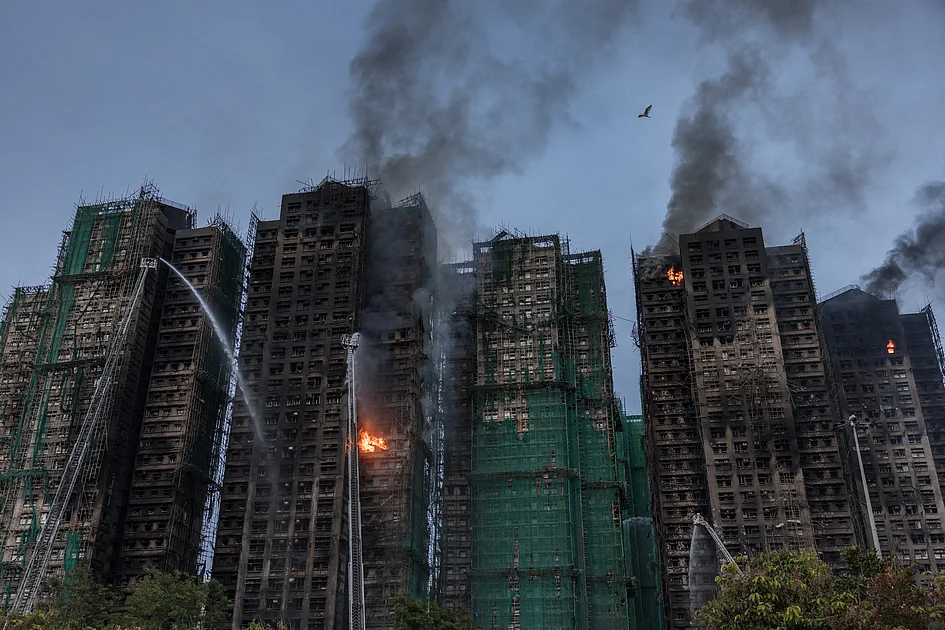
A catastrophic fire that engulfed a massive residential complex in Hong Kong has resulted in at least 94 fatalities, establishing itself as the second deadliest building blaze globally in recent decades. Government authorities confirmed the conclusion of firefighting operations on Friday, while numerous individuals remain unaccounted for following the city’s most devastating fire incident in modern history.
The tragedy has drawn inevitable comparisons to other major international fire disasters. The 2013 Kiss nightclub fire in Brazil remains the deadliest with 242 fatalities, caused by pyrotechnics igniting ceiling materials. London’s 2017 Grenfell Tower disaster, which claimed 72 lives due to flammable cladding, now ranks below the Hong Kong incident in mortality figures.
Other significant fire events include Romania’s 2015 Colectiv nightclub fire (65 deaths), Shanghai’s 2010 high-rise blaze (58 deaths) from unlicensed welding, and Hanoi’s 2023 apartment block fire (56 deaths) caused by an electrical fault. Each tragedy exposed critical safety failures, from inadequate fireproofing to corruption in safety inspections, leading to widespread reforms in building safety regulations within their respective countries.
The Hong Kong catastrophe has raised urgent questions about fire safety protocols in high-density urban environments, with investigators beginning the complex process of determining the cause and responsibility for the unprecedented loss of life.