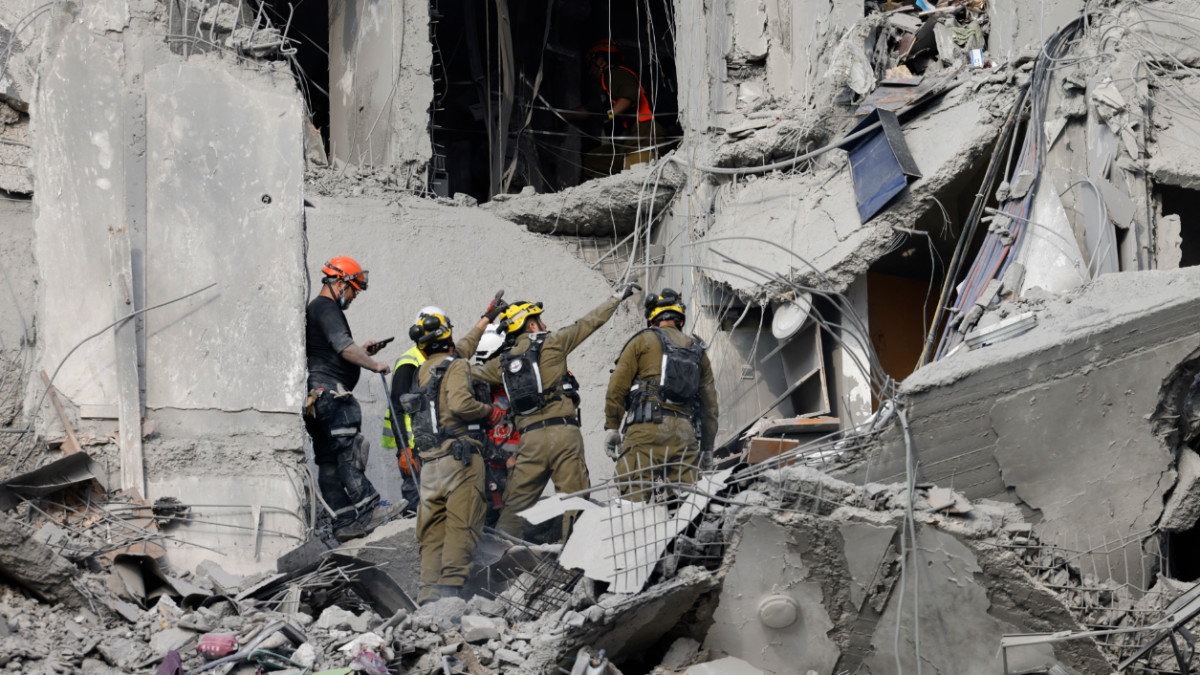
Five months following the cessation of hostilities with Iran, Israel continues to confront the severe aftermath of a 12-day conflict that left substantial destruction in its wake. Current reports indicate approximately 700 Israeli citizens have been rendered homeless due to structural damage from Iranian missile strikes, with governmental authorities experiencing significant challenges in formulating effective restoration strategies for devastated properties.
In early June, the Israeli government proposed a comprehensive initiative mandating the demolition and subsequent reconstruction of impaired residential buildings. This program would enable affected inhabitants to either occupy newly constructed apartments or divest their properties at current market valuations. Nevertheless, the plan’s ratification remains precarious due to intense political friction between the governing coalition and ultra-Orthodox factions. These groups exited the coalition earlier this year amid contentious debates regarding the conscription of Haredi youth into national service.
Affected residents report deteriorating conditions in damaged zones. A Haifa local, whose residence suffered a direct missile impact, disclosed to economic publication Calcalist that reconstruction efforts have stagnated, with incidents of looting exacerbating the situation. He emphasized that the detrimental effects extend beyond the initial attack, creating ongoing hardship. Similarly, occupants of partially damaged dwellings face paralysing uncertainty; a Ramat Gan resident noted that while the Property Tax Authority classifies their building as habitable, practical living conditions remain untenable, forcing families into a prolonged state of limbo.
Official statistics reveal that nearly 50,000 damage claims have been submitted to the Property Tax Authority, with 39,000 pertaining specifically to residential property damage. Israeli media assessments estimate the total economic impact of Iranian missile assaults to approach five billion shekels (approximately $1.53 billion).
Concurrently, a separate political controversy has emerged surrounding Israeli Social Equality Minister May Golan’s proposition to reallocate funds originally designated for Palestinian communities within Israel. During a parliamentary session held Wednesday, Minister Golan, a prominent member of Prime Minister Benjamin Netanyahu’s party and ally of National Security Minister Itamar Ben Gvir, announced intentions to cancel a three billion shekel ($918 million) program aimed at mitigating social disparities between Palestinian citizens and the broader Jewish population.
Instead, the revised strategy proposes diverting the majority of these resources to law enforcement agencies, ostensibly to address escalating crime rates in Palestinian localities. This reallocation would redirect hundreds of millions of shekels initially committed to educational facilities, public transportation, infrastructure development, housing projects, and vocational training toward the establishment of new police stations and related security operations within Palestinian towns.
The Association for Civil Rights in Israel has vehemently condemned this initiative, labelling it a direct violation of equality principles and fundamental rights for Arab citizens. The organization contends that pitting welfare programs against crime prevention creates a false dichotomy destined to ensure the failure of both objectives.
Further compounding Israel’s challenges, recent demographic studies conducted by Tel Aviv University researchers reveal an accelerating emigration trend. Since the outbreak of the Gaza conflict in October 2023, nearly 200,000 individuals have departed the country, with a disproportionate number representing young, highly educated professionals from upper socio-economic tiers. Over the past year, this exodus includes nearly 900 medical doctors, over 19,000 degree holders, and more than 3,000 engineers, with 75% of emigrants being under age 40.
Calcalist reports that this trend signifies a worrying drain of human capital, particularly noting the departure of hi-tech specialists, corporate managers, and other high-income professionals. The study calculates that the state has forfeited approximately 1.5 billion shekels ($459 million) in personal tax revenue within the past year due to this emigration, excluding additional economic losses. A specialized analysis of Israel’s technology sector corroborates these findings, indicating that over 8,000 tech workers have relocated abroad in the last year alone, primarily to the United States, Canada, and Germany. Experts warn that continuation of this trajectory could precipitate severe macroeconomic consequences for the nation, jeopardizing its position as a global innovation hub.