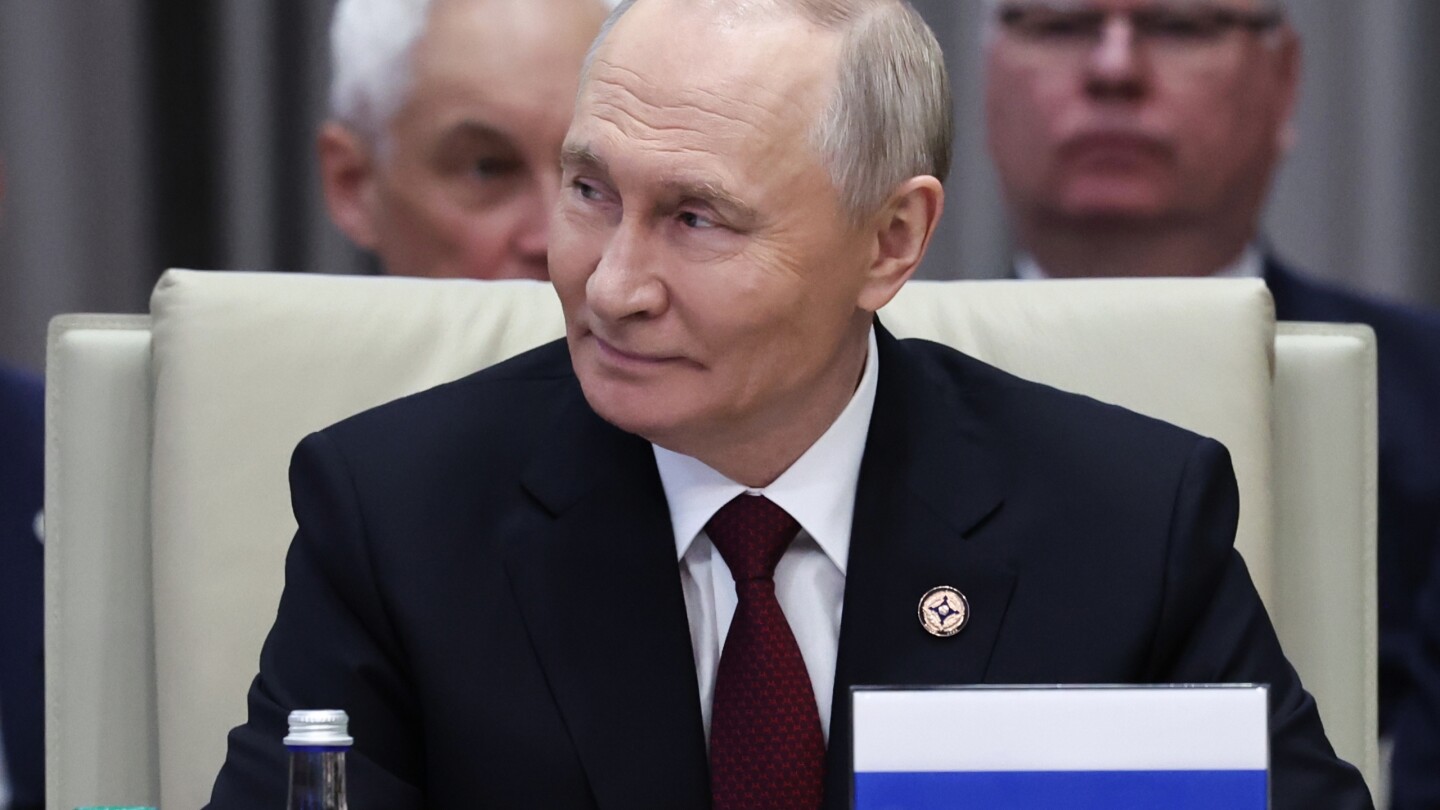
Russian President Vladimir Putin has characterized recent U.S. proposals to resolve the Ukraine conflict as a potential foundation for negotiations, while simultaneously delivering a stark military ultimatum to Ukrainian forces. Speaking to journalists concluding his Central Asian visit to Kyrgyzstan, the Kremlin leader emphasized the critical nature of precise diplomatic language, stating “Every word matters” when discussing potential pathways to peace.
The Russian president framed former U.S. President Donald Trump’s peace framework not as a finalized agreement but as “a set of issues put forward for discussion.” However, Putin coupled this diplomatic overture with a severe military warning: “If Ukrainian troops withdraw from the territories they occupy, hostilities will cease. If they don’t withdraw, we will achieve this by force.”
This development occurs amid heightened diplomatic activity, with U.S. special envoy Steve Witkoff scheduled to visit Moscow and U.S. Army Secretary Dan Driscoll potentially traveling to Kyiv. The initial U.S. proposals, which European officials noted appeared disproportionately favorable to Russian interests, underwent revision during Sunday’s Geneva negotiations between American and Ukrainian delegations.
European leaders, increasingly concerned about regional security stability amid Russian aggression, are actively seeking greater involvement in peace discussions. Analysts interpret Putin’s strategy as attempting to outlast Western commitment to Ukrainian defense efforts, particularly as the Trump administration has previously indicated willingness to abandon negotiation efforts without visible progress.
Despite Russian claims of battlefield momentum, independent military analysts from the Institute for the Study of War challenge Moscow’s narrative of inevitable victory. Their assessment indicates Russian forces continue struggling to capture strategic cities in Donetsk Oblast, with recent advances representing opportunistic gains rather than sustained operational success.
The diplomatic landscape further complicated as Russia ordered the closure of Poland’s consulate in Irkutsk, a retaliatory measure following November’s shutdown of Russia’s diplomatic mission in Gdansk. This diplomatic friction unfolds against continued military violence, with overnight drone exchanges resulting in casualties and infrastructure damage across conflict zones.
Ukraine faces additional challenges beyond battlefield pressures, with President Zelenskyy’s administration confronting significant corruption allegations and substantial financial shortfalls. While the International Monetary Fund approved an $8.1 billion four-year assistance package, this support covers merely a fraction of Ukraine’s projected $153 billion budgetary and military requirements through 2027.