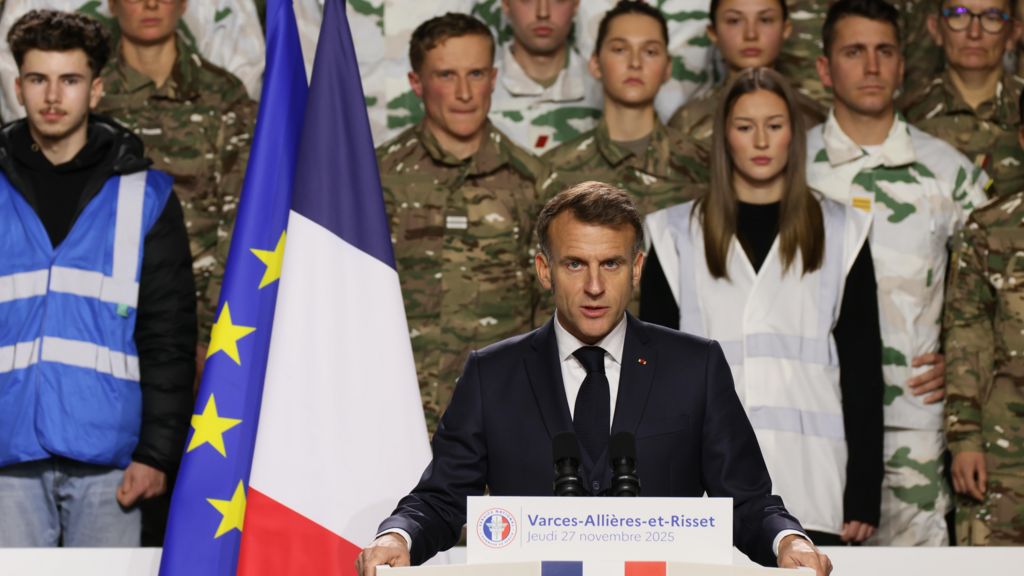
In a significant shift in national defense policy, France is set to reintroduce a limited form of military service, more than 25 years after conscription was phased out. President Emmanuel Macron announced the initiative, describing it as an ‘act of trust in our youth’ and a necessary step to prepare for potential threats in an increasingly uncertain world. The voluntary service, open to both young men and women aged 18 and 19, will involve 10 months of paid military training, with participants receiving at least €800 (£700) per month. The program will be implemented gradually, starting with 3,000 volunteers next year and expanding to 50,000 by 2035. Macron emphasized the importance of national mobilization, stating, ‘The only way to avoid danger is to prepare for it.’ The move aligns France with other European nations, such as Belgium, the Netherlands, and Germany, which have also introduced or are planning similar voluntary military service schemes in response to fears of Russian aggression. The new ‘national service’ aims to create a hybrid military structure, combining professional soldiers, reservists, and volunteers. French military leaders have welcomed the initiative, viewing it as a way to bolster the armed forces and ensure a reserve of trained personnel. However, the plan has sparked mixed reactions among the public, with some praising it as a patriotic endeavor and others criticizing it as a distraction from pressing issues like youth mental health and financial stability. The reintroduction of military service marks a departure from the post-Cold War era, when France, under then-President Jacques Chirac, ended conscription as part of the peace dividend following the fall of the Soviet Union. The new scheme reflects a broader European trend of rearming and preparing for potential conflicts, as tensions with Russia continue to escalate.