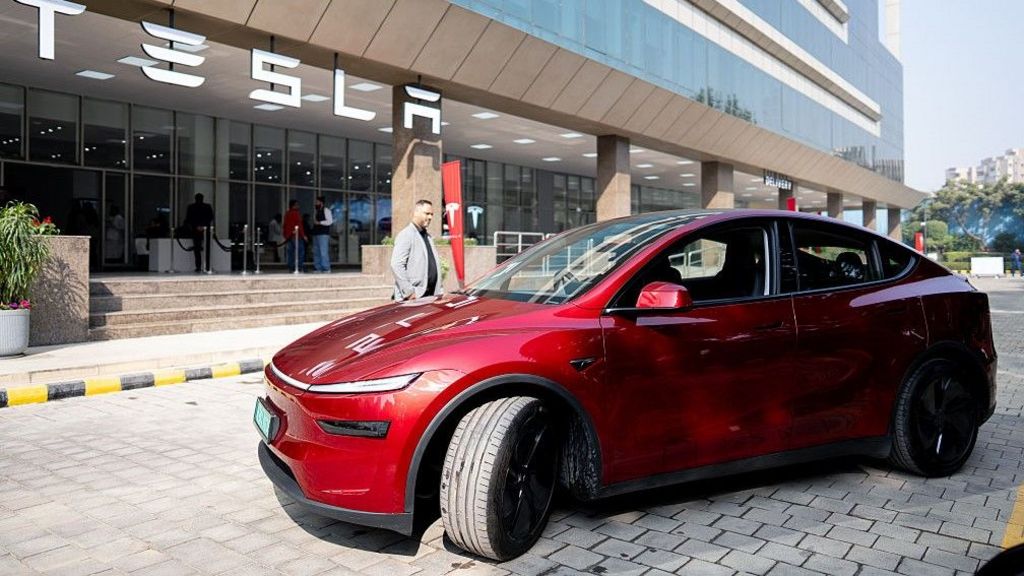
Tesla has unveiled its largest sales and service hub in India, located in Gurugram, a northern city. This state-of-the-art facility integrates an experience showroom, charging infrastructure, and after-sales services under one roof. Despite this significant investment, Tesla continues to face challenges in the Indian market, with only around 100 cars sold since its high-profile debut in July this year, according to dealership data. Sources close to the company reveal that Tesla is now focusing on bolstering India’s EV ecosystem to rejuvenate its sales momentum. The company has not directly addressed inquiries regarding its underwhelming sales figures. Since its launch in July, Tesla has struggled to gain traction in India, with media reports indicating that it received bookings for just over 600 cars by mid-September. However, only a fraction of these bookings have translated into actual sales, even as competitors like BMW, BYD, and Mercedes Benz have reported robust sales, driven by festive demand and tax incentives. Tesla’s strategy to enhance its market presence includes a three-pronged approach: increasing EV adoption, expanding the charging station network, and improving customer experience. High taxes and slow adoption rates remain significant barriers to EV growth in India, with Tesla’s steep upfront prices posing an additional challenge. Speaking at the launch event, Tesla India head Sharad Agarwal highlighted the long-term cost benefits of owning a Tesla, estimating that buyers could save up to two million rupees ($22,400) over four years on fuel and maintenance costs. He also emphasized the advantages of remote software updates and the low cost of home charging. Despite the current low sales figures, industry experts like Hormazd Sorabjee, editor of Autocar India, believe that Tesla’s entry into the Indian market is strategic and holds potential for future growth. EVs currently account for less than 3% of passenger vehicle sales in India, and the country’s charging infrastructure remains underdeveloped, with only around 25,000 charging stations. Tesla is expanding its network, including superchargers that can deliver about 170 miles of range in just 15 minutes. Tesla’s struggles in India are part of a broader slowdown in demand across its major markets, including Europe, China, and the US. The company reported a 37% drop in profits for the third quarter of 2023, despite achieving record revenue of $28 billion. In India, Elon Musk has shown little interest in local manufacturing, opting instead for an import-led strategy, despite government incentives aimed at attracting global EV manufacturers.