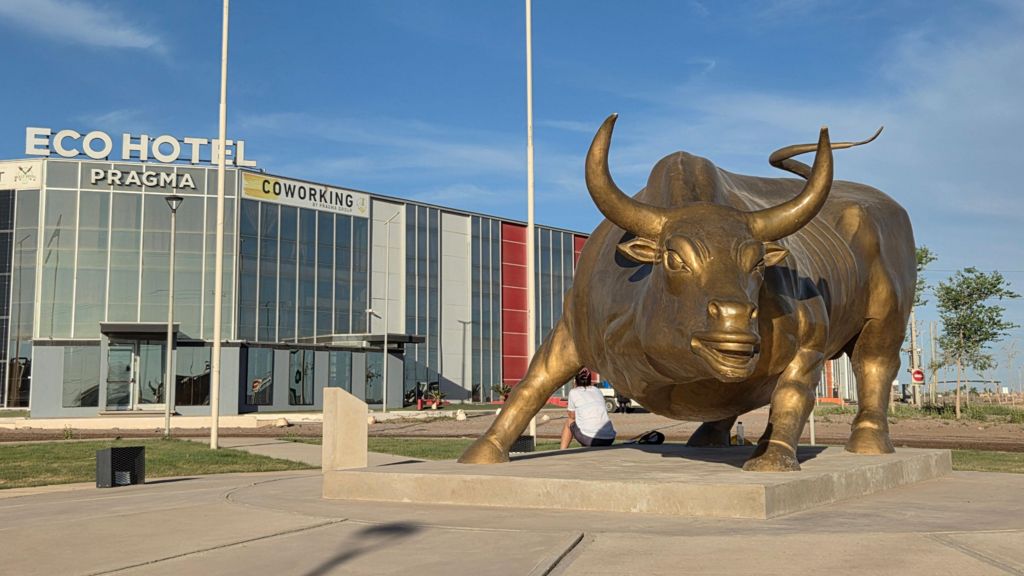
The once-sleepy town of Añelo, located 1,000 kilometers southwest of Buenos Aires, has undergone a dramatic transformation over the past decade. Once a remote settlement with no mains water, gas, or reliable electricity, Añelo has become a bustling hub of economic activity, thanks to the fracking boom in the surrounding Vaca Muerta region. This geological formation, rich in oil and gas, spans 30,000 square kilometers and has become the cornerstone of Argentina’s energy sector. Since fracking was legalized in 2014, Añelo’s population has surged by over 60%, from 10,788 in 2010 to 17,893 in 2022. The town now sees an influx of 15,000 workers daily, with roads bustling with oil tankers and commercial vehicles. Mechanic Fabio Javier Jiménez, who moved his family-owned tyre repair shop to Añelo, has witnessed this growth firsthand. From servicing two vehicles a day, his business now handles 20 daily, prompting him to open a second branch. Vaca Muerta, first discovered in 1931, has become Argentina’s largest oil and gas producer, accounting for over half of the country’s output. The region’s low extraction costs, compared to older, conventional deposits, have made it a key driver of Argentina’s energy self-sufficiency and export earnings. However, challenges remain. Critics argue that insufficient infrastructure, strict currency controls, and Argentina’s poor credit rating are hindering Vaca Muerta’s full potential. Despite these obstacles, the region enjoys broad political support, with all major parties backing its expansion. Yet, environmental concerns persist, with activists like Fernando Cabrera of Observatorio Petrolero Sur lamenting the lack of public debate on the ecological impact of fracking. While Añelo’s growth symbolizes Argentina’s energy renaissance, experts caution that Vaca Muerta alone cannot solve the country’s deep-rooted economic issues, including high inflation and public debt.