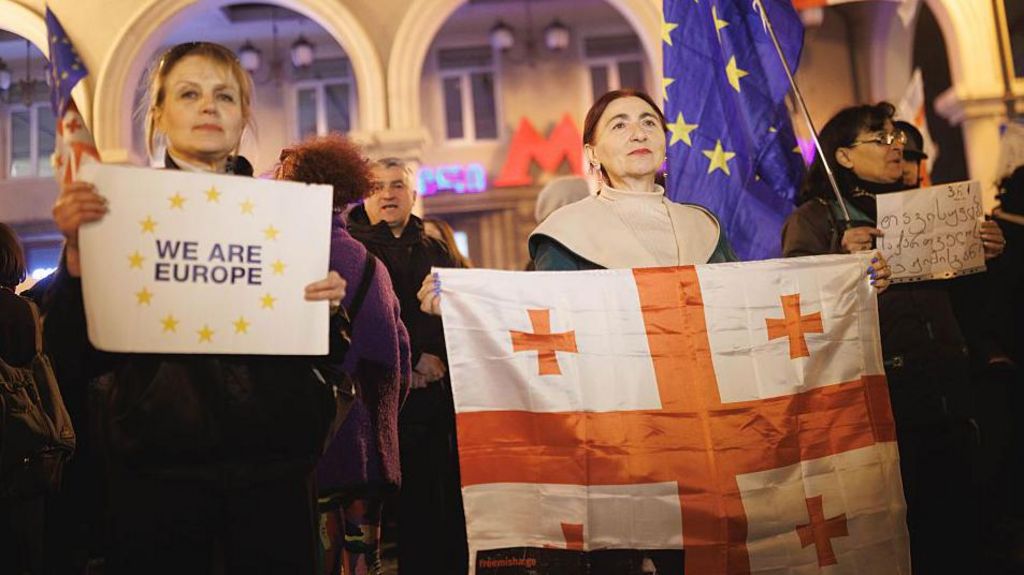
For over a year, Georgia has been gripped by nightly protests as citizens rally against the government’s perceived shift away from European integration and democratic values. The demonstrations, which began in November 2024 after Prime Minister Irakli Kobakhidze announced a four-year pause in EU accession efforts, have evolved into a protracted battle between protesters and authorities. Despite violent police crackdowns, heavy fines, and new laws imposing severe penalties for blocking roads, the movement persists, driven by a deep-seated fear of returning to Russia’s sphere of influence. Protesters like Giorgi Arabuli, who lived through the tumultuous 1990s, see the struggle as a fight for Georgia’s future. The government, led by the Georgian Dream party, has faced accusations of authoritarianism, with critics pointing to legislation mirroring Russian laws, the imprisonment of opposition figures, and restrictive measures targeting civil society and media. The EU’s recent assessment of Georgia as a candidate ‘in name only’ has further fueled discontent. Amidst this turmoil, Georgia’s democratic decline has intensified, with sweeping education reforms and increasing hostility toward Western critics. The protests, though smaller, continue to symbolize a resilient hope for a European future.