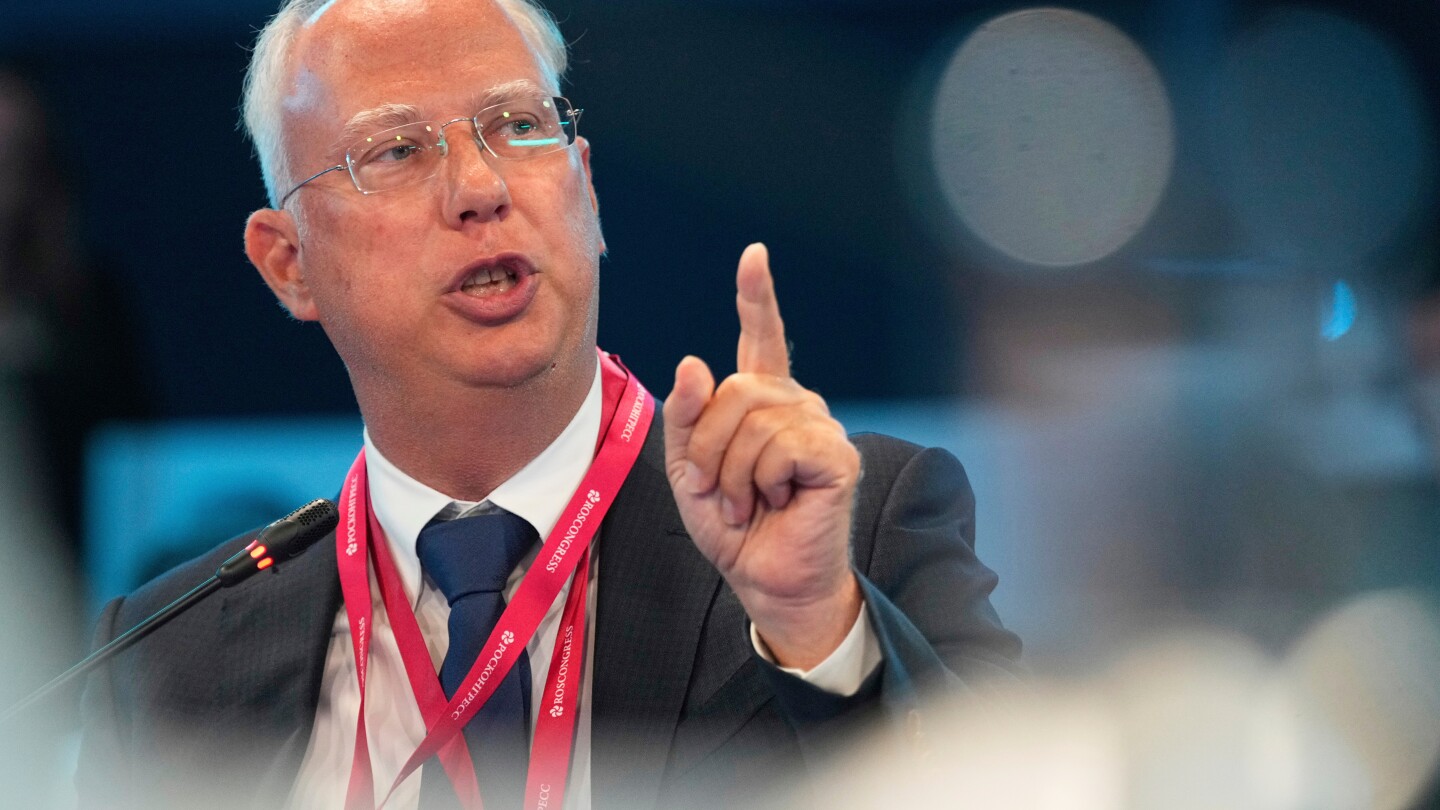
Kirill Dmitriev, the head of Russia’s sovereign wealth fund, has emerged as a pivotal figure in crafting a new proposal to end Moscow’s war in Ukraine. Despite lacking formal diplomatic credentials, Dmitriev’s background as a former investment banker and his role as a back-channel communicator between the Kremlin and allies of former U.S. President Donald Trump have positioned him uniquely for this task. His inclusion on the U.S. sanctions list has not deterred his involvement in high-stakes negotiations.
Boris Bondarev, a former Russian diplomat who resigned in protest after Russia’s 2022 invasion of Ukraine, noted that Dmitriev’s informal status might actually be an asset. His ability to connect with figures like Steve Witkoff, Trump’s special envoy, has made him a valuable intermediary. Bondarev emphasized that Dmitriev’s approachability and business-oriented mindset resonate well with U.S. counterparts.
Born in Kyiv in 1975, Dmitriev’s early exposure to the U.S. through a school exchange program and his education at Stanford University and Harvard Business School laid the foundation for his global perspective. His career trajectory, which included stints at Goldman Sachs and McKinsey & Company, eventually led him to private equity firms in Russia and Ukraine. In 2011, he was appointed CEO of the Russian Direct Investment Fund (RDIF), where he worked to attract foreign investment and foster financial ties with countries like Saudi Arabia and the UAE.
Political analyst Anton Barbashin described Dmitriev as a modern negotiator, contrasting him with traditional Soviet-trained diplomats. His ability to navigate the Trump administration’s business-centric approach has further solidified his role. Dmitriev’s connections extend beyond business; his wife, Natalia Popova, is linked to the Putin family through her role at Innopraktika, a nonprofit headed by the president’s daughter, Katerina Tikhonova.
Despite his informal status, Dmitriev’s efforts have not gone unnoticed. If his peace proposals succeed, he could earn significant recognition from Vladimir Putin. However, as Bondarev cautioned, the Kremlin retains the power to disown him at any moment, underscoring the precarious nature of his role.