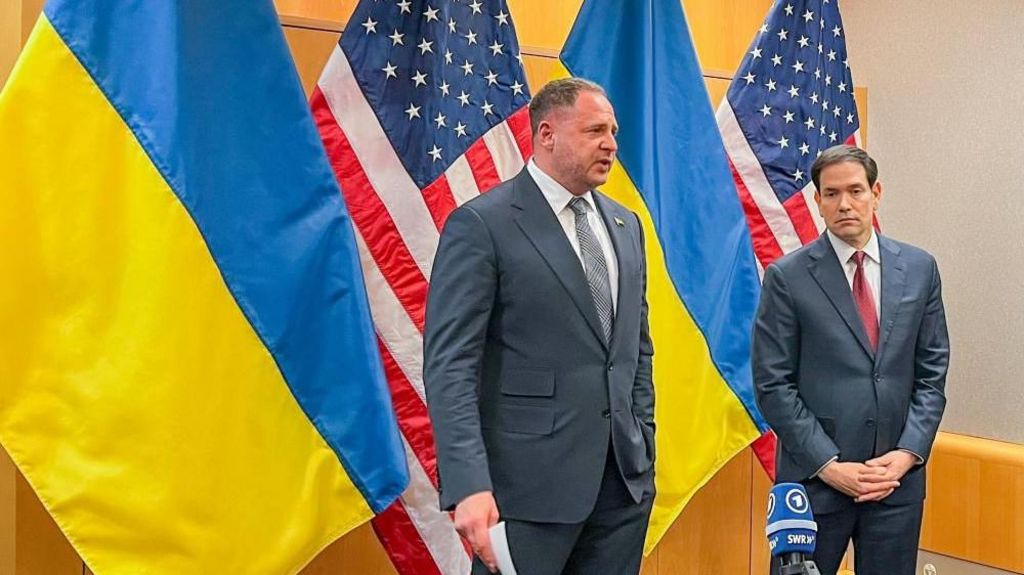
In a high-stakes diplomatic effort to broker peace in Ukraine, senior officials from the United States and Ukraine engaged in intense negotiations in Geneva over the weekend. The talks, which included national security advisers from Germany, France, and the UK, aimed to address a proposed peace deal that initially appeared heavily skewed in favor of Russia’s demands. The initial proposal, reportedly influenced by US President Donald Trump’s envoy Steve Witkoff, faced strong resistance from Kyiv, which refused to accept terms resembling surrender. Ukraine’s lead negotiator, Andriy Yermak, appeared visibly tense as discussions began, with US Secretary of State Marco Rubio forced to deny allegations that the draft was authored by the Kremlin. By Sunday night, Rubio announced ‘tremendous progress,’ though details remained vague. A joint Ukraine-US statement revealed an ‘updated and revised framework document,’ which reportedly incorporates significant amendments proposed by European allies. Key changes include the removal of an automatic veto on Ukraine’s future NATO membership, no permanent deployment of Western troops, and a commitment to recover occupied territories through diplomatic means. The revised plan also eliminates a full amnesty for war crimes and introduces security guarantees akin to NATO’s Article 5, a non-negotiable priority for Ukraine. German Chancellor Friedrich Merz described the deal as ‘significantly modified’ in a positive direction. However, skepticism remains, as Russia’s President Vladimir Putin shows no signs of conceding unless forced. Analysts suggest that while Trump’s push for a deal has injected momentum into peace efforts, the outcome may still fall short of Ukraine’s aspirations. The negotiations highlight the delicate balance between diplomatic progress and the enduring realities of the conflict.