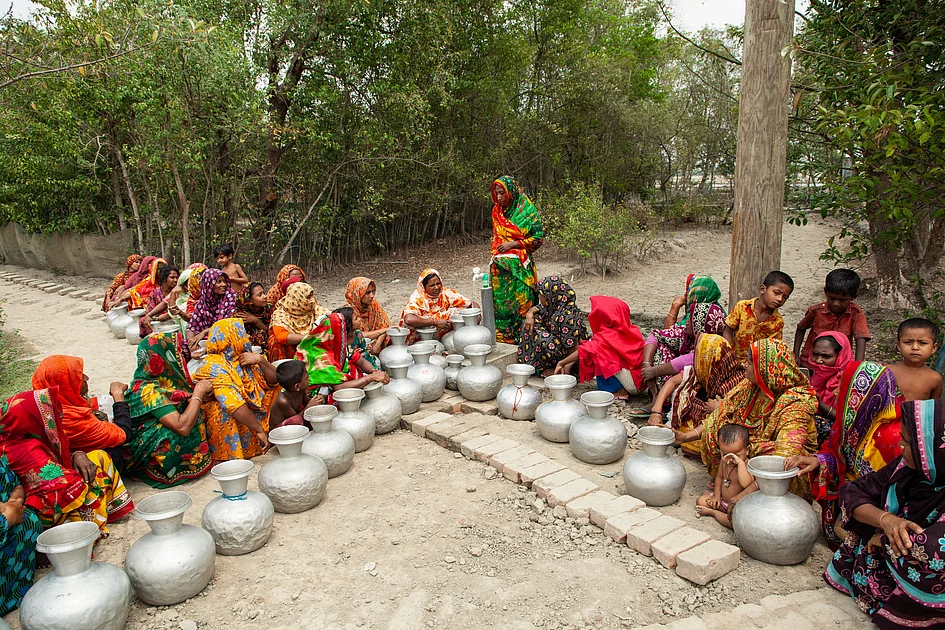
In the coastal regions of Bangladesh, where the mighty rivers of the Himalayas meet the sea, life is intricately tied to water. However, the escalating impacts of climate change are transforming this vital resource into a source of hardship. Rising sea levels and increasingly severe storms are driving saltwater inland, contaminating wells and lakes, and rendering once-fertile land barren. For millions of people living in the ecologically fragile deltas of mudflats and mangrove forests, accessing clean drinking water has become a daily struggle. The 2009 Cyclone Aila marked a turning point, as breached embankments allowed saltwater to flood homes and farmland, leaving behind a legacy of salinity and displacement. Today, communities in the Khulna and Satkhira districts navigate a precarious existence. Families live in bamboo-stilted houses to escape tidal floods, while children grow up in a landscape of constant erosion and displacement. Men often migrate for work, leaving women and children to walk for hours across cracked, parched soil to fetch water from distant ponds or rely on rainwater stored in charity-supplied tanks. Each household carefully rations its limited water supply, enduring the daily ritual of collection and storage. This story is part of a photography series by Muhammad Amdad Hossain, supported by AFP’s 2025 Marai Photo Grant, which highlights the impact of climate change on daily life in South Asia. The grant honors Shah Marai, the former AFP photo chief in Kabul, who was killed in a 2018 suicide attack.