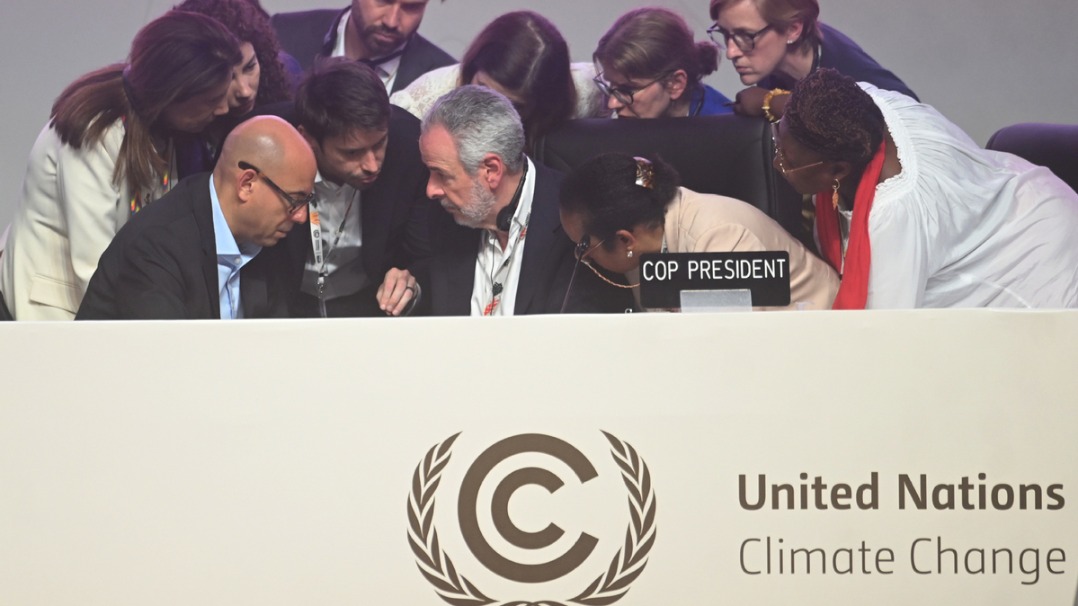
China has lauded the Global Mutirao Decision, a landmark agreement reached at the 30th United Nations Climate Change Conference (COP30) in Belem, Brazil, as a testament to global solidarity in addressing climate change. The agreement, described as ‘hard-won,’ was finalized on November 22, 2025, after intense negotiations that extended the conference by an additional day. Li Gao, head of the Chinese delegation and vice-minister of China’s ecology and environment, emphasized the significance of the decision, which encompasses climate mitigation, adaptation, finance, and international cooperation. The term ‘Mutirao,’ borrowed from Brazilian Portuguese, symbolizes collective action, reflecting the spirit of the agreement. Li highlighted the challenges posed by rising unilateralism, protectionism, and the United States’ withdrawal from the 2015 Paris Agreement, underscoring the difficulty of reaching consensus. The Global Mutirao Decision reaffirms that climate measures should not serve as tools for arbitrary trade restrictions, a principle China has long advocated. Additionally, China, alongside other Global South nations, secured increased support from developed countries for climate adaptation funding. The conference also adopted a call to triple adaptation finance by 2035, albeit with a timeline longer than developing nations had hoped. Li noted that China’s Nationally Determined Contributions (NDCs), announced in September 2025, aim to reduce net greenhouse gas emissions by 7-10% from peak levels by 2035, with a commitment to ‘striving to do better.’ This phrase, which became a rallying cry at COP30, was incorporated into the conference’s key political document as a shared global objective. The timing of COP30, coinciding with the 10th anniversary of the Paris Agreement, was particularly significant, setting the stage for the next decade of climate action. Li described the outcome as a milestone in the global multilateral climate process, signaling the irreversible shift toward green and low-carbon development, the resilience of multilateralism, and the necessity of international cooperation.