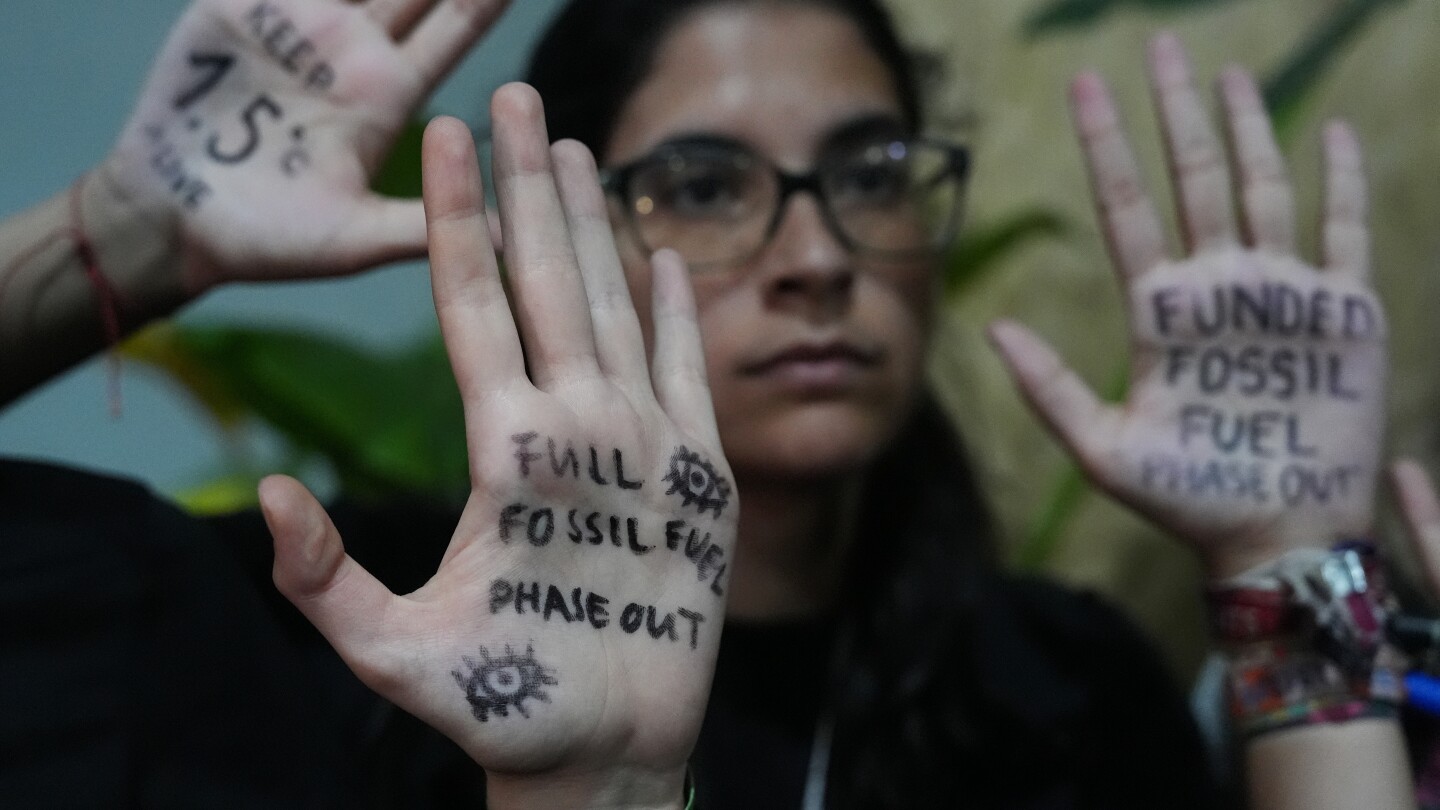
The United Nations climate talks in Belem, Brazil, have extended beyond their scheduled conclusion as delegates grapple with contentious issues, particularly the transition away from fossil fuels. Hosted in a city on the edge of the Amazon rainforest, the annual COP30 conference aimed to address global warming but faced significant delays and disagreements. A key point of contention is the omission of explicit language in the draft text outlining a roadmap for phasing out oil, gas, and coal, despite calls from 36 nations, including Panama, for stronger commitments. Panama’s lead negotiator, Juan Carlos Monterrey Gomez, criticized the process, warning it risks becoming a ‘clown show’ due to its lack of clarity. The European Union also rejected the draft, with Climate Commissioner Wopke Hoekstra lamenting its ‘weakness’ and failure to align with scientific imperatives. Small island nations like Tuvalu echoed these concerns, emphasizing the urgent need for a ‘survival roadmap’ to combat climate change. Brazil’s proposals included financial aid for vulnerable nations and stricter emissions reduction plans, but the absence of a detailed fossil fuel phase-out plan drew widespread criticism. Former U.S. Vice President Al Gore accused oil-producing nations like Saudi Arabia and Russia of obstructing progress. Despite acknowledging the irreversible global transition toward low emissions, the draft text fell short of providing concrete timelines or processes. The talks, now behind schedule, continue as negotiators seek common ground amidst mounting pressure to deliver meaningful outcomes.
Negotiators at UN climate talks split over when and how to phaseout use oil, gas and coal