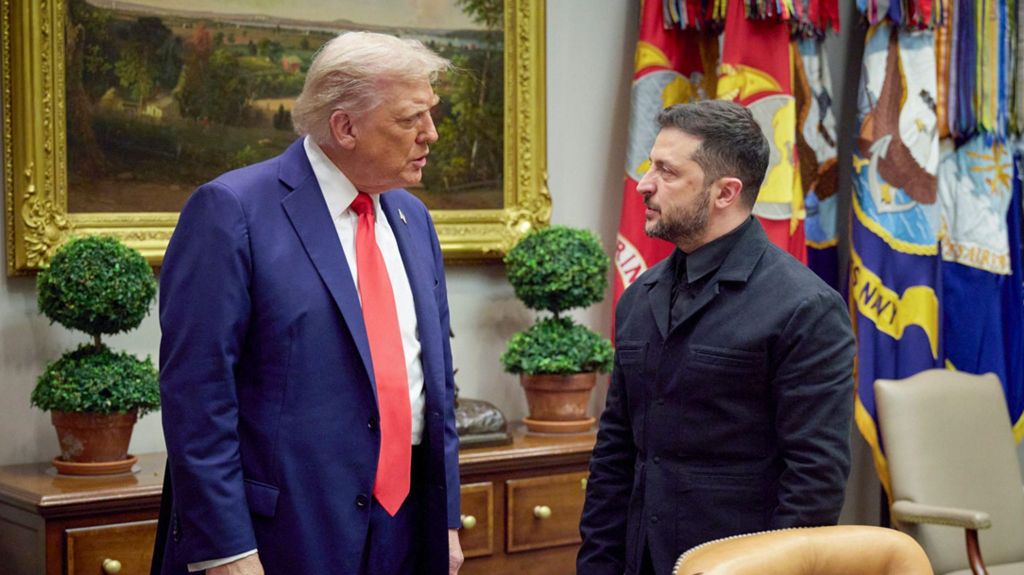
Ukrainian President Volodymyr Zelensky has adopted a measured approach to a US-drafted peace proposal, refraining from outright criticism despite its apparent alignment with many of Moscow’s demands. The White House has countered assertions that Ukraine was excluded from the drafting process, emphasizing that the plan emerged from recent US-Russia discussions. In his nightly address, Zelensky underscored Ukraine’s commitment to peace, diplomacy, and constructive dialogue, stating, “We are ready for honest, efficient, and constructive work.” However, concerns linger over specific provisions, such as relinquishing the Donbas region, downsizing Ukraine’s military, and barring international troops—concessions previously rejected by Kyiv. Ukrainian MP Yaroslav Yurchyshyn criticized the proposal as a “quick peace at the expense of the weaker side.” Recent developments have further strained Ukraine’s position, including Russian advances in the east, widespread power outages due to Moscow’s strikes on Ukraine’s energy grid, and internal political turmoil fueled by corruption allegations. US Secretary of State Marco Rubio acknowledged that achieving peace would necessitate tough compromises. The draft reportedly offers Ukraine “reliable security guarantees” and suggests using frozen Russian assets for reconstruction, while excluding NATO membership but leaving EU accession open. European nations, notably the UK and France, have been sidelined in the drafting process, with the proposal explicitly opposing foreign troop presence. European allies are pressing for their voices to be heard, potentially influencing Zelensky to seek amendments. However, time is of the essence, as US officials, operating under President Donald Trump’s directive, aim to finalize the deal within weeks, not months. Trump, eager to end the conflict swiftly, appears to have abandoned hopes of direct negotiations between Zelensky and Russian President Vladimir Putin, focusing instead on securing a bilateral agreement.