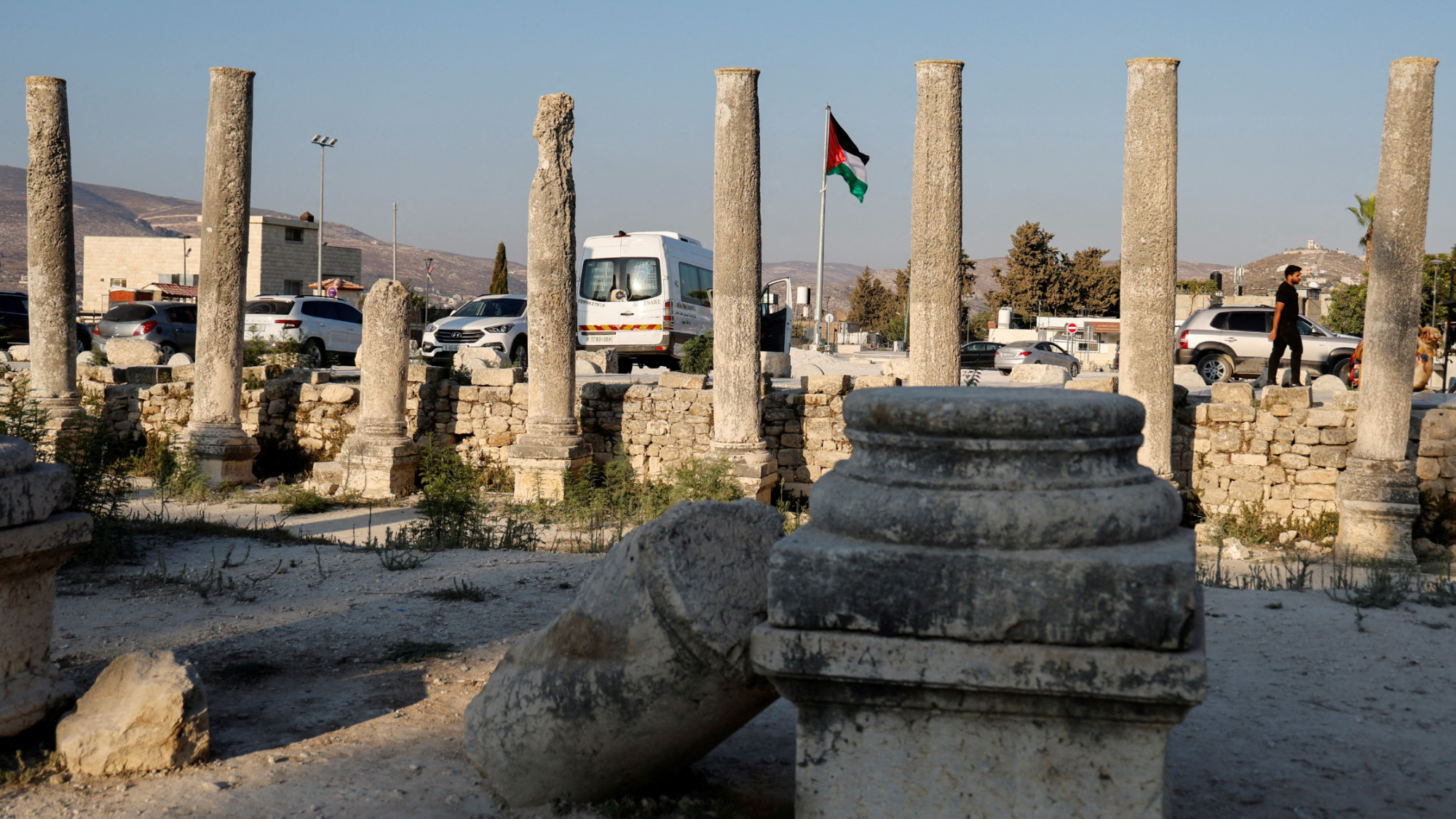
Israel has announced plans to confiscate 180 hectares of privately owned land in the occupied West Bank, citing the development of an archaeological site as the primary reason. The targeted area, located near the town of Sebastia north of Nablus, is home to tens of thousands of olive trees and spans across Sebastia and the neighboring village of Burqa. Local officials have labeled this as the largest land seizure for archaeological purposes since 1967. The site in Sebastia dates back to the Bronze Age, approximately 3200 BCE, and Israel claims it is linked to the biblical city of Samaria, associated with the ancient Kingdom of Israel. However, Palestinians argue that this move is part of a broader strategy to ‘Judaise’ Palestinian heritage and legitimize land annexation. Sebastia’s mayor, Muhammad Azem, stated that Israel aims to connect the archaeological site to the nearby Shavei Shomron settlement, built on land belonging to several Palestinian towns. Additionally, Israel plans to confiscate more land from Burqa to construct a settler road leading to the settlement. Azem warned that this decision seeks to take control of one of Palestine’s largest archaeological sites, effectively blocking Palestinians from accessing their own land. The economic and security impacts are expected to be severe, with local tourism suffering as Palestinians lose access to the site, and foreign visitors are only permitted entry through Israel. Sebastia, which relies heavily on the site for tourism revenue, could face economic paralysis. Azem also revealed that Israel conducted a year-long excavation, reaching deep archaeological layers, and moved a mobile archaeological unit from Sebastia to the Shavei Shomron settlement, further confirming suspicions of land confiscation. In May 2023, the Israeli government allocated 30 million shekels (approximately $9 million) for excavations and development in Sebastia, including the restoration of the town’s old train station, where settlement activity began in 1974. The plans also include a new road bypassing the Palestinian village entirely. Palestinian expert Dirgham Fares accused Israel of using antiquities as a pretext to annex and Judaise more land, calling it a systematic policy. Peace Now, an Israeli NGO, condemned the move as a violation of Palestinian rights and international law, emphasizing that Sebastia is a heritage site within a Palestinian village and part of a future Palestinian state. Fares also highlighted ongoing Israeli restrictions on Palestinian tourism and antiquities ministry staff, including detentions and disruptions of restoration work, further exacerbating tensions in the region.