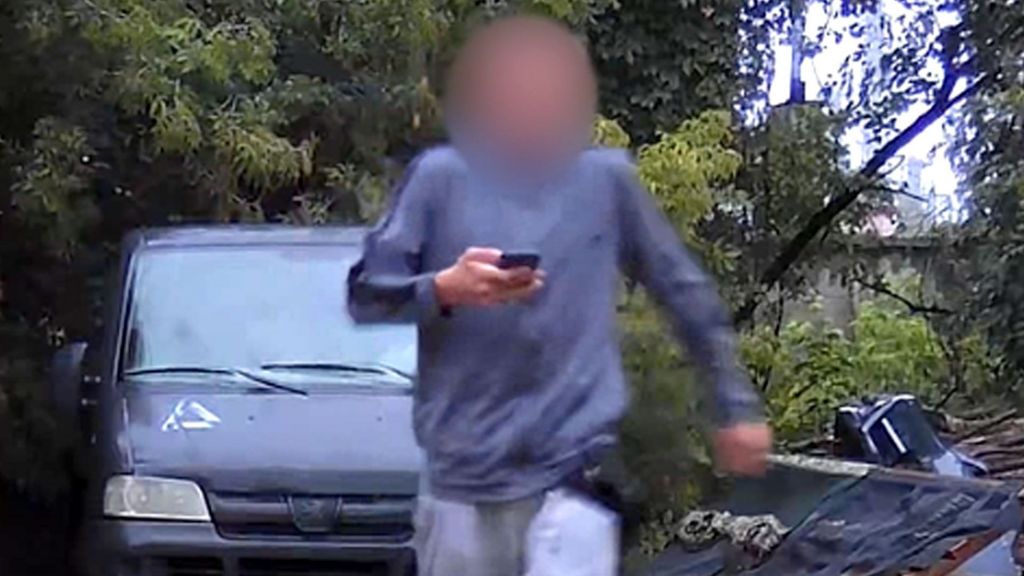
In a chilling revelation, a Ukrainian teenager, now 18, has confessed to attempting to plant a bomb in a military conscription van under the direction of Russian handlers. The young man, identified only as Vlad to protect his identity, was promised $2,000 for the act of sabotage. However, Ukraine’s Security Service (SBU) had been monitoring him, ultimately thwarting the attack. Vlad is now awaiting trial on terrorism charges, which could result in a 12-year prison sentence.
Vlad’s case is part of a broader pattern of Russian recruitment of Ukrainian minors for sabotage and attacks against their own country. According to the SBU, over 800 Ukrainians, including 240 minors, have been recruited by Russia in the past two years. Some of these recruits are as young as 11, with reports of attempts to recruit children as young as nine.
The recruitment primarily occurs on platforms like Telegram, TikTok, and even video game platforms. The handlers exploit financial desperation, offering payments for increasingly dangerous tasks. Vlad, for instance, was initially reluctant but was persuaded to undertake a series of assignments, culminating in the bomb plot. He was paid a fraction of the promised cryptocurrency, highlighting the manipulative nature of these recruitments.
Ukrainian officials have publicly named suspected Russian intelligence agents involved in these operations. While the BBC has not independently verified the Russian state’s direct involvement, several European governments have reported evidence of Russian agents recruiting young men for acts of vandalism, arson, and surveillance.
The SBU has been proactive in countering these threats, conducting awareness campaigns in schools and removing some of the recruitment channels on Telegram. However, many of these channels remain active, with some even growing in subscribers. Telegram has stated that calls to violence are explicitly forbidden and removed when discovered, but the persistence of these channels suggests a significant challenge.
Vlad’s story serves as a stark warning to others tempted by such offers. ‘It’s not worth it,’ he says. ‘They will either cheat you, and then you will end up in prison just like me, or you can take a bomb in your hands and it will simply blow you up.’