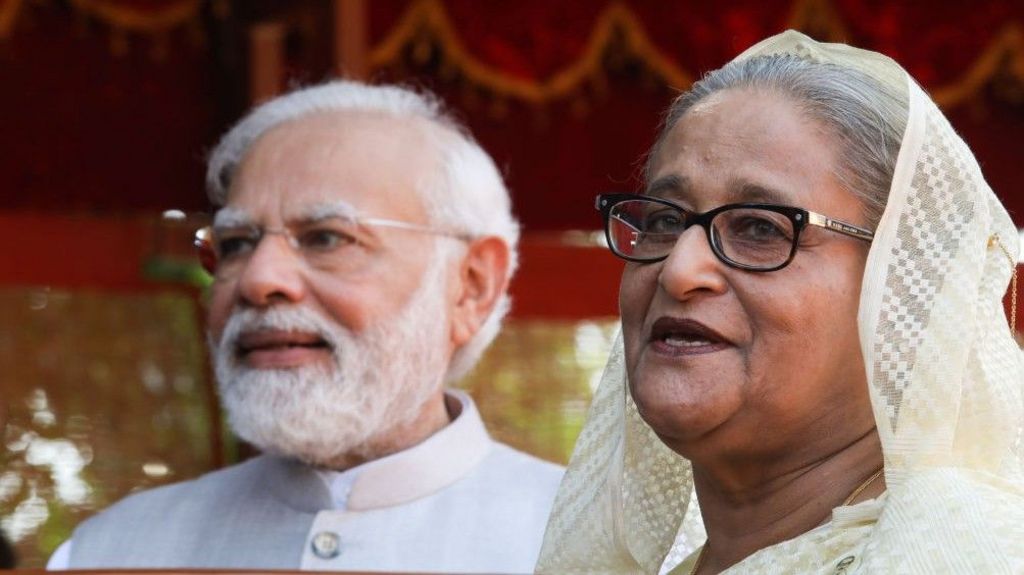
The longstanding relationship between India and Bangladesh has reached a critical juncture, with the exile and death sentence of Bangladesh’s former leader Sheikh Hasina creating a complex diplomatic bind. Hasina, who ruled Bangladesh for 15 years, was a key ally for India, ensuring stability and connectivity in the region while aligning with Delhi’s interests over Beijing’s. However, her crackdown on student-led protests in 2024 led to her ousting and subsequent exile in India, where she has been granted asylum. A special tribunal in Bangladesh has sentenced her to death for crimes against humanity, but India has shown no inclination to extradite her, leaving the sentence unenforceable.
This situation has placed India in a precarious position. South Asia expert Michael Kugelman outlines four unappealing options for Delhi: extraditing Hasina, maintaining the status quo, pressuring her to remain silent, or finding a third country to take her in. Each option carries significant risks, particularly as Bangladesh’s interim government, led by Nobel laureate Muhammad Yunus, seeks to rebalance its foreign policy by reducing reliance on India and strengthening ties with China, Pakistan, and Turkey.
The India-Bangladesh relationship is deeply intertwined, with Bangladesh being India’s largest trading partner in South Asia and India serving as Bangladesh’s biggest export market in Asia. Over the past decade, India has provided billions in concessional credit, built cross-border infrastructure, and supplied energy and raw materials. Despite this economic interdependence, public sentiment in Bangladesh has soured, with a recent survey revealing that 75% of Bangladeshis view ties with China positively, compared to just 11% for India. Many blame Delhi for supporting Hasina’s increasingly authoritarian regime.
Experts argue that while political and diplomatic relations may fluctuate, economic and cultural ties often endure. However, the current situation poses significant challenges for India, particularly in managing border security and counterterrorism efforts along the 4,096 km shared border. The path forward, according to Avinash Paliwal of SOAS University of London, requires quiet and patient engagement with key stakeholders in Dhaka, including the armed forces.
The uncertainty surrounding Bangladesh’s upcoming elections adds another layer of complexity. If the interim government can conduct credible elections, it may open opportunities for India and Bangladesh to renegotiate their relationship. However, the Hasina factor remains a wildcard, with the potential to strain bilateral ties further. Ultimately, the next elected government in Bangladesh will need to balance core national interests against domestic politics and public sentiment, making the future of India-Bangladesh relations fragile at best.