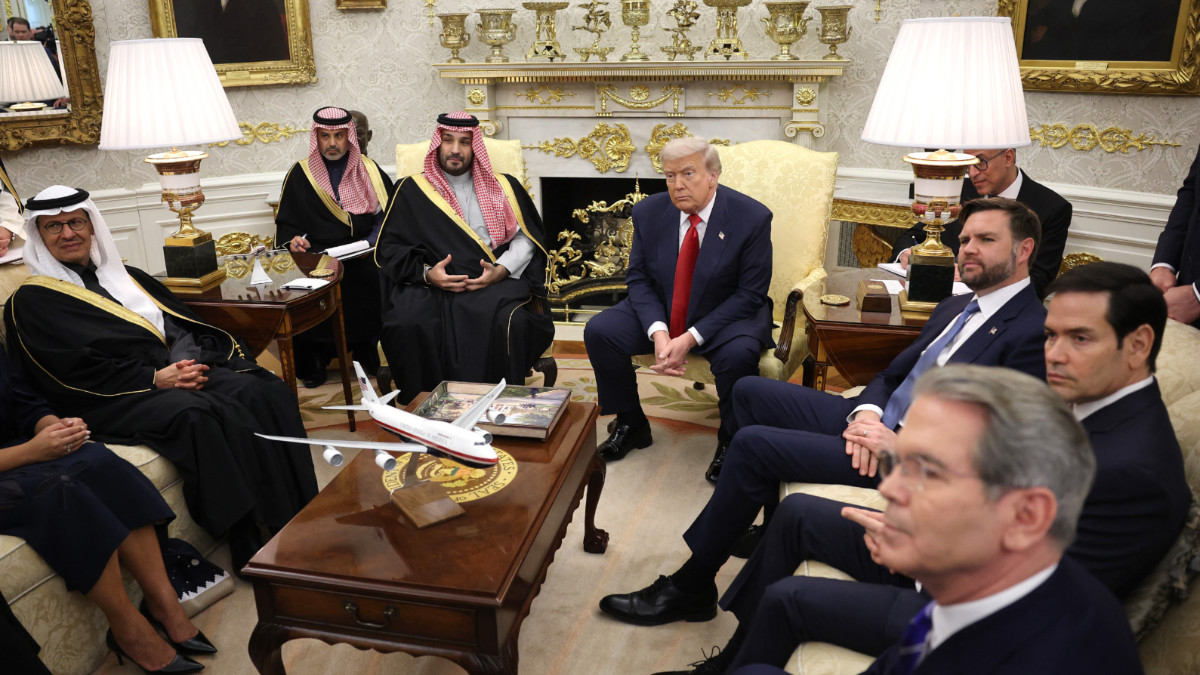
In a significant move to bolster military cooperation, the United States and Saudi Arabia have inked a Strategic Defence Agreement (SDA), paving the way for expedited arms sales to the kingdom. The deal, signed by US President Donald Trump and Crown Prince Mohammed bin Salman, marks a pivotal shift in bilateral relations, with Saudi Arabia poised to gain access to cutting-edge US defence technology, including the coveted F-35 warplanes. The agreement, currently under detailed negotiation by US officials, is expected to position Saudi Arabia ahead of other Gulf states in acquiring sophisticated US weaponry. A former senior US official revealed that the Saudis have received Trump’s approval to secure the best in defence technology, despite Israeli lobbying efforts to limit the capabilities of the F-35s sold to the kingdom. Beyond the F-35, Saudi Arabia is exploring futuristic weapons systems like Collaborative Combat Aircraft (CCA) drones, designed to operate alongside manned aircraft. The kingdom is also in talks with US firms, including Shield AI and General Atomics, for advanced drone acquisitions. The SDA extends beyond military technology, with separate deals anticipated in civilian nuclear technology and AI chips. Additionally, the US has designated Saudi Arabia as a major non-NATO ally, a status that accelerates weapons transfers and deepens military training. This designation places Saudi Arabia alongside other Middle Eastern allies like Bahrain, Qatar, and Kuwait. Crown Prince Mohammed bin Salman’s visit to Washington, his first since 2018, underscores Riyadh’s ambition to strengthen economic and security ties with the US. The crown prince’s diplomatic efforts, including navigating Israel’s war on Gaza and rekindling relations with Iran, have bolstered his international standing. However, Saudi Arabia seeks a more binding defence commitment from Washington, akin to the US-Japan mutual defence treaty. Talks on such a treaty are ongoing, contingent on Saudi Arabia’s recognition of Israel. The crown prince expressed a desire to join the Abraham Accords, emphasizing the need for a clear path toward a two-state solution. The agreement reflects Saudi Arabia’s strategic importance as the world’s largest oil exporter and the Arab world’s only G-20 economy, amid evolving regional dynamics.