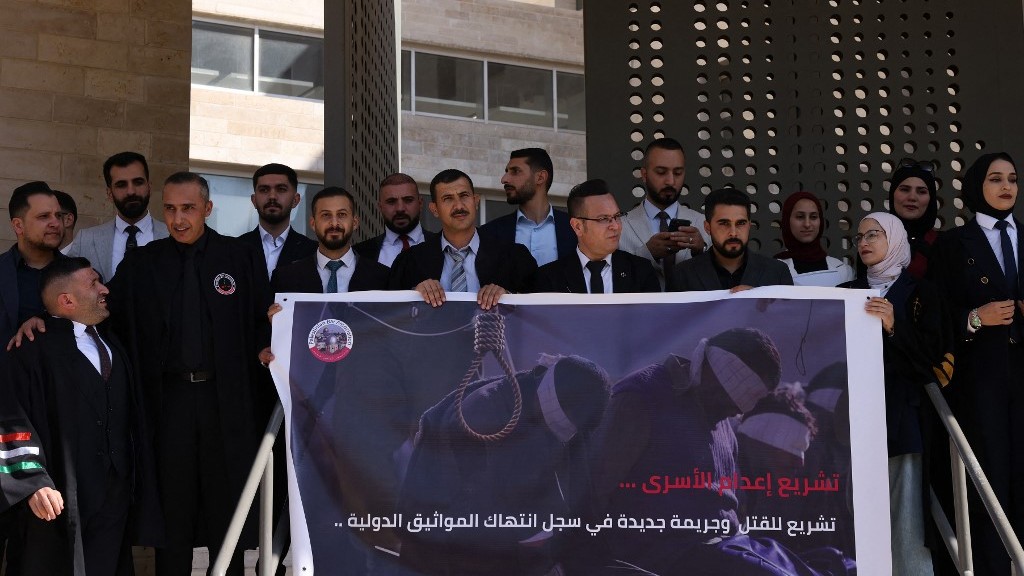
The Israeli parliament’s National Security Committee convened on Wednesday to deliberate a contentious bill proposing the death penalty for Palestinians convicted of terrorism, with lethal injection as the designated method. The legislation, spearheaded by MK Limor Son Har Melech of the far-right Otzma Yehudit (Jewish Power) party, successfully passed its first reading last week and is now advancing toward its second and third readings, the final steps before becoming law. Committee Chair MK Tzvika Foghel, also from Otzma Yehudit, outlined the guiding principles of the bill earlier this week, emphasizing its alignment with what he described as the Israeli public’s demand for justice following the October 7, 2023, Hamas-led attack. Foghel argued that the death penalty would eliminate the possibility of future prisoner exchanges, which he claimed endanger Jewish lives. The bill mandates death sentences for individuals convicted of murdering Jews solely based on their ethnicity, including planners and dispatchers of such acts. It further stipulates that executions must occur within 90 days of sentencing, with no avenues for appeal, commutation, or pardon. The proposal has sparked intense debate in parliament, with heated exchanges between Otzma Yehudit lawmakers, including National Security Minister Itamar Ben Gvir, and left-wing MPs who were forcibly removed from the session. Critics, including MP Gilad Kariv of the center-left Democrats party, condemned the bill as racist and driven by vengeance, arguing that it disproportionately targets Palestinians. The Public Defense’s Office at the Ministry of Justice also criticized the bill, citing global evidence that the death penalty lacks deterrent effects. Despite opposition, the bill garnered support from coalition parties and the right-wing opposition party Yisrael Beiteinu, while centrist parties abstained from voting. Prime Minister Benjamin Netanyahu has publicly endorsed the death penalty, aligning with the bill’s assertion that imprisonment is insufficient to deter terrorism. If enacted, the law would mark a significant shift in Israeli policy, as the country has not carried out an execution since 1962. Human rights organizations, including the Association for Civil Rights in Israel, have vehemently opposed the bill, arguing that it violates fundamental human rights principles and disproportionately targets Palestinians. The debate unfolds amid reports of rising Palestinian detainee deaths in Israeli custody, further intensifying scrutiny of the proposed legislation.