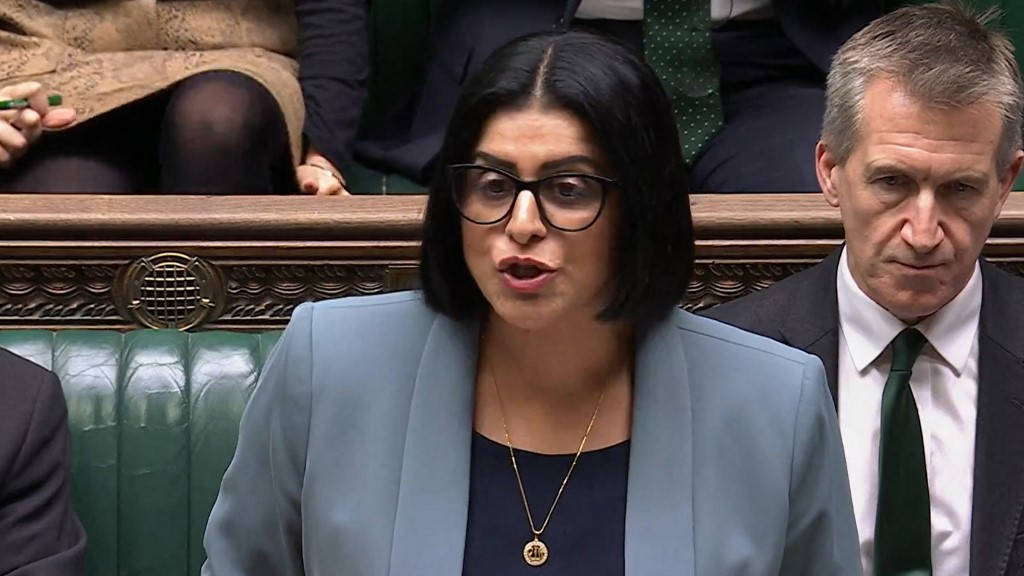
The British government has introduced a series of sweeping reforms to the asylum system, aiming to curb immigration and increase deportations. Announced by Home Secretary Shabana Mahmood in Parliament on Monday, the proposals have sparked fierce criticism from across the political spectrum, including former Labour leader Jeremy Corbyn and Green Party leader Zack Polanski. The reforms, influenced by Prime Minister Keir Starmer’s chief of staff Morgan McSweeney and Blue Labour founder Lord Maurice Glasman, mark a significant shift in Labour’s approach to immigration. Key measures include seizing assets from asylum seekers to cover processing costs, limiting annual asylum admissions to a few hundred initially, and making refugee status temporary with reviews every 30 months. Refugees will no longer be eligible for indefinite leave to remain after five years, instead waiting up to 20 years for permanent residency. Some asylum seekers will lose state benefits, while AI-driven technology will be trialled for age verification. The government also plans to reconsider human rights law, particularly Article 8 of the European Convention on Human Rights, in migration cases. These reforms come amid public discontent over immigration figures and the rise of Nigel Farage’s Reform UK, which has consistently topped opinion polls. Net migration dropped to 431,000 in 2024, down from 906,000 the previous year, due to reduced healthcare and student visas. Critics, including Corbyn and Polanski, have condemned the proposals as dehumanizing and divisive, accusing Labour of adopting far-right rhetoric. Mahmood, however, defends the reforms as necessary to restore moderate politics and control illegal migration, which she claims is tearing the country apart. Despite internal dissent, the government is unlikely to reverse course, with Mahmood emerging as a key figure in Labour’s shift to the right on immigration.