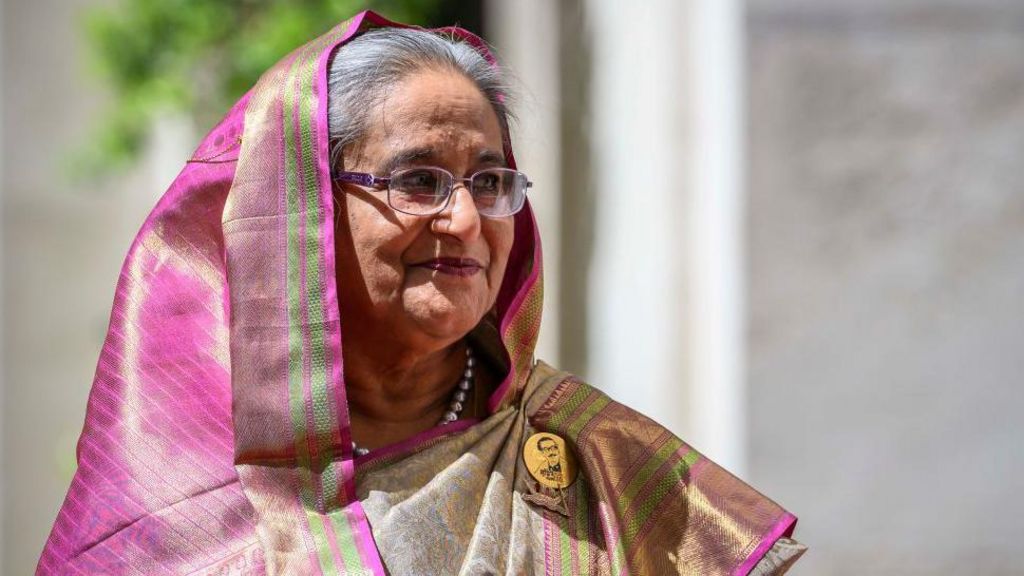
In a landmark ruling, Bangladesh’s former Prime Minister Sheikh Hasina has been sentenced to death by the International Crimes Tribunal (ICT) for her role in the violent crackdown on student-led protests in 2024, which resulted in the deaths of 1,400 individuals. The verdict, delivered in absentia, marks a significant moment in Bangladesh’s political landscape, as Hasina has been in exile in India since her ousting in July 2024. The tribunal found her guilty of authorizing the use of lethal force against protesters, a charge she vehemently denies, labeling the trial as “biased and politically motivated.”
The protests, initially sparked by demands to abolish government job quotas, quickly escalated into a broader anti-government movement. A UN report in February highlighted the severity of the crackdown, describing the killings as potential “crimes against humanity.” Leaked audio verified by the BBC suggested Hasina had authorized the use of “lethal weapons” during the unrest, which was presented as evidence during the trial.
Families of the victims have welcomed the verdict, with many calling for severe punishment. Ramjan Ali, whose brother was killed during the protests, expressed a desire for “exemplary punishment” for Hasina and others involved. Lucky Akther, who lost her husband, emphasized the need for the sentence to be carried out before the next election to bring closure to the bereaved families.
The verdict has intensified political tensions in Bangladesh, with the interim government banning Hasina’s Awami League party in May. Hasina has warned that millions might boycott the upcoming 2026 election if her party’s candidates are barred from participating. The ruling also poses a diplomatic challenge for India and Bangladesh, as Dhaka has requested her extradition, a move India has yet to comply with.
While the sentence offers some closure to the victims’ families, it is unlikely to heal the deep political divisions in the country. Rights activists and observers have noted that without an apology or remorse from Hasina and her party, the Awami League’s path to political rehabilitation remains uncertain.